
The complete guide
The Honest Buyer's Guide to Kids' Play Tents
The pile of chairs and bedsheets problem
Most parents know the routine. A child decides they want a den, and the dining chairs get dragged into the lounge room, a doona comes off a bed, and twenty minutes later there is a sagging fabric structure that falls down the moment someone sneezes. It gets rebuilt three times. Then it stays there for two days because nobody wants to be the one to take it apart.
The urge behind that is real and worth taking seriously. Children want a space that is theirs, with a wall between them and the rest of the house. It is not about hiding. It is about having somewhere small and predictable where they decide what happens. A play tent gives them exactly that, with a frame that actually stands up and a cover that folds away when you need the floor back.
How a teepee play tent works
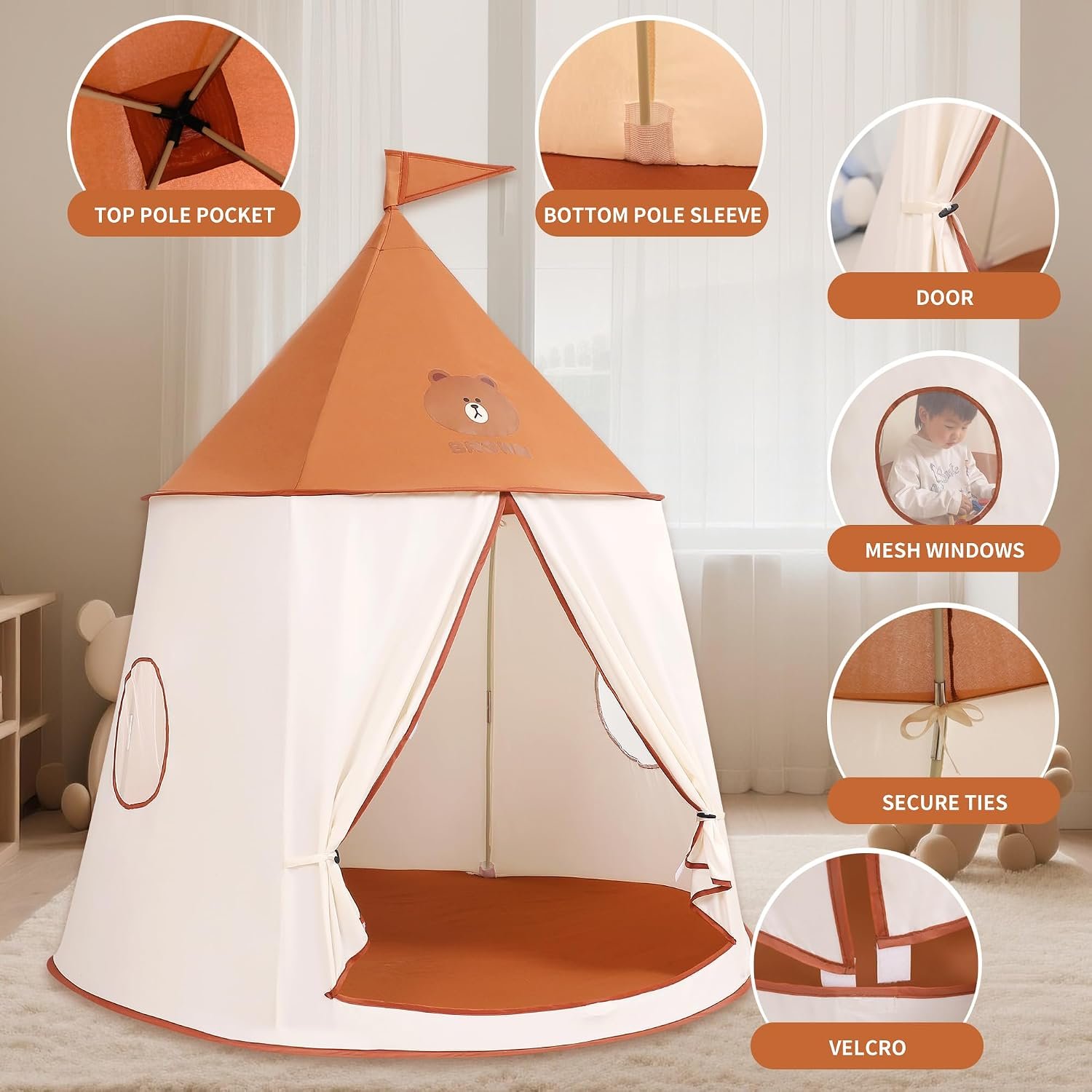
The design is simple on purpose. Four rods lean together at the top to form a cone, and a fabric cover slides over them to make walls. The weight of the cover pulls the rods outward against the floor, which is what keeps the whole thing standing. There are no screws, no brackets and no tools.
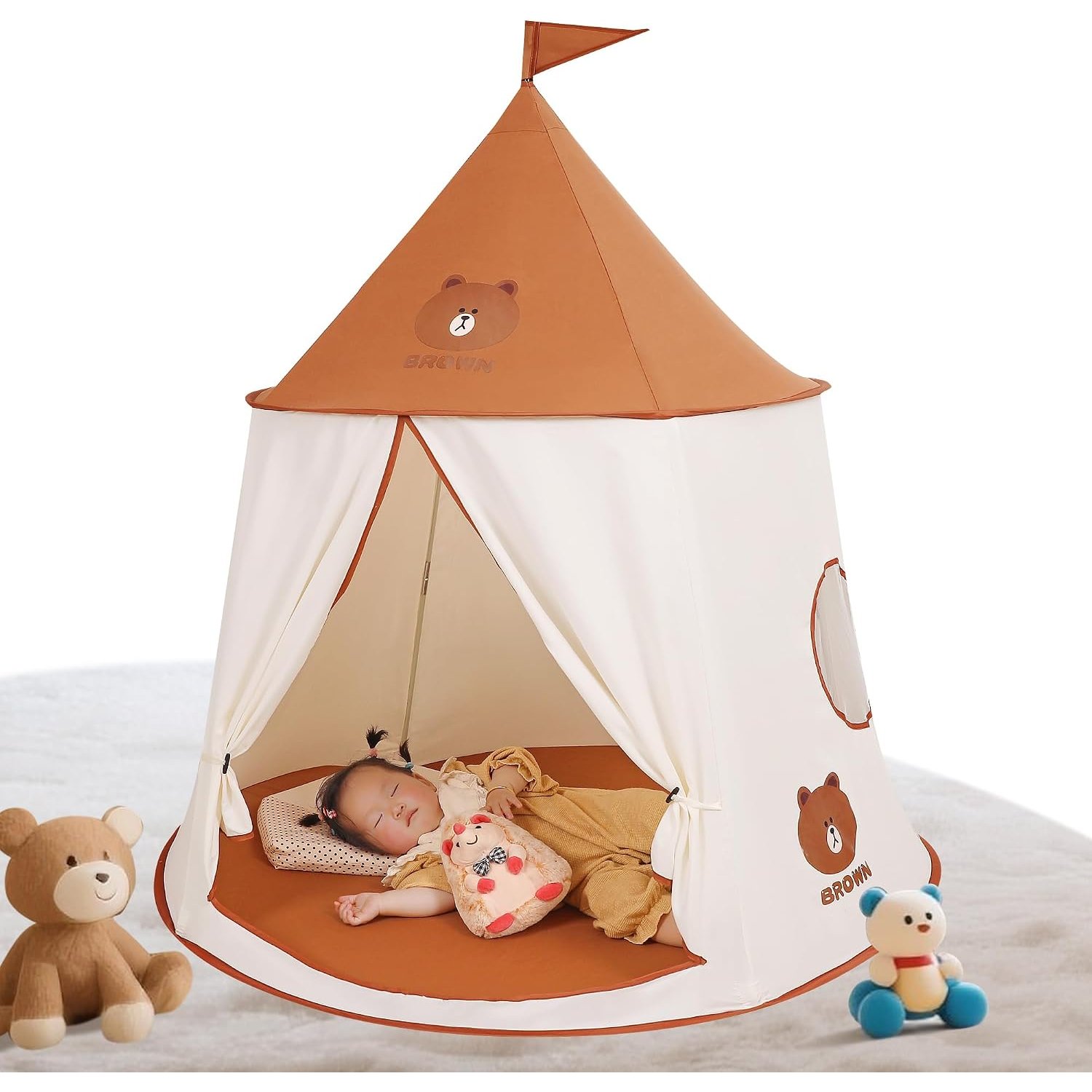
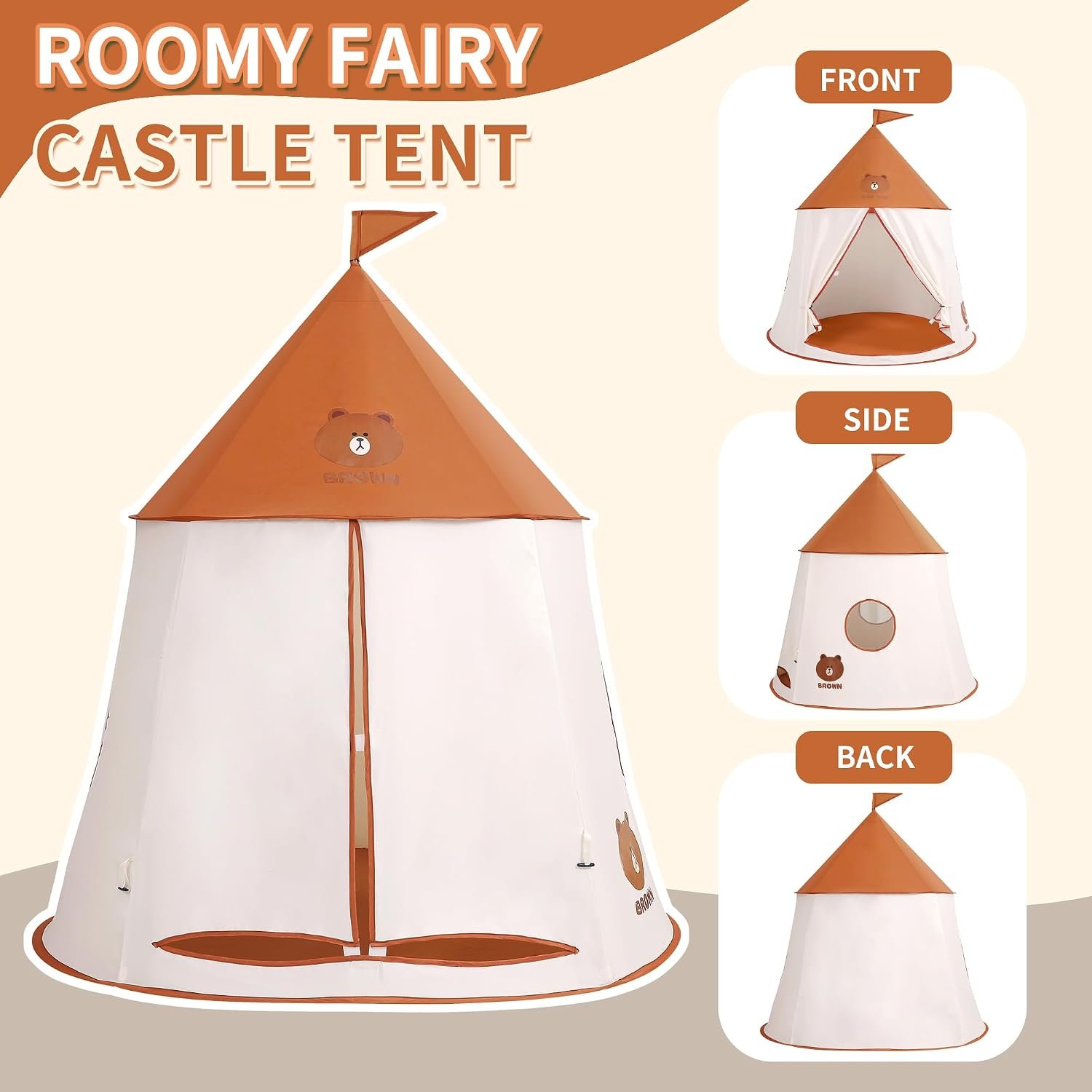
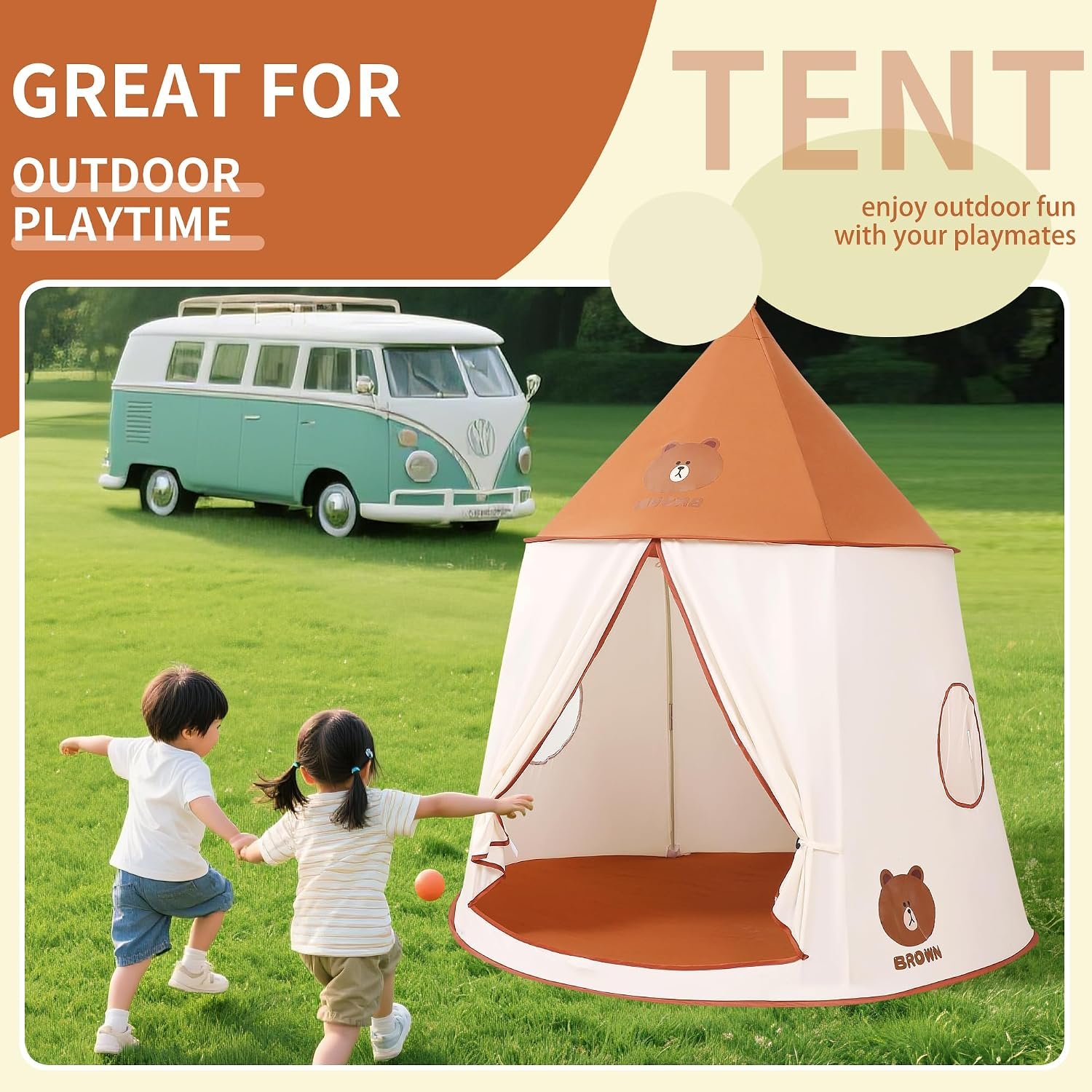
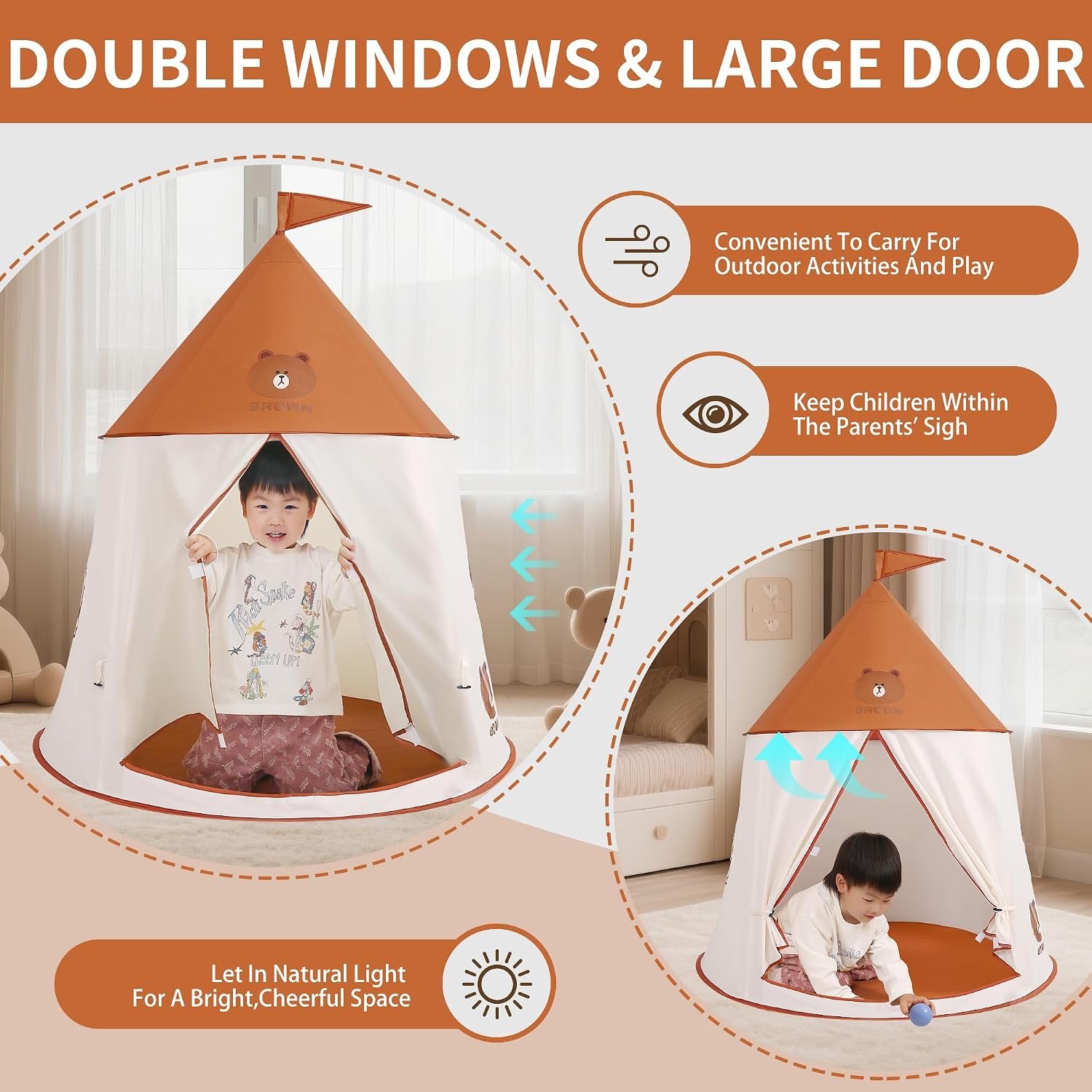
This bear teepee uses that same system. The assembled footprint is 116 cm across and the peak sits at 123 cm, so there is enough height for a young child to stand and enough floor for two or three to sit together. The cover is cotton, which is the part that makes the difference between a den and a camping shelter. Cotton hangs rather than crackles, and it feels soft when a hand or a bare foot brushes it.
The whole product weighs around 1 kg. That sounds trivial until you have moved it from the bedroom to the lounge room for the fourth time in a weekend. Light matters.
Who it suits
The manufacturer recommends three years and up, and that lines up with how children actually use these. Around three is when pretend play really takes off. The tent stops being a thing to crawl into and starts being a shop, a cave, a vet clinic, a spaceship, a library.
It suits a few situations particularly well.
Shared bedrooms, where one child needs somewhere to retreat without leaving the room. A quiet corner in a lounge room, where it works as a reading spot that is separate from the television. Homes with limited storage, since it collapses into a carry bag instead of living in the garage. And households where more than one child wants in at once, which the 116 cm base handles better than the narrower pop-up tunnels you see at the cheap end.
It is less suited to a child under three who is unsupervised, and it is not a garden structure. Use it outdoors on a dry day if you like, but bring it in before dark.
Choosing the right play tent
If you are comparing options, a few things actually matter and a lot of things do not.
Size. This is the one people get wrong most often. Check the base measurement against the floor space you genuinely have free, not the floor space you would have if you tidied up. A 116 cm square needs roughly 1.2 metres clear. Height matters too, since a tent your child cannot stand in gets used less.
Material. Cotton covers feel better and look better in a bedroom than shiny synthetics. They also sit more quietly, which is worth something during a nap.
Frame. Rod count and how the rods join determines stability. A four-rod teepee on a flat floor is steady. On a sloped or very slippery surface it will shift, so a rug underneath is a cheap fix.
Packability. Ask whether a carry bag is included. Tents that do not pack down neatly end up permanently assembled, which is fine if you have the room and annoying if you do not. This one includes the bag.
What is in the box. Here you get the tent cover, four rods, the carry bag and an instruction sheet. Mats, cushions and lights are extras you add yourself.
One thing to be sceptical of across the whole category is the padded floor mat. Many tents advertise one, and it is often a thin sheet that compresses to nothing. A folded quilt or a small rug from home is usually more comfortable, so do not pay extra for the mat alone.
Setting it up and making it feel like somewhere
Assembly is tool-free and takes a few minutes. Lay the cover out, stand the rods, settle the cover over the top and square the base. Children usually want to help with this part, and letting them is fine since there is nothing sharp or heavy involved.
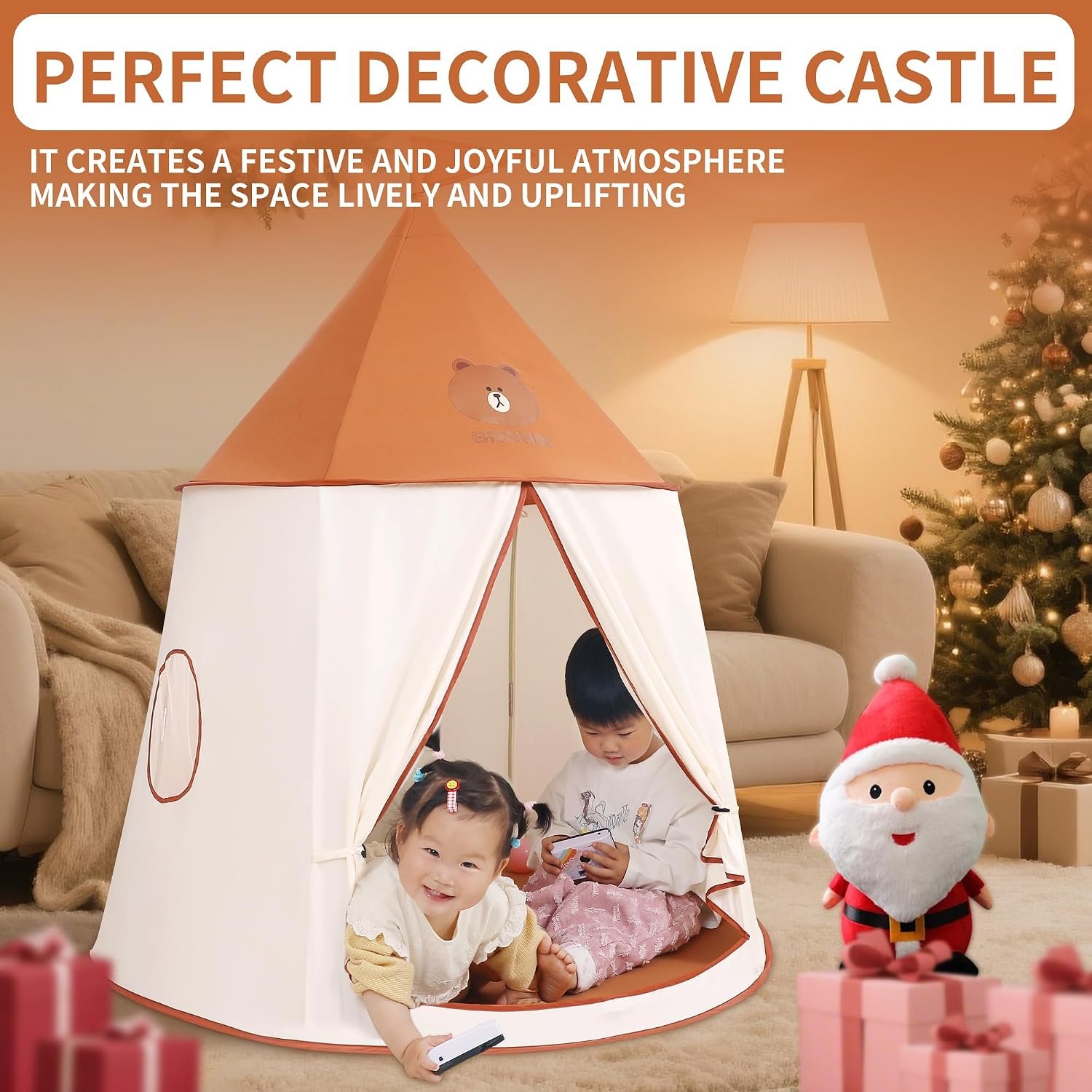
What turns it from a fabric cone into a place they want to be is what goes inside. Two or three cushions. A rug or folded blanket on the floor. A small basket of books. Battery-powered string lights if you want it to glow in the evening, which are cool to the touch and safe near fabric in a way candles and mains-powered globes are not.
Think about placement too. A corner is better than the middle of a room, because corners already feel enclosed. Away from heaters, cords and glass furniture. On carpet if you have it, or on a rug if the floor is timber or tile, since a smooth floor lets the base slide.
Keeping it in good shape
Cotton play tents are easy to look after as long as you stay on top of spills. Spot clean with a damp cloth and a little mild soap, working from the outside of a mark inward so you do not spread it. Let the fabric dry fully before you fold anything, because damp cotton packed in a bag will smell within a week.
Keep it out of long stretches of direct sunlight, which fades printed designs over time. Wipe the rods with a dry cloth when you take it down and check that the joints are still snug. If the cover develops a small tear at a seam, a few stitches early will stop it running.
Store the folded cover and the rods together in the carry bag, in a dry cupboard rather than a damp shed.
The short version
This is a cotton teepee play tent with a brown bear design, measuring 116 x 116 x 123 cm and weighing about 1 kg. It comes with four rods, a carry bag and instructions, assembles without tools in a few minutes, and is recommended for children aged three and up.
It solves a small but genuine problem. Children want their own space, and most houses do not have a spare room to give them. A tent in the corner is the practical answer, and this one is big enough for siblings to share, soft enough to be comfortable, and light enough to move or pack away when the room needs to be something else.
Add a rug and a few cushions, put it somewhere quiet, and let them decide what it is this week.