
The complete guide
Choosing a Christmas Cabin Play Tent That Children Actually Use
The problem with most kids' play gear
Walk into any home with young children and you will find at least one toy that looked brilliant in the box and then sat untouched after week two. It usually fails for one of a few reasons. It was too complicated. It took up too much floor space to leave out. Or it was a single trick toy, fun once, dull by Tuesday.
A play tent avoids most of those traps because it is not really a toy. It is a space. Children fill it with whatever game they are playing that week, which is why a simple fabric cabin tends to outlast flashier presents. A Christmas cabin play tent adds a seasonal hook on top of that, so it feels like an event when it comes out, and it still works the rest of the year as a quiet corner.
The question is not whether children like tents. They do, reliably. The question is whether the particular tent you buy will fit your home, survive the way your child plays, and go away again without a fight when you need the floor back.
What this one actually is
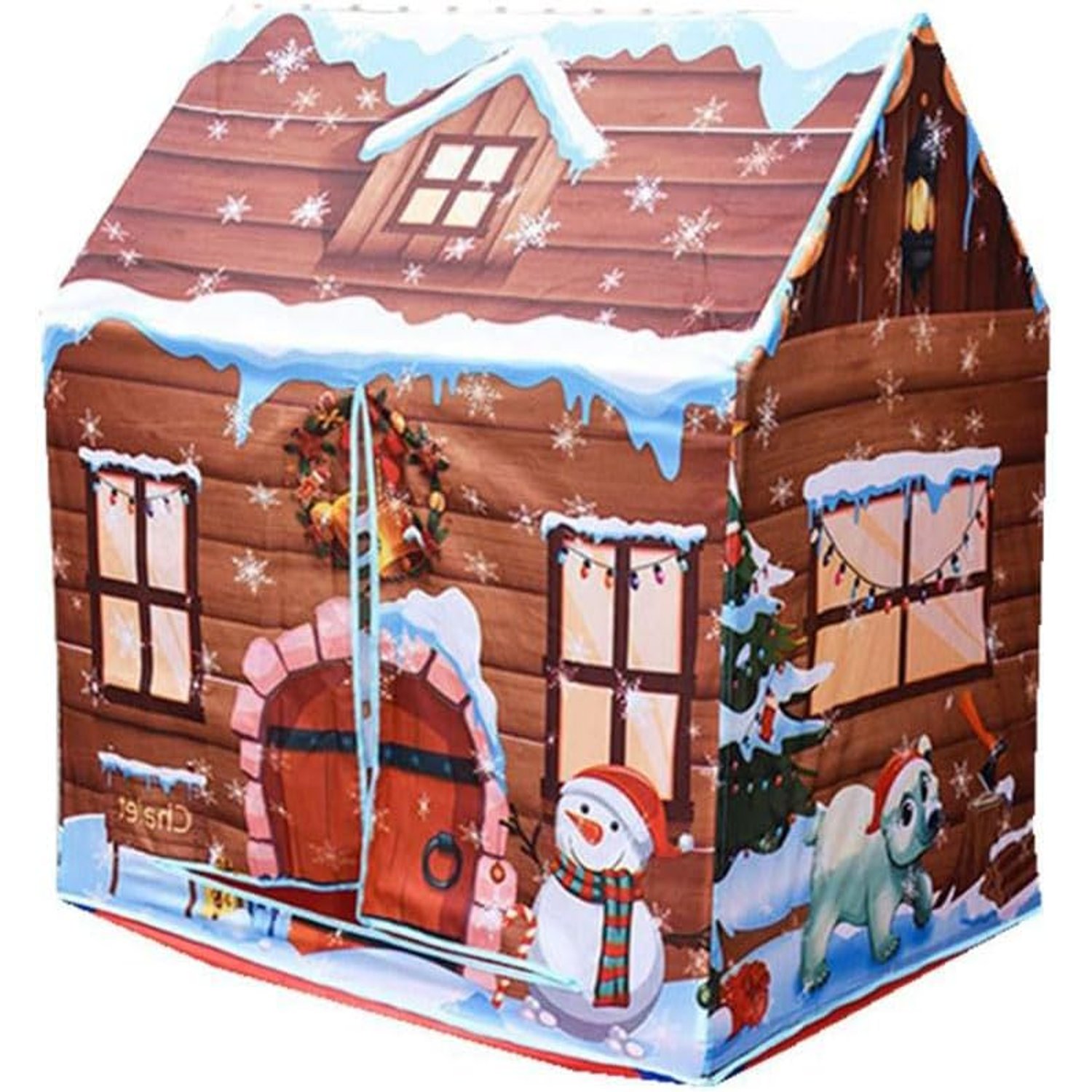
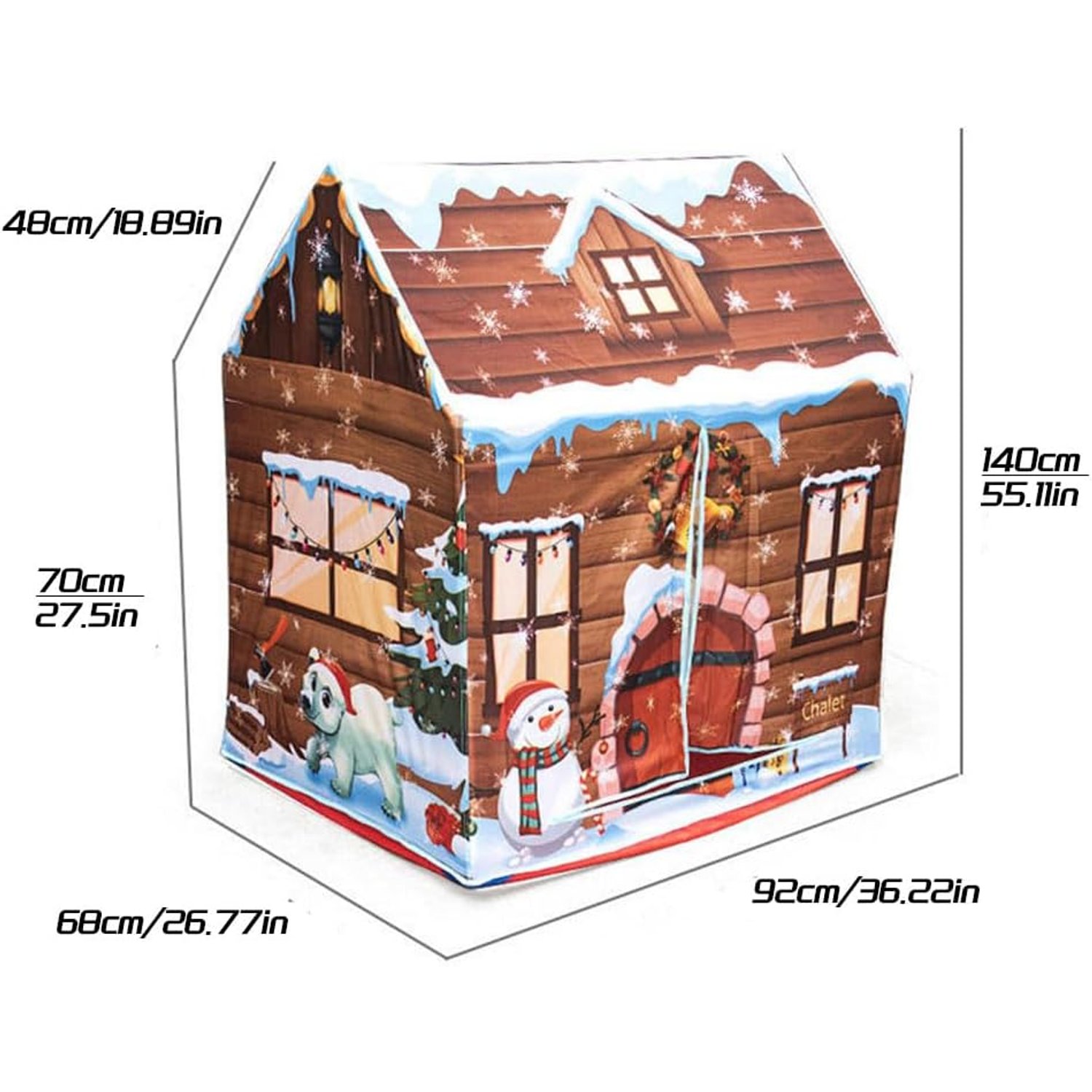
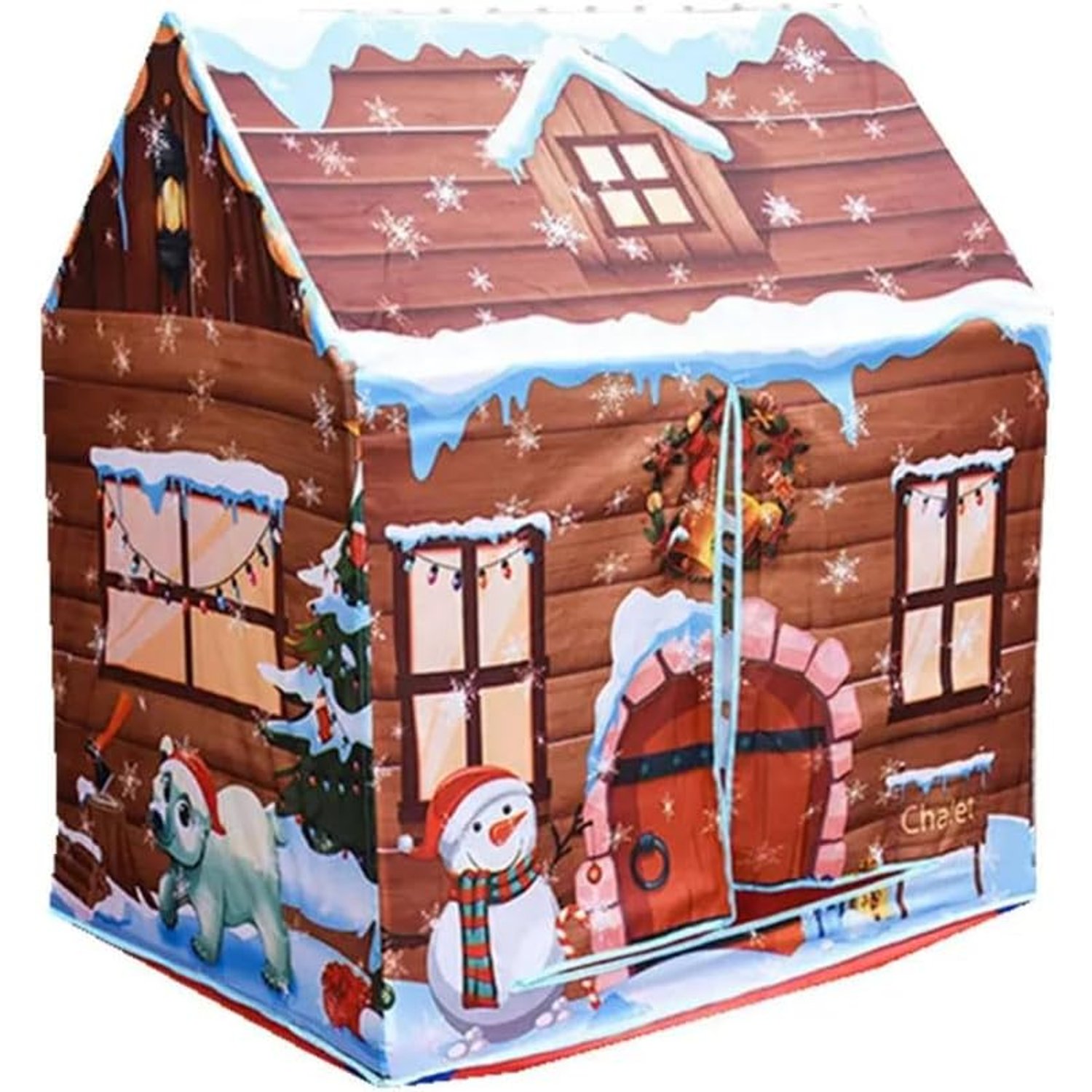
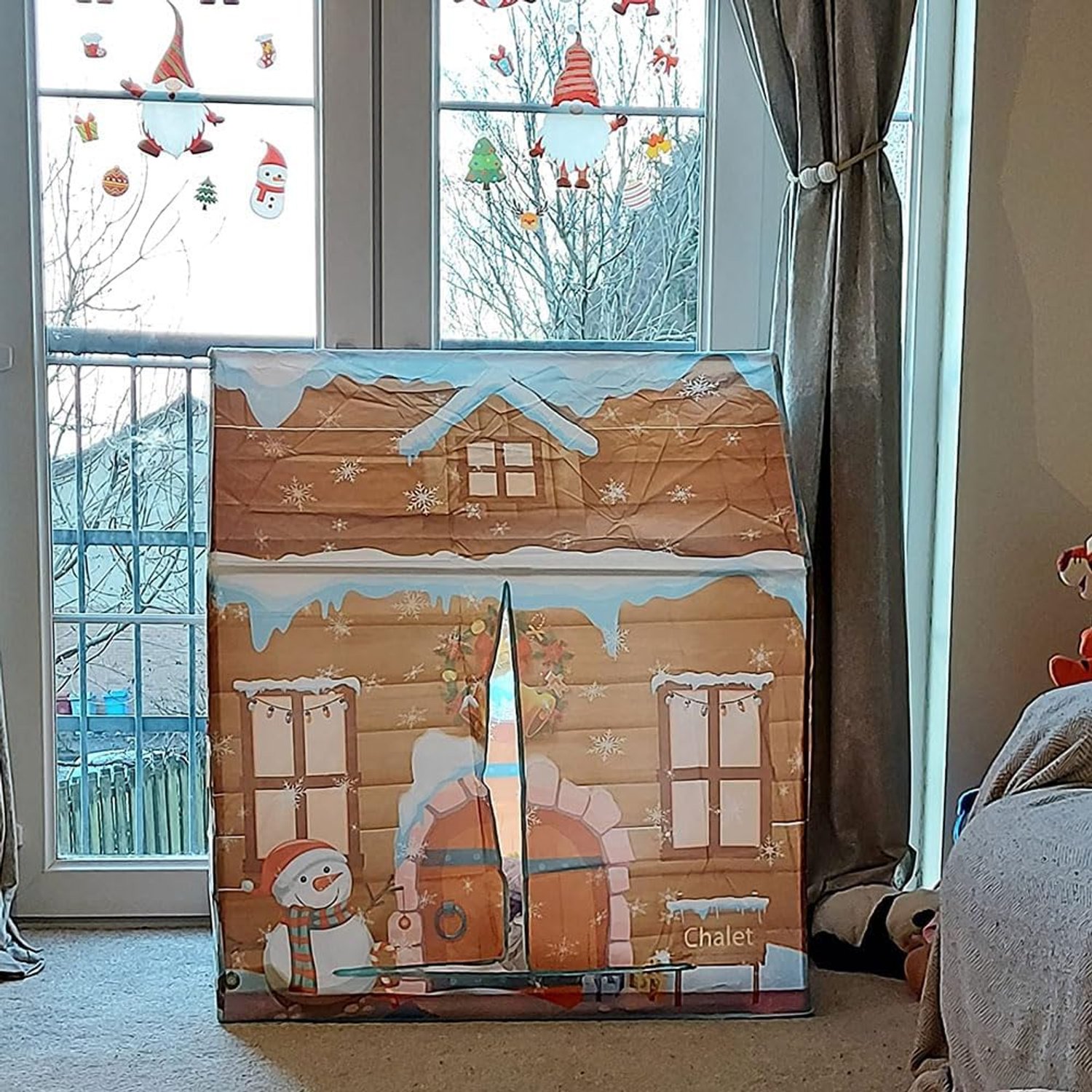
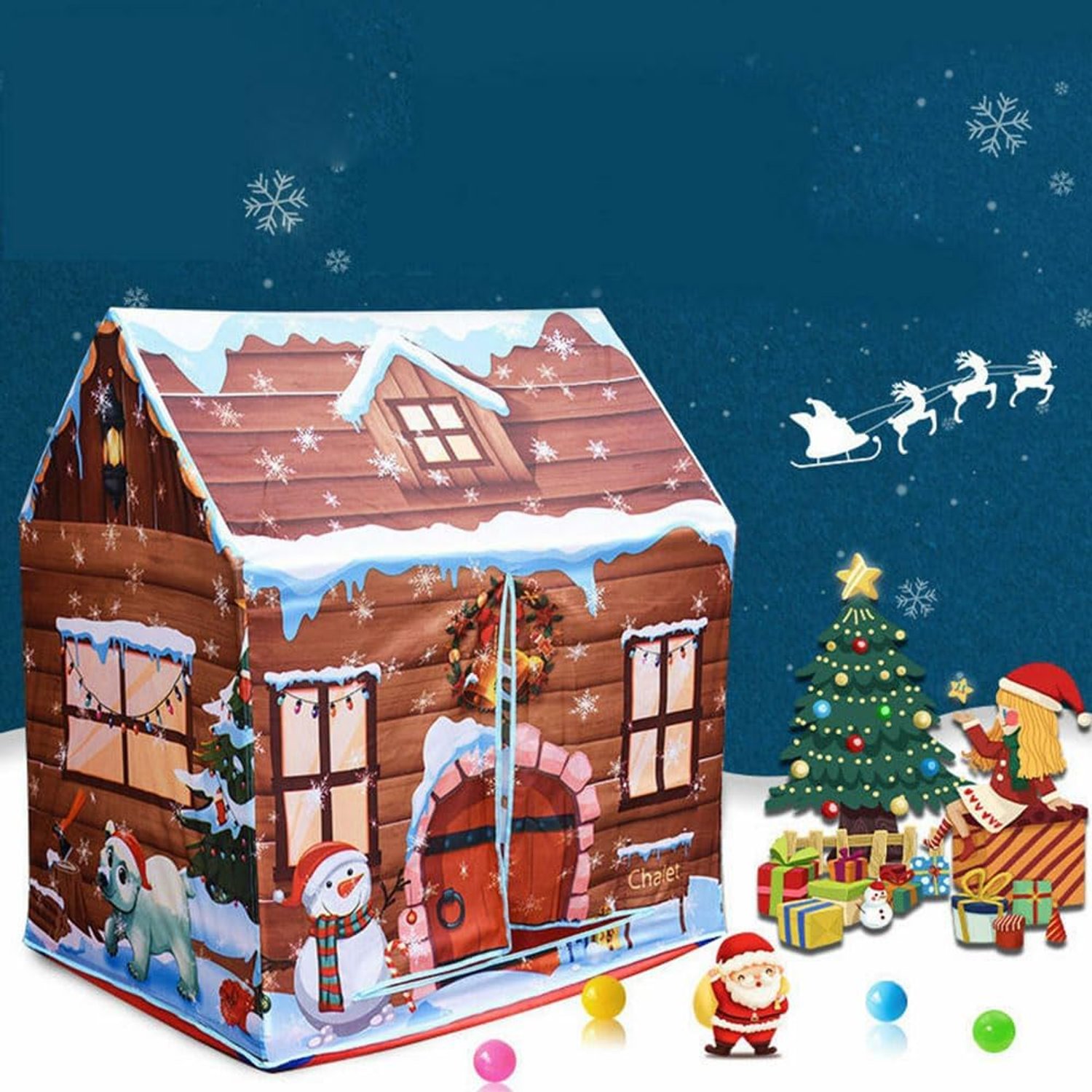
This is a polyester play tent built over a bracket frame, finished in brown with a Christmas cabin look. Set up, it stands 140 cm high with a footprint of 92 cm by 68 cm. In inches that is about 40.55 tall by 35.43 by 26.77. It weighs 499 grams.
Those numbers matter more than the pictures do. The 140 cm height means a small child can stand up inside, which changes how the space feels compared with a low pop up tunnel. The footprint is small enough to sit in a bedroom corner without eating the room. And the weight tells you this is a light fabric structure, not a rigid cubby.
The box contains the bracket, the tent, and a storage bag. Assembly is required. The manufacturer recommends it for ages 3 years and up, and lists the themes as castle, fairy tale, princess, and winter wonderland alongside the Christmas styling.
How a frame and fabric tent works
There are two common ways to build a kids' tent. One is the spring steel pop up, where a coiled hoop snaps the shape open and you twist it back into a flat disc. The other is a frame tent, where separate poles or brackets assemble into a skeleton and the fabric shell goes over the top.
This one is the second kind. That has trade offs worth knowing. A frame tent takes a few minutes to put together instead of a few seconds, so it is less of a grab and go item. In exchange you get a shape that holds properly, corners that stay square, and a structure that does not fight you every time you try to fold it. Anyone who has wrestled a pop up tent back into its sleeve on a windy afternoon knows why that matters.
The fabric is polyester, which is the standard choice for this type of product. It is light, it does not soak up water the way cotton does, and it wipes clean. It is also not armour. Sharp edges, dragged corners, and dog claws can all mark it, so it rewards a bit of care.
Who it suits
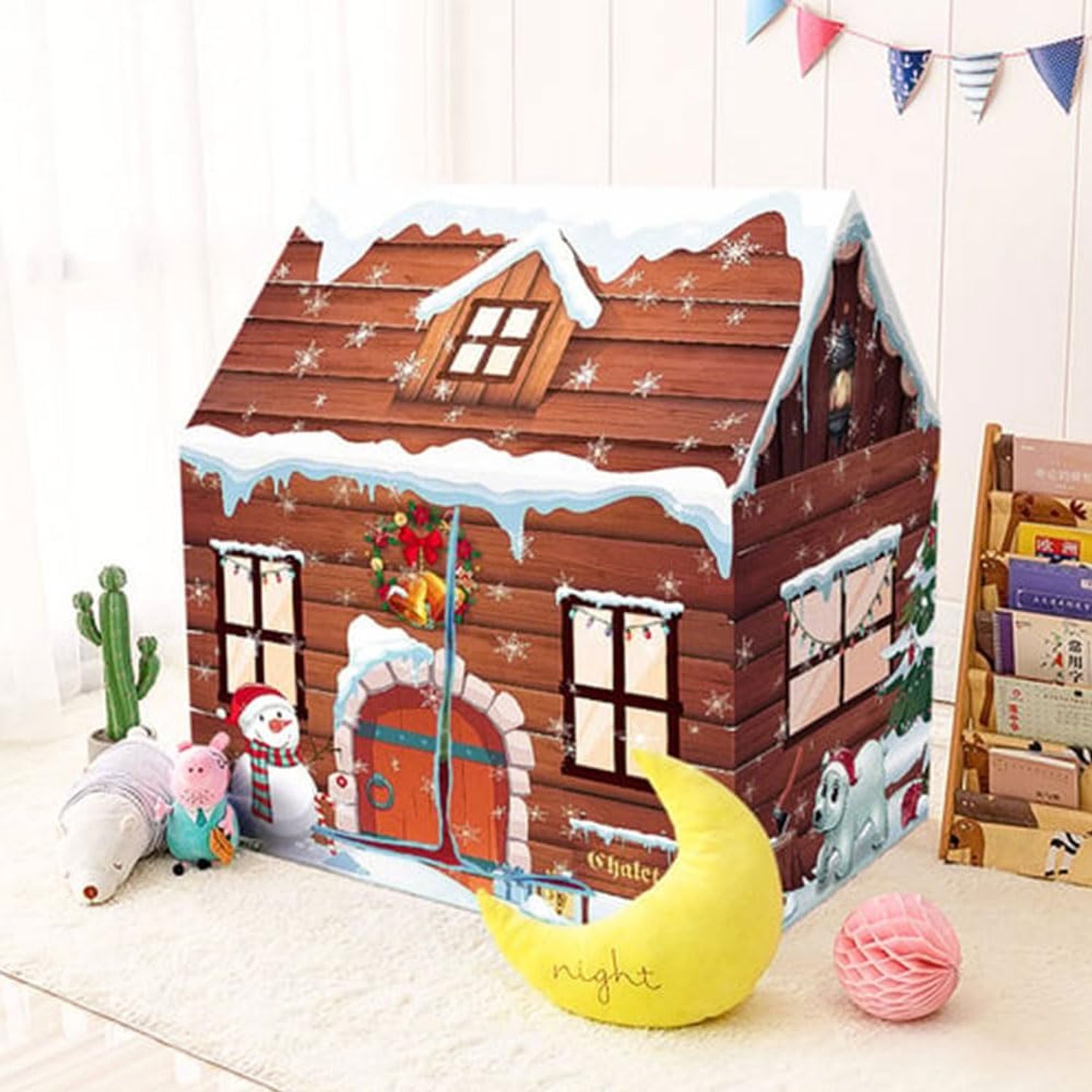
The clearest fit is a household with one or two children aged roughly three to seven who want a space of their own. Two can sit inside together comfortably, so it works for siblings or for a child who has friends over.
It also suits families who move things around. Grandparents' houses, holiday rentals, a cousin's place for Christmas lunch. At under half a kilogram with its own bag, taking it with you is genuinely easy, which is more than you can say for a plastic playhouse.
Parents looking for a calm down corner often land on something like this too. A child who gets overwhelmed in a loud room benefits from a soft bounded space they can choose to enter. The best indoor playhouse for kids in that situation is one with a clear doorway and no latching or locking, so the child can leave whenever they want. This design is open fabric with no fastening doors, which is what you want.
It is less suited to rough outdoor use. It is not a weatherproof camping tent, so a wet lawn or a gusty day is not the right setting.
How to choose the right play tent
Start with the space, not the style. Measure the spot where it will actually live, including the height if it is going under a sloped ceiling or a loft bed. A tent that has to be dismantled every evening because it blocks a doorway will stop being used by February.
Next, think about who is going in. If you have two children who always play together, check the floor area rather than the height. A tall narrow tent looks impressive but can be cramped for two. This one is a reasonable compromise at 92 by 68 cm.
Think about storage honestly. The best pop up play tent for one family is the worst for another, purely because of where it goes when it is packed away. Ask yourself where the bag will live. If the answer is a cupboard shelf, a flat folding tent is the right call. If you have no storage at all, a tent that stays up permanently is the better plan, and then the look of it matters more.
Finally, consider how long you want the theme to last. A heavily Christmas specific design can feel out of place in March. A cabin shape in a warm neutral brown is easier to live with year round, which is part of why this style works. Some families still prefer the best winter themed play tent purely as a seasonal decoration and store it with the tree ornaments. Both approaches are fine, just decide which one you are before you buy.
Setting it up and keeping it going
The first assembly is the slow one. Lay the bracket pieces out, work out the order, then fit the shell. After that, most people can do it from memory in a couple of minutes. Take a photo of the assembled frame the first time if you think you will forget.
Place it away from heaters, radiators, fireplaces, and candles. Polyester and heat sources are a bad combination. If you want light inside, use battery powered LED fairy lights that stay cool. Nothing with a bulb that warms up, and nothing with a mains cable trailing into a space where a child is rolling around.
For cleaning, a damp cloth with a little mild soap handles almost everything. Let it dry fully in the air afterwards. Do not machine wash it, do not bleach it, do not iron it, and do not put it in a dryer. Those shortcuts tend to end with warped panels or stressed seams.
When the season ends, make absolutely sure it is dry before it goes in the bag. Fabric packed away damp can develop a musty smell that is hard to shift. A dry cupboard is better than a garage or a shed where damp creeps in.
Small things that make a big difference
Put something soft underneath. A folded blanket or a small rug turns a hard floor into somewhere a child will actually stay for half an hour, and it insulates against cold tiles.
Let the child own the inside. Cushions, a torch, a favourite soft toy, maybe a book basket. The tent is a shell, and the stuff inside is what makes it a destination.
Keep the doorway clear. A tent shoved behind an armchair gets forgotten. Put it somewhere the child walks past.
The short version
This is a light polyester play tent on a bracket frame, 92 by 68 by 140 cm, weighing 499 grams, with a Christmas cabin look that doubles as a general purpose playhouse. It comes with a storage bag, needs assembly, and is recommended for ages three and up. It folds flat when you are done.
Buy it if you want a seasonal gift that keeps working after December, if you have a corner roughly a metre square to spare, and if you value something you can pack down and carry. Look elsewhere if you need a weatherproof outdoor structure or a tent big enough for three or more children at once.
For most families with young kids, a simple fabric cabin earns its place. It is not complicated, which is exactly why it gets used.