


The complete guide
Choosing a Kids Play Tent That Actually Gets Used
The problem with hideouts
Most children go through a phase of building forts. The cushions come off the sofa, chairs get moved, and a sheet goes over the top with something heavy holding the corners. It is good play. It is also a daily rebuild, it blocks the hallway, and somebody always ends up stepping on a corner and bringing the whole thing down.
A play tent solves the practical side of that without taking the fun out of it. The structure already exists, so the child spends their energy on the story rather than on engineering. And because it folds away, you are not handing over a permanent chunk of your lounge room.
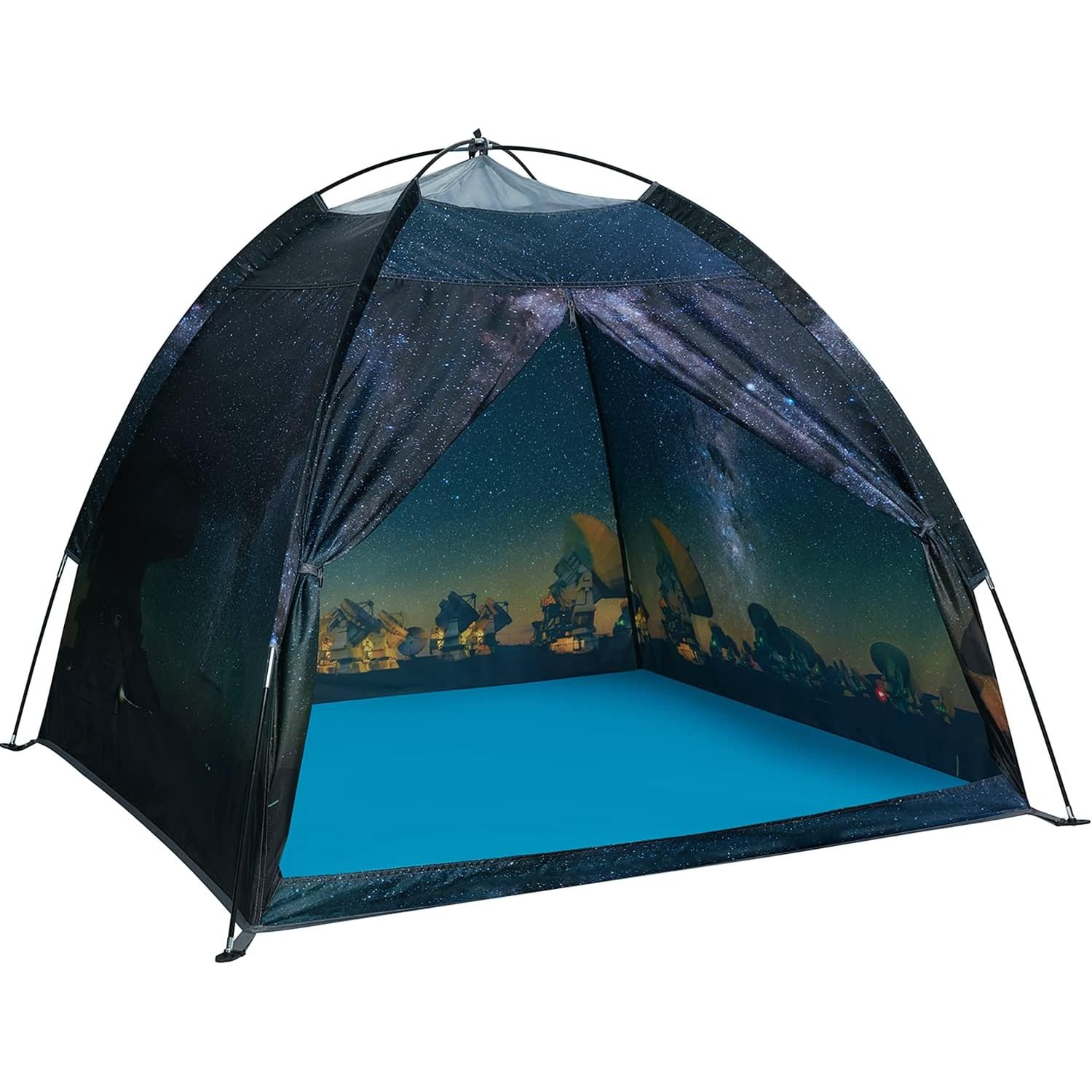
The Galaxy Dome Play Tent takes the dome approach, which is a shape that works well for small spaces. A dome has no sharp corners, holds itself up with two crossed poles, and makes better use of its footprint than a square tent of the same width. At 119.4 cm across and 109.2 cm tall, it is big enough for a few children to sit in together but small enough to fit in a bedroom corner.
How a pop up dome tent works
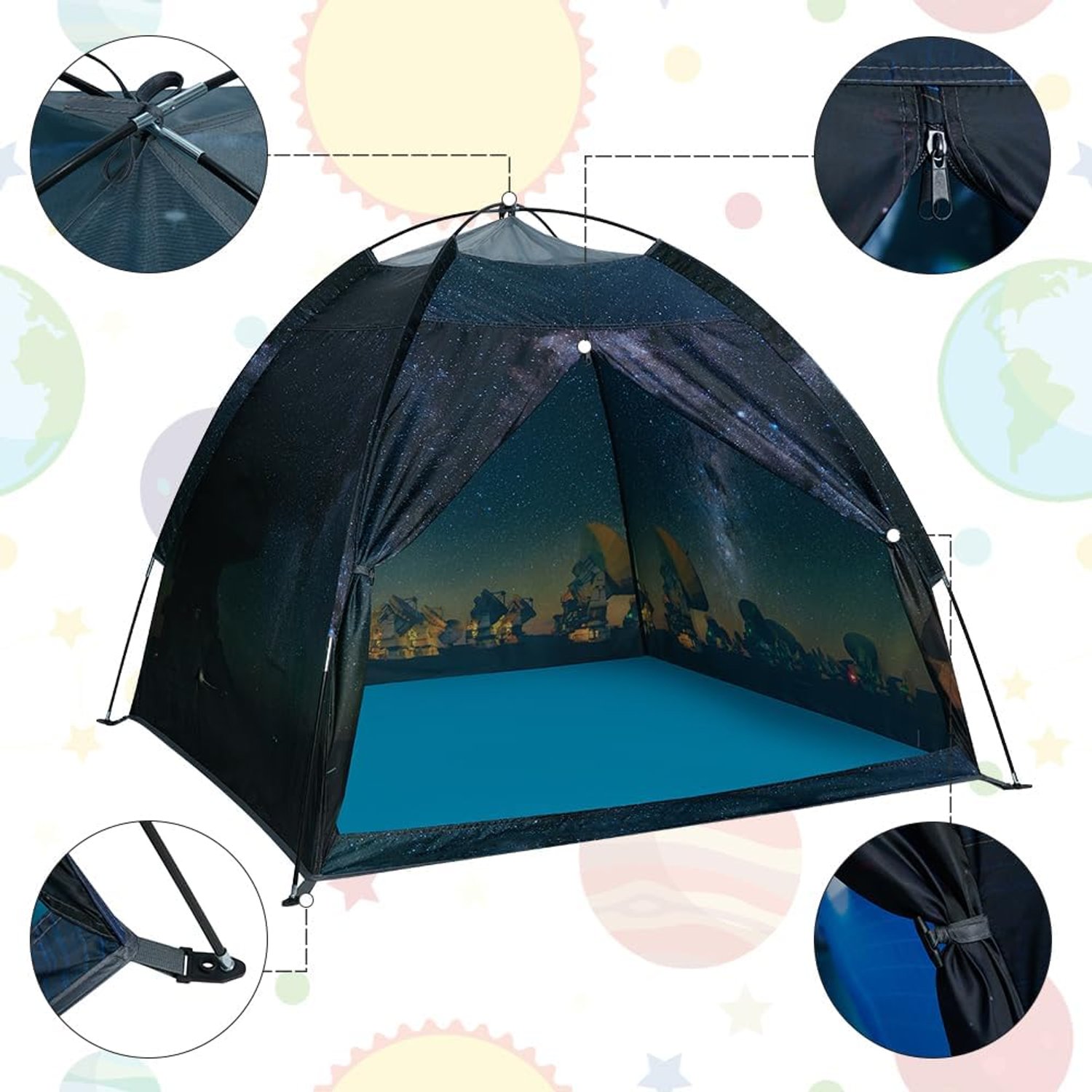
The frame is two metal poles that run in sleeves across the top of the tent and cross at the peak. Inside each pole is a length of elastic shock cord. When you shake the folded pole out, the cord pulls the sections together and they click into line almost by themselves. You feed the assembled pole through its sleeve, seat the ends, and the fabric lifts into a dome.
That is the whole mechanism. No tools, no screws, no instructions that take twenty minutes to decode. The first attempt might take five minutes while you work out which sleeve goes where. After that it is quick enough to set up on a whim.
The reverse works the same way. Pull the pole ends free, slide the poles out, let them collapse, fold the shell and put it all in the carry bag. The packed tent weighs 0.85 kg in total, which is light enough that a seven or eight year old can carry their own tent to the park.
What to look at in the fabric
Two things matter in a play tent shell, and they are strength and airflow.
Strength comes down to the material and the stitching. This tent uses polyester with double-stitched seams. Seams are where play tents fail, because a child grabbing the doorway to haul themselves in puts all their weight on one small section of thread. A doubled seam spreads that load. Polyester itself holds up well to repeated folding, which single-layer cotton sheeting does not.
Airflow matters more than people expect. A sealed fabric box with a child inside gets warm and close very quickly, especially in a sunny room. This design uses mesh panels in the polyester so air keeps moving through. The side benefit is visibility. You can see into the tent from across the room, and the child inside can see out, which helps a lot with younger children who want their own space but still want to know you are there.
Who this suits
The manufacturer puts the age range at 36 months to 12 years, which is broad but fair for a tent of this size. Here is how that tends to play out.
For three to five year olds, it is a playhouse. It becomes a rocket, a cave, a shop, a hospital for soft toys. Supervision still matters at this age, mostly to stop enthusiastic climbing on the frame.
For six to nine year olds, it is usually a retreat. Quiet corner, books, a torch, somewhere to be away from a younger sibling for half an hour. This is where a lot of families get the most value out of a dome tent for children, because that age wants privacy more than props.
At the upper end, around ten to twelve, it is more of an occasional thing. Sleepover setups, holiday use, a den in the backyard on a warm afternoon. The 109.2 cm height means older children sit rather than stand, which is fine for lounging but worth knowing before you buy.
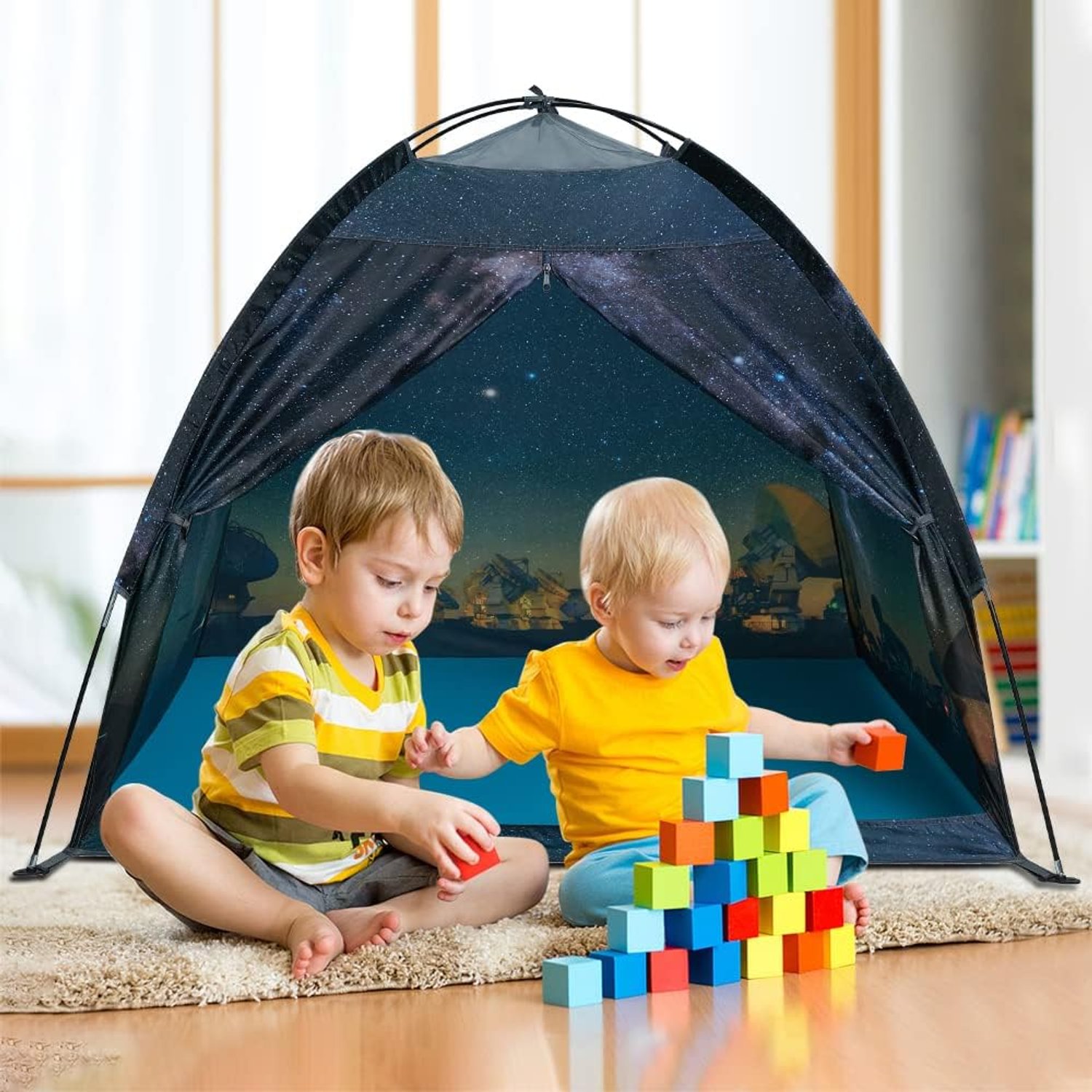
Two to four children fit inside together. Four is a squeeze with toys involved, so think of three as the comfortable number.
Choosing the right spot
Measure first. You need roughly 1.2 metres square of clear floor, and a little extra around the edges so the dome walls are not pushed against a wardrobe or a skirting board. Pressing the fabric flat against furniture puts strain on the pole ends.
Indoors, a bedroom corner or a playroom works best. Keep it away from heaters, radiators and anything with a flame. Lighting is easy, since battery fairy lights or a small LED lantern give the inside a glow without any heat.
Outdoors, flat lawn or a patio in dry, still weather is ideal. No pegs are listed with this set, so it is freestanding by design. On a breezy day, put something of modest weight inside the tent along the edges, or simply bring it in. This is a play tent, not a camping shelter, and a wet night outside will shorten its life.
Looking after it
Care is simple and it is mostly about two habits.
The first is cleaning. Wipe marks off the polyester with a damp cloth and a little mild soap, then let it dry completely in the air before you fold it. Skip the washing machine, the dryer, bleach and the iron. Machine washing can pull at the seams and push the shell out of shape, which is the one thing you cannot easily fix.
The second is packing. Fold the fabric rather than stuffing it, let the poles collapse naturally along the shock cord, and put everything in the bag together. Storing the poles loose is how they end up bent or lost. A bent section changes the tension across the dome and the tent never quite sits right afterward.
Give the stitching a quick look every month or so. Catching a loose thread early takes thirty seconds with a needle. Catching it late means a tear.
A few things worth knowing before you buy
Assembly is required. That is not a drawback, it is how the tent packs down small, but it is worth saying plainly if you were expecting something that springs open on its own.
No waterproof rating is given for this product, so treat it as dry-weather and indoor gear.
The carry bag is the included component. Pegs, mats and lights are not part of the set, so if you want a soft floor inside, plan on adding a rug or a foam mat yourself.
Country of origin and warranty details are not specified in this record. If either matters to your purchase, ask us before you order and we will tell you what we know.
The short version
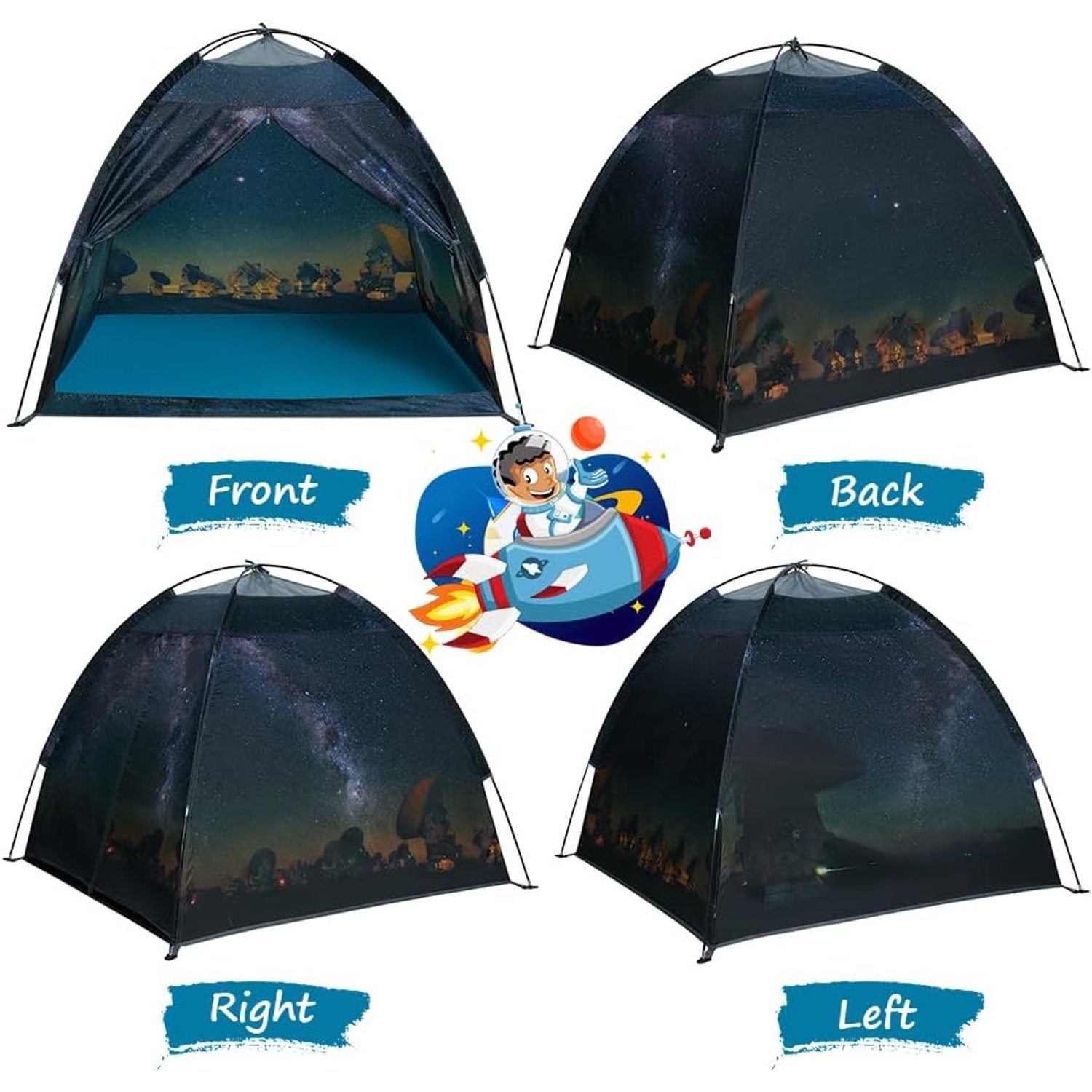
This is a well-sized dome tent with a galaxy print, built from polyester with double stitching on a metal pole frame. It sets up in a few minutes, holds two to four children, measures 119.4 x 119.4 x 109.2 cm, and folds into a 0.85 kg bundle in its own bag.
It suits families who want to give a child their own space without surrendering a room to it. If your child likes space, stories or simply somewhere quiet to sit with a book, this is an easy yes. Measure the corner, clear the floor, and let them get on with it.