
The complete guide
How To Choose A Kids Play Tent That Actually Gets Used
The problem with most play spaces
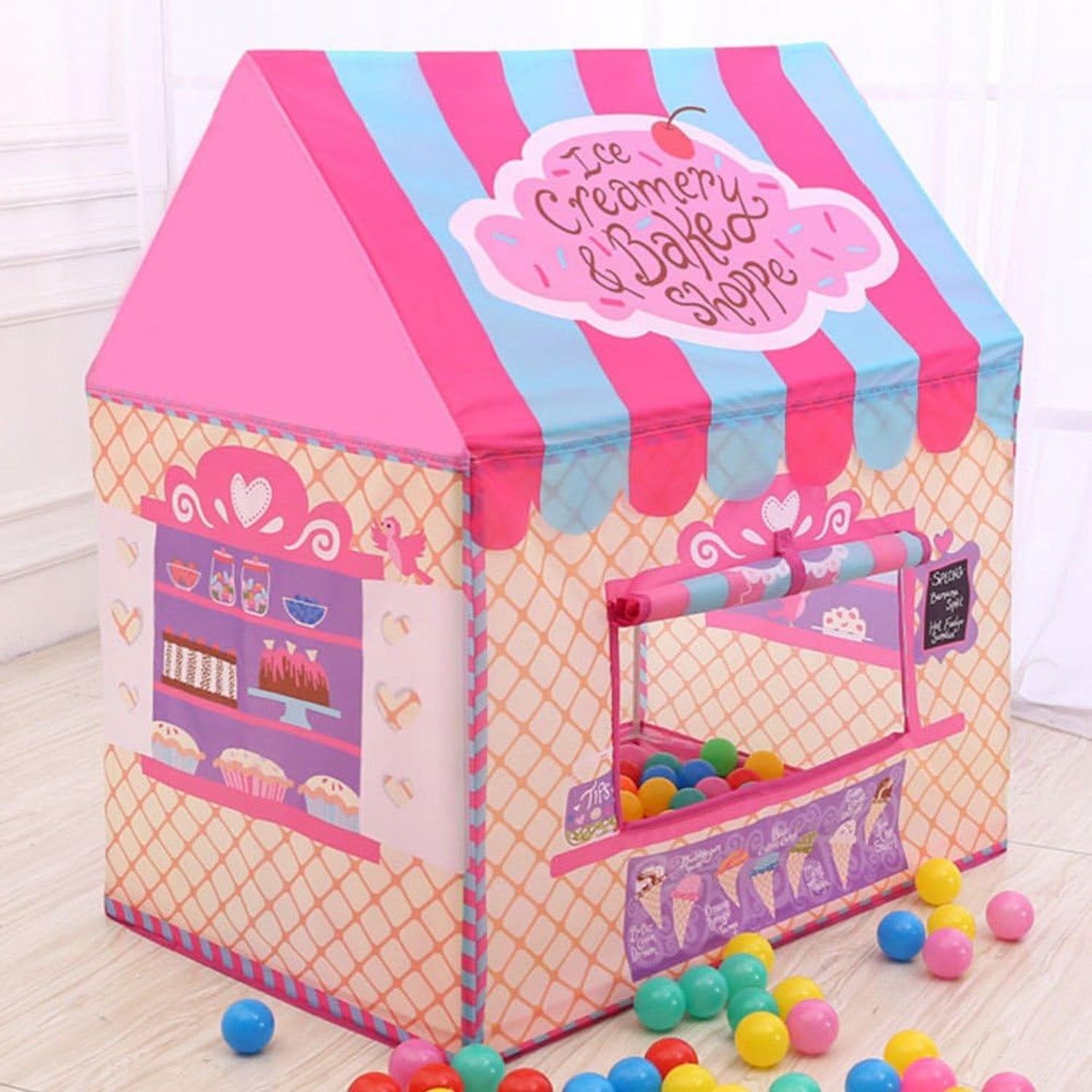
A lot of children's toys arrive with a burst of excitement and then sit in the corner. The ones that keep getting used tend to share a trait: they suggest something to do without needing an adult to explain it. A play tent with a shop front does that. A child looks at the window, decides they are the one serving, and the game starts.
The other common problem is space. Rigid plastic playhouses are brilliant until you realise they live in your lounge room permanently and cannot be moved without three people and a bad back. Fabric tents solve that. They stand when you want them and disappear when you do not.
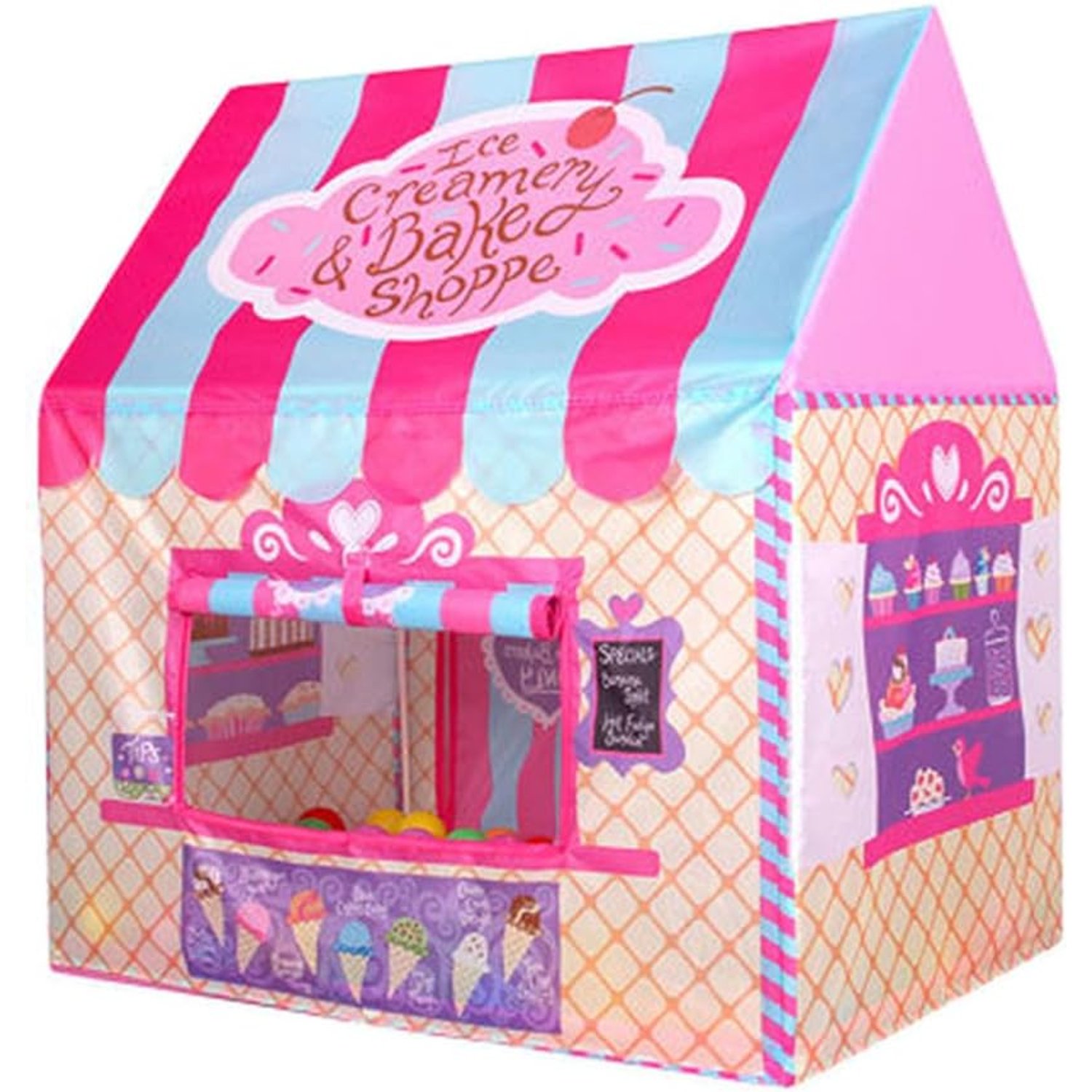
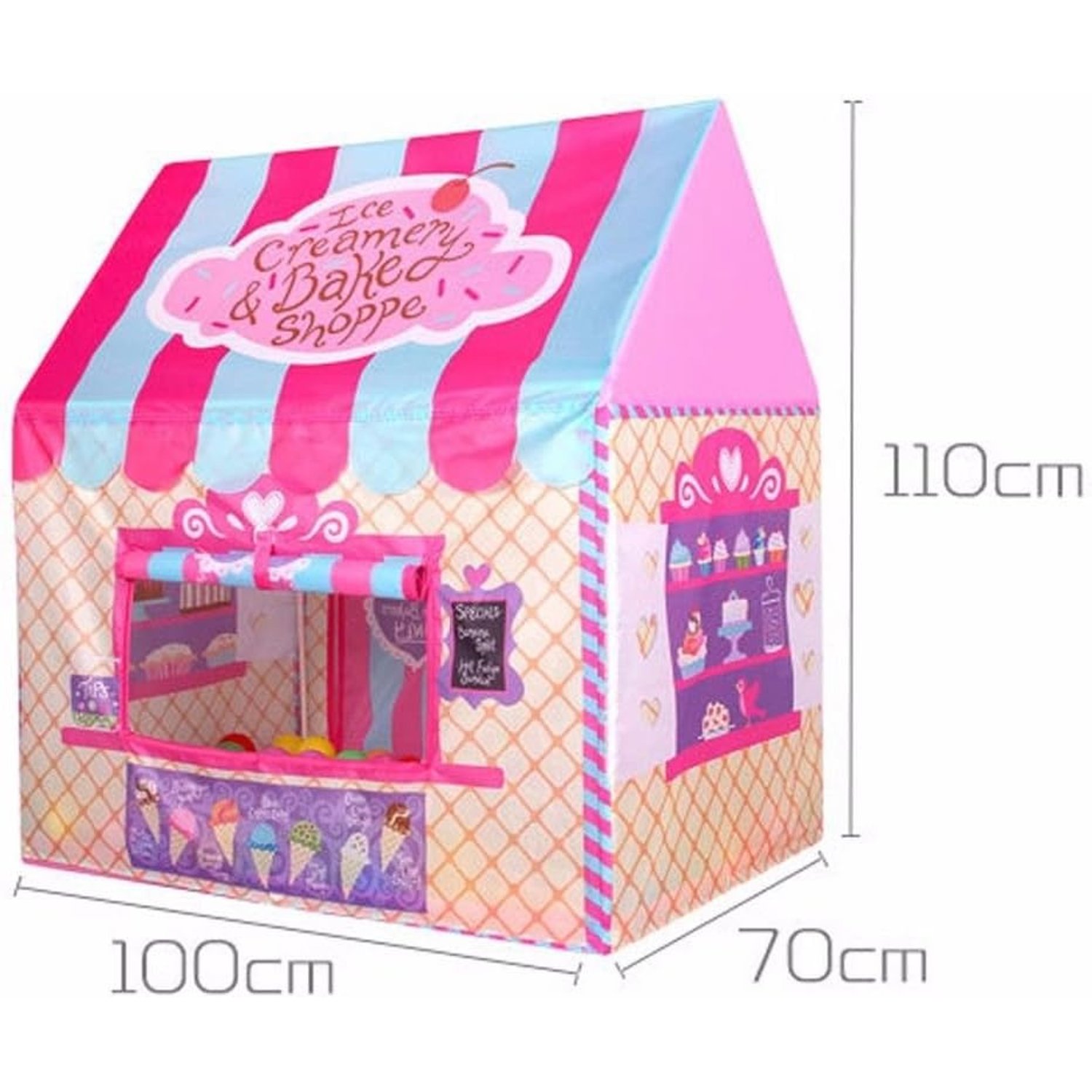
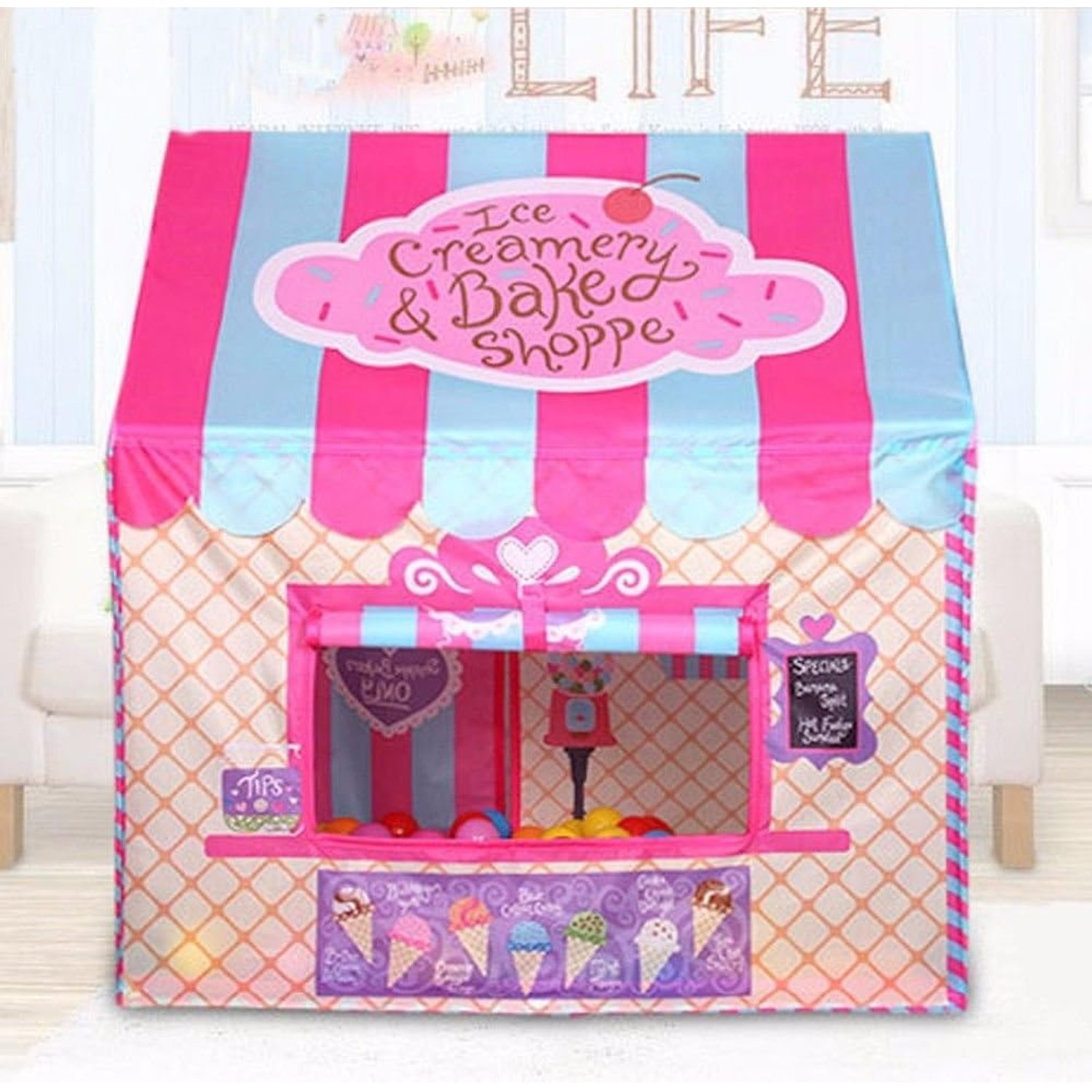
This guide walks through what to look at when you are choosing a kids pretend play tent, using this ice cream shop tent as the working example.
How a fabric play tent works
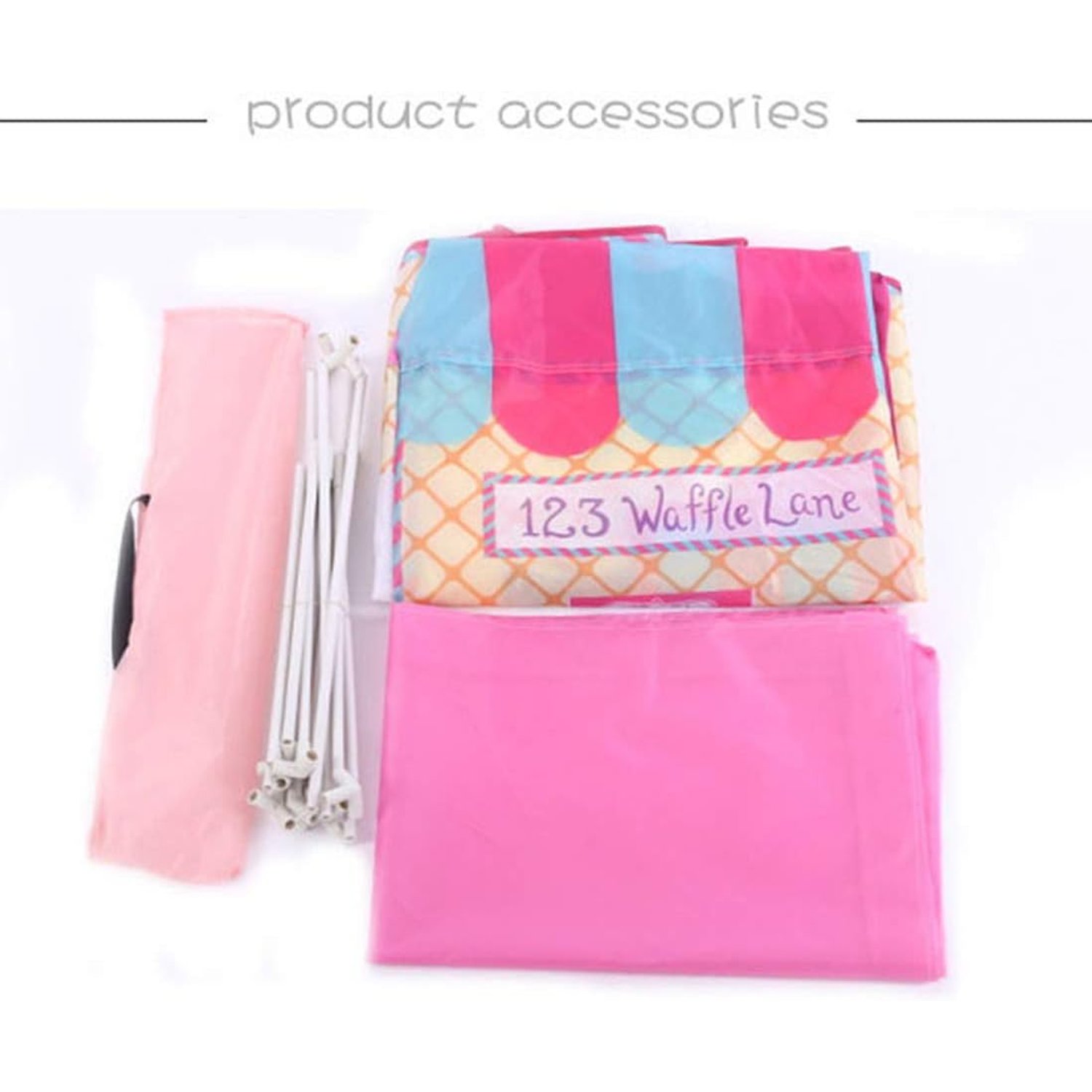
The design is straightforward. A set of poles connects into a frame that holds the shape, and a printed fabric cover slips over the top. In this case the poles are polyvinyl chloride and the cover is polyester. The whole assembled tent weighs 0.9 kg.
That low weight is the point. A child can help move it. You can shift it out of the way with one hand while vacuuming. And when the mood changes from indoor shop to backyard shop, you pick it up and go.
Assembly is a hands-only job. No screws, no glue, no tools listed. The first build takes a few minutes while you work out which pole fits which sleeve. The second build is much quicker. Once you have done it twice, packing down after play stops feeling like a chore.
Who this suits
The manufacturer's recommended range is 36 months to 10 years.
In practice, the sweet spot sits around three to seven. That is the age where pretend play is doing real work. Kids that age are busy sorting out how shops function, what money means, how to ask for something politely and how to wait their turn. A pretend shop gives them a stage to rehearse all of it.
Older children in the eight to ten band tend to use it differently. They might stand outside and run the counter, use it as a base for a longer game, or claim it as a reading corner. The 110 cm height means a tall nine year old will not be standing upright inside, which is worth knowing before you order.
It also suits households that are short on floor space. At 100 cm by 70 cm, this is not a tent that claims half a bedroom.
How to choose between play tents
Start with where it will live. Measure the actual corner you have in mind, then add a bit of clearance so a child can get in and out without knocking a lamp. A tent that needs to be moved every evening gets used less than one with a home.
Then think about the theme. A themed tent is a prompt. Ice cream shop, castle, vet clinic, rocket: each one tells a child what to play. A plain tent is more open ended but needs more imagination to get going. Younger kids usually do better with a clear prompt. If your child already has a favourite pretend game, lean into it.
Check the weight and pack-down. This is the detail people skip and then regret. Something under a kilo is easy to carry and store. Something heavier tends to stay in one spot forever. A foldable kids tent earns its place by being easy to put away.
Look at the frame type. Pole frames like this one need a short assembly step but hold their shape and pack flat. Sprung pop up tents are instant but fold down into a large ring that is awkward to store and fiddly to twist back into shape.
Consider how many children will use it. One child has comfortable room in a 100 cm by 70 cm footprint. Two can share for short stretches. If you have three or more regularly playing together, plan for queueing outside the shop window rather than everyone cramming in, which is how the game usually goes anyway.
Getting the most out of it
The tent on its own is a good start. A few small additions make the play last longer.
Toy ice creams or cones give the shop stock, and you probably already have something in the toy box that works. A handful of play money or buttons turns serving into counting. A small cushion or a folded blanket inside makes it a reading nook once the shop closes.
Rotating where it lives helps too. Set it up in the bedroom for a few weeks, then move it to the lounge room, then take it out to the yard on a dry morning. The change of setting resets the novelty without costing anything.
If you are using it for a party or a group of kids, set a simple turn rule early. One shopkeeper at a time, everyone else queues. It saves arguments and, usefully, it is also how a real shop works.
Care and sensible use
Polyester is easy to look after as long as you do not overdo it. Wipe spills with a damp cloth and a little mild soap, working from the outside of the mark inwards. Let the fabric dry completely in open air before you fold it. Damp fabric packed into a cupboard is how mildew starts.
Skip the washing machine. The spin cycle is hard on seams and printed graphics. Hand spot cleaning keeps a polyester play tent looking right for much longer.
Store the poles with the cover. A missing pole means no tent, and poles have a habit of migrating under furniture if they are not bundled with the fabric.
A few safety notes worth repeating. Keep it away from heaters, candles, fireplaces and anything with a flame. Do not let children climb on the frame or lean their weight against the poles, because it is built for playing inside rather than hanging off. Set it up on flat ground. And follow the manufacturer's note about supervision for the youngest users.
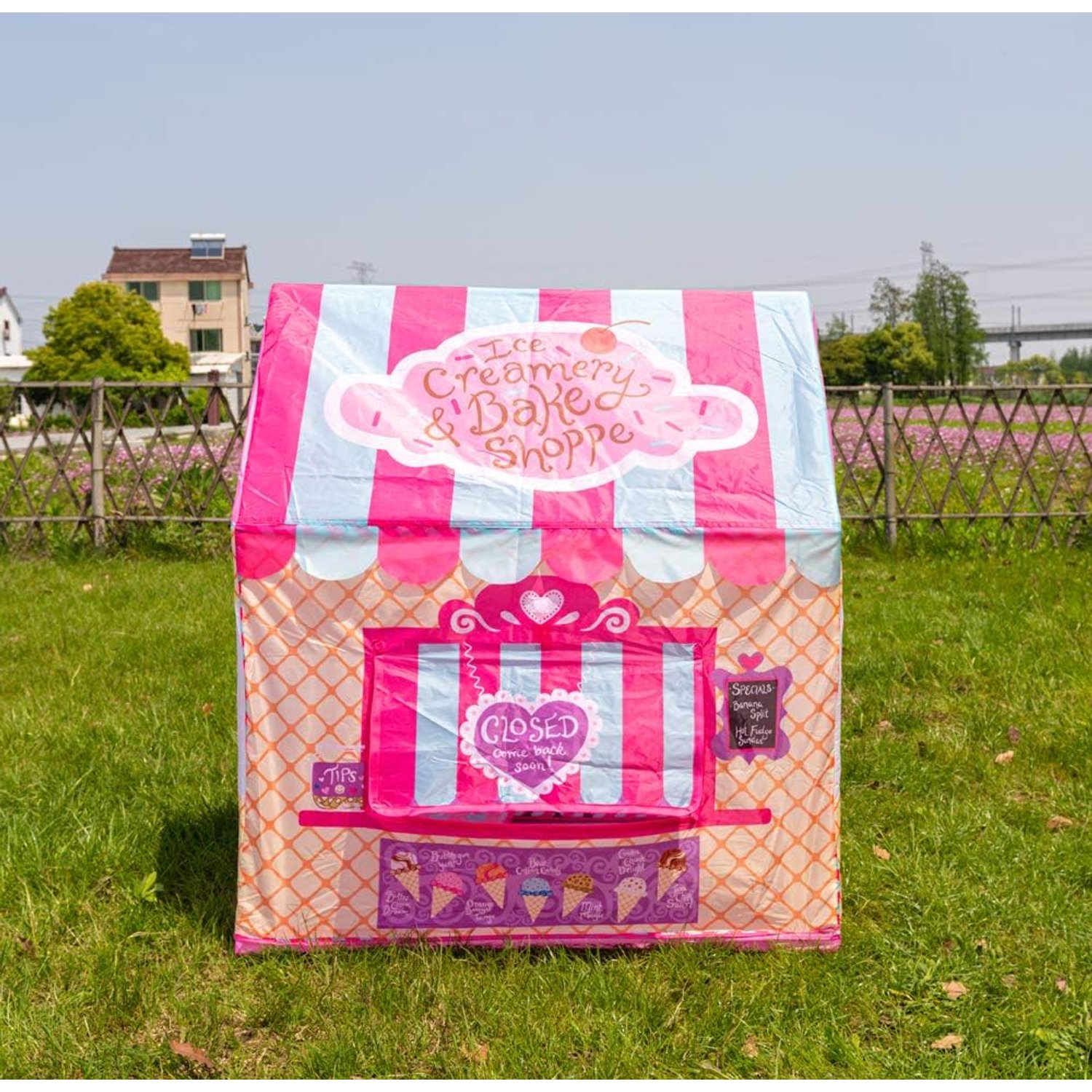
Outdoors, use it on calm, dry days and bring it in afterwards. It is not a camping shelter and it is not built to sit out through weather.
The short version
The Ice Cream Shop Play Tent is a light, simple pretend play structure that does one job well: it gives a child a shop front and a reason to start playing.
It measures 100 cm by 70 cm by 110 cm, weighs 0.9 kg, uses a polyester cover on a polyvinyl chloride frame, and is recommended for ages three to ten. There is a short hands-only assembly step, and it packs flat into a bundle you can store anywhere.
If you want an indoor play tent for toddlers and young children that can move between rooms, go outside on a dry day and then vanish into a cupboard, this is a sensible pick. If you need something a tall nine year old can stand up inside, or a weatherproof outdoor structure, look at a different style.
Still weighing it up? Tell us the room, the age and what your child is into at the moment, and we will give you a straight answer.