


The complete guide
How to Choose a Kids Play Tent That Actually Gets Used
The problem with most play tents
Plenty of play tents get opened on a birthday, used hard for a week, then quietly folded into the back of a wardrobe. It is rarely the child's fault. Usually the tent was too small to sit up in, too flimsy to lean on, or so fiddly to put back together that nobody bothered after the first collapse.
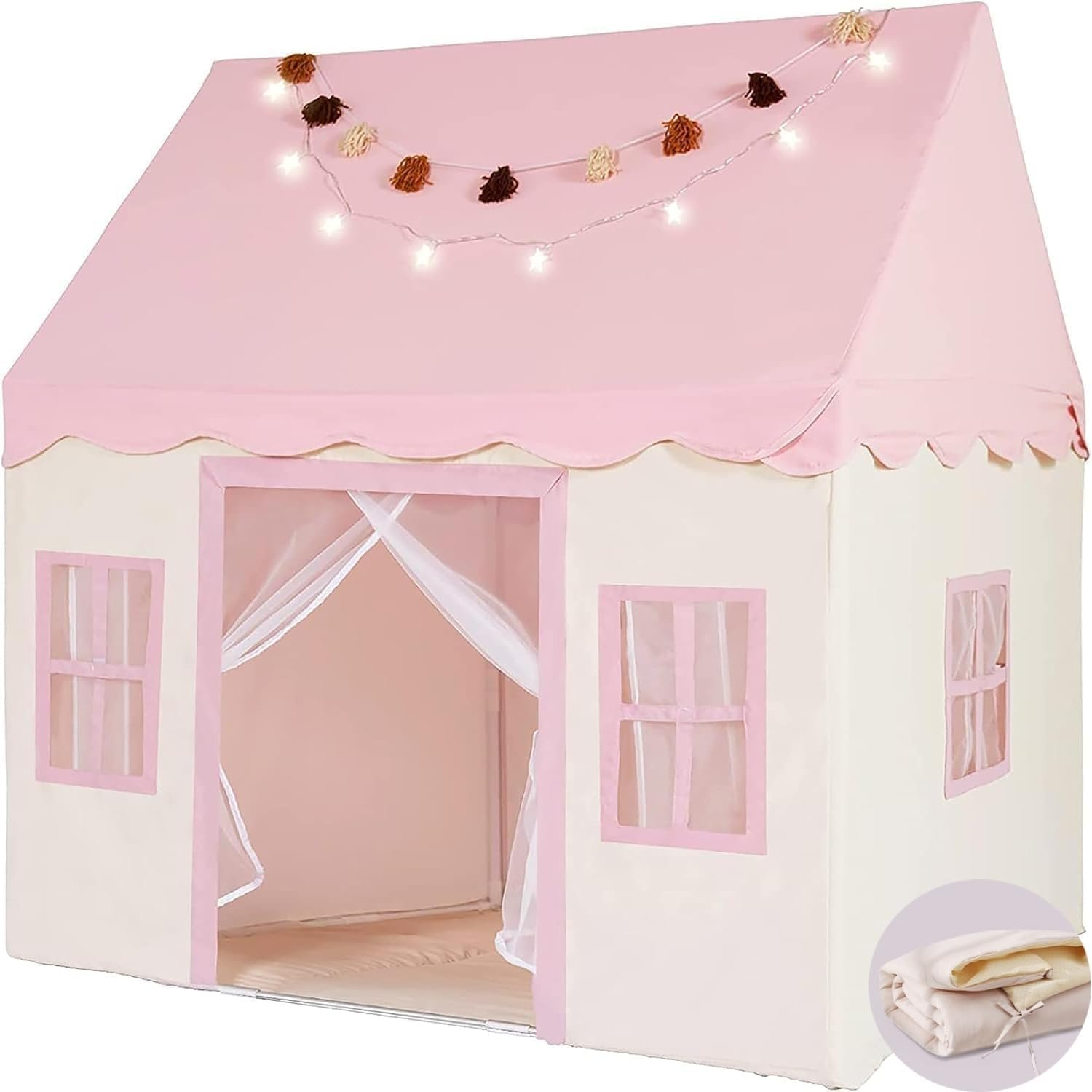
A pink castle playhouse tent with mat solves most of that by being bigger and more solid than the pop-up alternatives. At 102 cm deep, 120 cm wide and 132 cm high, it gives a child somewhere they can actually live for an afternoon, not just poke their head into. That difference in scale is the single biggest factor in whether a tent becomes a daily habit or a one-week novelty.
What you are actually buying
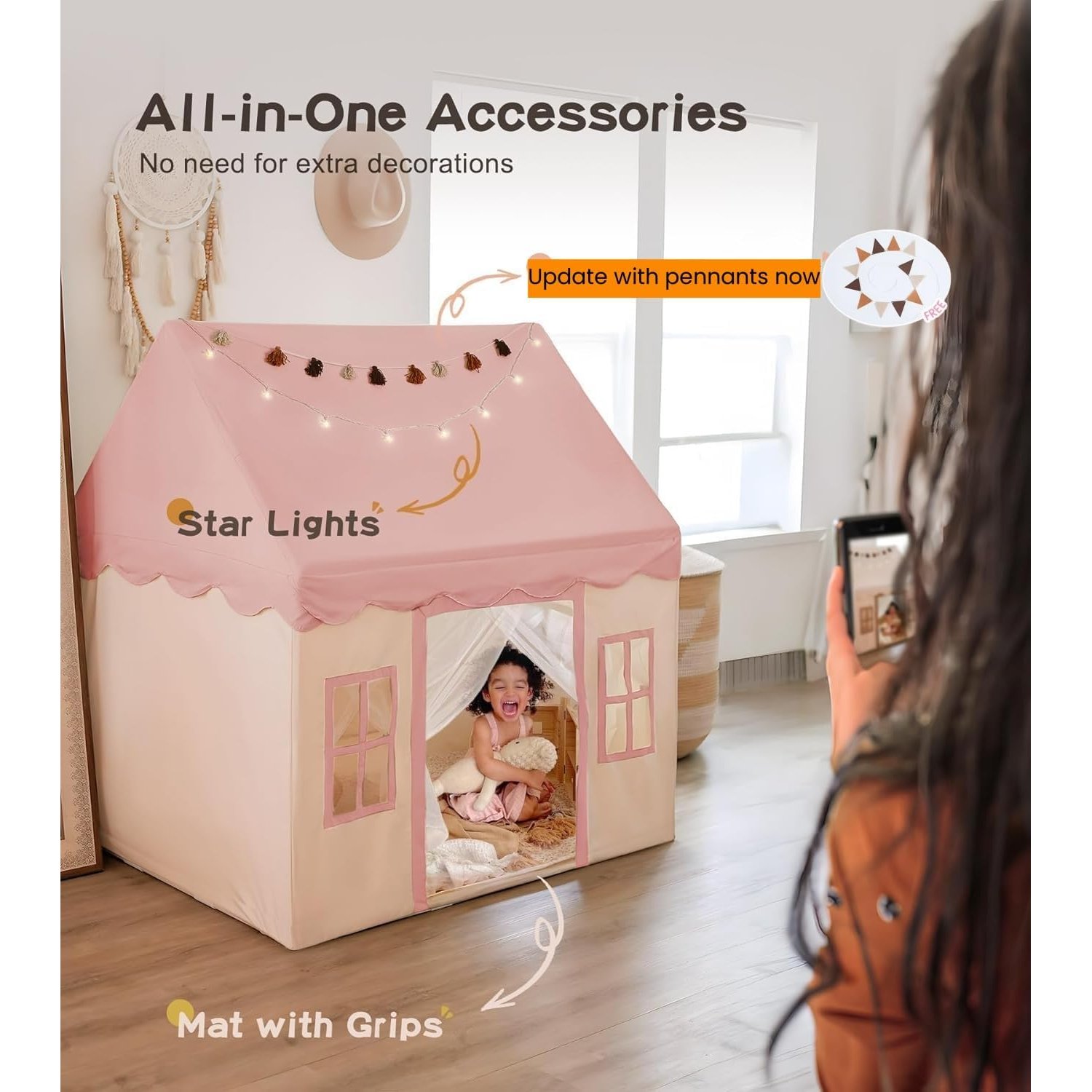
This is a castle themed fabric playhouse built over a structure of steel and fabric, with pine wood listed as the frame material. It comes with a padded mat and an accessory, and assembly is required before first use. The recommended age is three years and up.
The mat matters more than people expect. A tent on bare floorboards or tiles is cold and hard, and children will drift out of it within minutes. With a padded base already included, the inside feels finished from the first day, and you are not left measuring the footprint to find a rug that fits.
The height is the other thing worth noticing. Many young children cannot stand upright in a low dome tent, which means every visit involves crawling in on hands and knees. At 132 cm, most preschoolers can get in and out on their feet. It sounds like a small detail. In practice it is the reason they keep going back.
How a frame tent differs from a pop-up
Pop-up tents use flexible hoops sewn into the fabric. They spring open in seconds, which is great, and they also sag, fold inwards and tip over when a child leans on a wall. They are designed to be temporary.
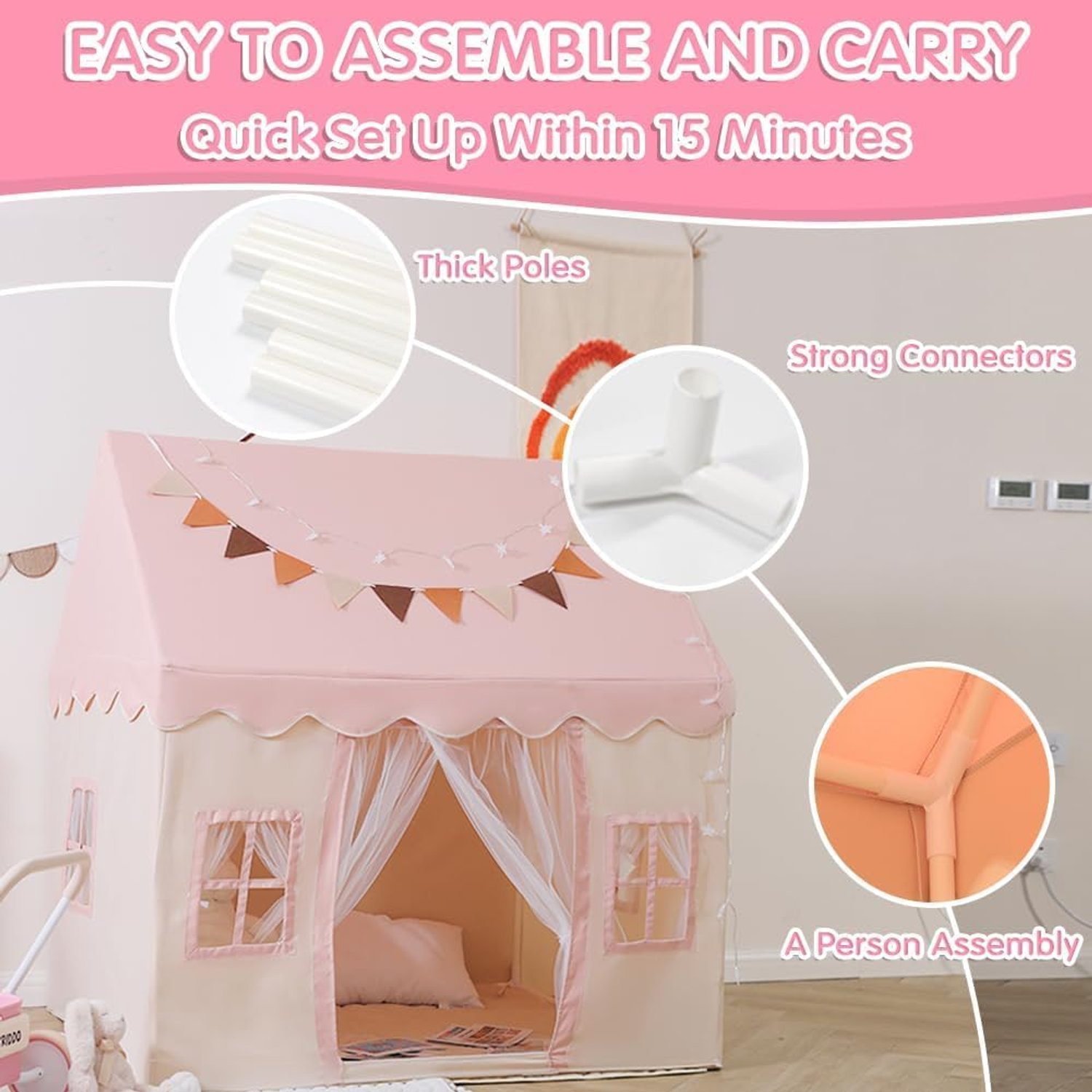
A frame tent works the other way round. You assemble the structure first, then fit the fabric over it. That takes longer the first time, but the result holds its shape. Children can sit against the inside wall without the whole thing folding on top of them, and you can hang a few soft decorations without the roof drooping.
The trade-off is that a frame tent is not something you throw in a bag for the park. It is an indoor piece that stays where you put it. For most families that is exactly right, because the best kids play tent is usually the one that is already standing when the mood strikes.
Finding the right spot in your home
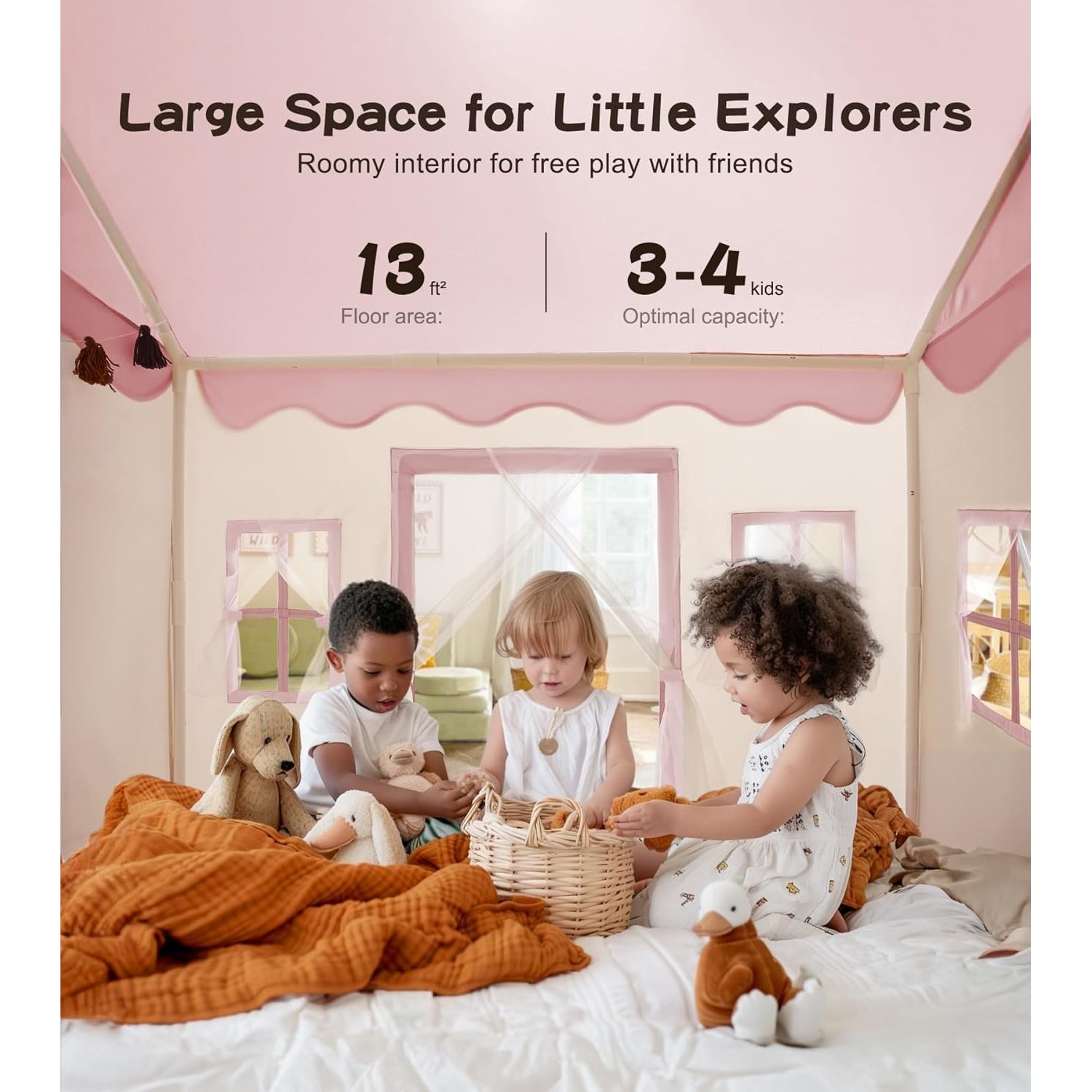
Before anything else, measure. You need a clear floor area of about 102 by 120 cm, plus some walking space at the entrance so the doorway is not blocked by a bed or a chest of drawers.
Corners work well. Two walls take care of two sides, the tent feels tucked in rather than marooned in the middle of the room, and foot traffic goes past rather than through. A bedroom corner opposite the bed is a classic choice. So is the quiet end of a playroom, or a wide landing if you have one.
Watch out for a few things. Sloped ceilings in attic rooms can be a problem at 132 cm. Radiators and heaters should be well clear of the fabric. Windows that get strong afternoon sun will fade any coloured fabric over months, so if you have a choice, keep the tent off the sunniest wall.
Who it suits
The sweet spot is roughly three to seven years old. That is when imaginative play is at its peak and a dedicated den gets used every day. Younger toddlers can enjoy it with an adult around, though the stated guidance starts at three.
It works for solo play and for groups. One child alone will use it as a quiet retreat, somewhere to look at books or play with small figures without being interrupted. Two or three together will use it as a base camp, a shop, a castle under siege or whatever the story of the week demands. The floor area supports both.
It also earns its keep as a calm space. Some children settle better in an enclosed spot where the light is softer and the noise from the rest of the house is a little muffled. A reading nook tent for kids can become the place a child goes when they need ten minutes away from everything. Whether that suits your child is something only you can judge, so introduce it without pressure and let them find their own use for it.
Setting it up well
Give yourself a clear patch of floor and lay all the parts out before you start. Match them against the instructions so you know what you are working with. Frame sections usually push together in a set order, and it is much easier to follow the sequence than to improvise.
Fit the fabric last, working it evenly over the frame rather than pulling hard on one corner. If it feels tight, check that every frame joint is fully seated. Tension problems are almost always a half-connected pole rather than a fabric that is too small.
Once it is up, check the joints again after the first week of heavy use and then occasionally after that. Children lean. Things loosen. Thirty seconds of checking keeps the structure firm.
Keeping it clean
Spot cleaning is the safe default for the canopy. A damp cloth, a little mild soap, then air dry fully before it goes back on the frame. Skip bleach and strong solvents, which can lift the colour out of pink fabric faster than you would think.
The mat takes most of the daily wear. Shake it out regularly, vacuum it on a low setting, and deal with spills quickly rather than letting them soak in. Let it dry flat before it goes back under the tent.
If you pack the tent away for a season, make sure every part is bone dry first, then store it in a dry cupboard rather than a garage or a shed where damp can get in. Keep the frame parts bagged together so nothing wanders off.
A few honest limits
This is an indoor product. A dry, shaded patio on a still afternoon is fine, but leaving it out in weather will shorten its life, and that applies to every fabric playhouse regardless of price.
It is also not climbing equipment. The frame supports fabric, not body weight, so children should play inside it rather than on it. Set that rule early and it tends to stick.
Finally, a few details are simply not published for this item, including weight and exact fabric composition. We would rather say so than fill the gap with guesswork. If one of those details is a dealbreaker for you, get in touch before ordering and we will find out what we can.
The short version
If you want a castle tent for girls or a shared playroom den that will still be in use next year, size and structure are what matter. This one gives you 132 cm of height, a 102 by 120 cm footprint, a steel and fabric build with a pine wood frame material, and a padded mat already in the box. Assembly is required, it is made for indoors, and it is recommended from three years up.
Measure your corner, build it once properly, and then let them get on with it.