


The complete guide
Play Tunnels and Pop-Up Tents - A Parent's Buying Guide
The problem with rainy days
Every parent knows the particular restlessness that sets in when a small child has energy and nowhere to put it. The weather is bad, the park is out, and the toys that normally hold attention get fifteen minutes before the complaints start. What children actually want in that moment is not another thing to sit and look at. They want something to climb into and move through.
That is the gap a play tunnel set fills. It takes the floor you already have and turns it into a route. There is a way in, a way out, a dark bit in the middle and a hideout at the end. For a three year old, that is a destination.
What a five piece set actually gives you
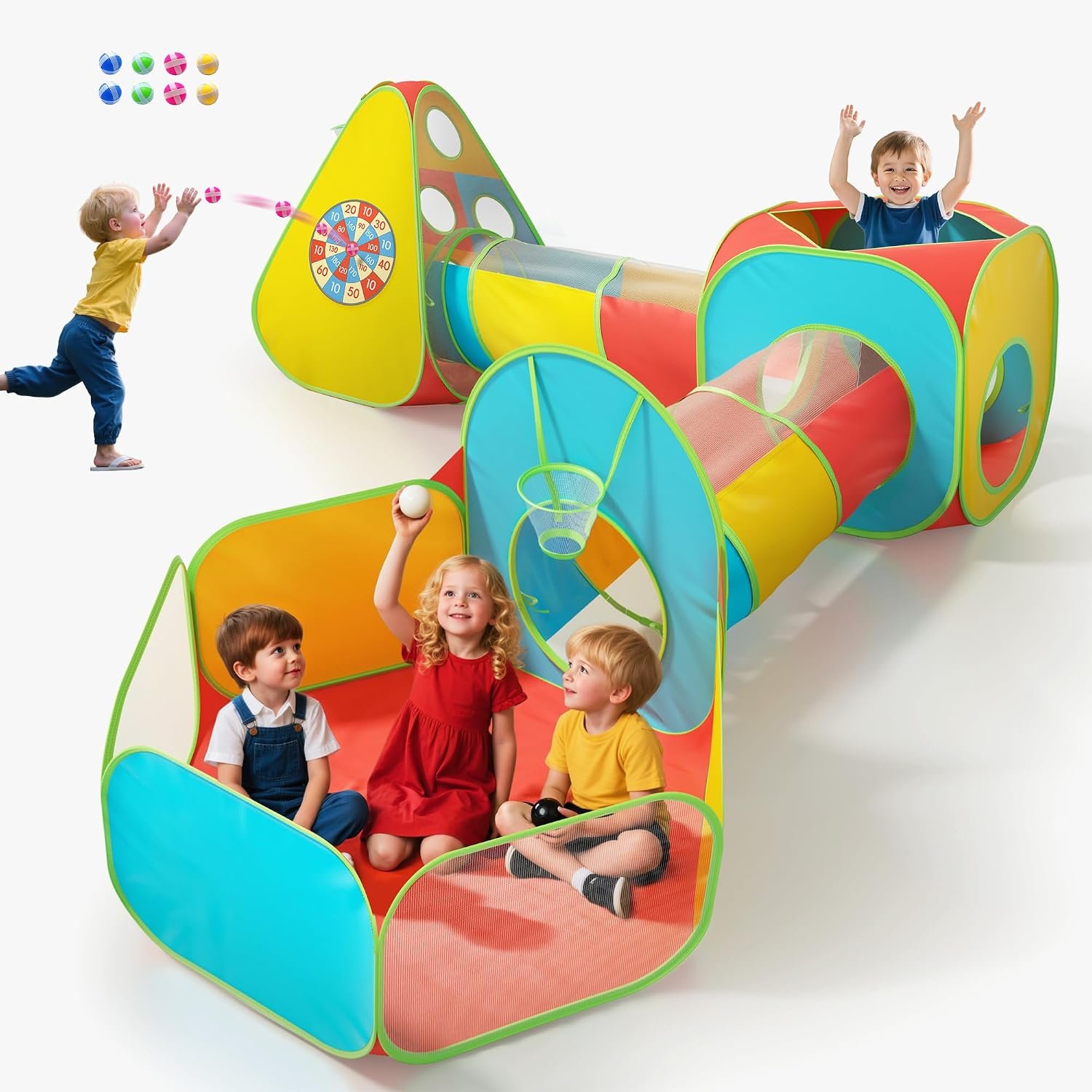
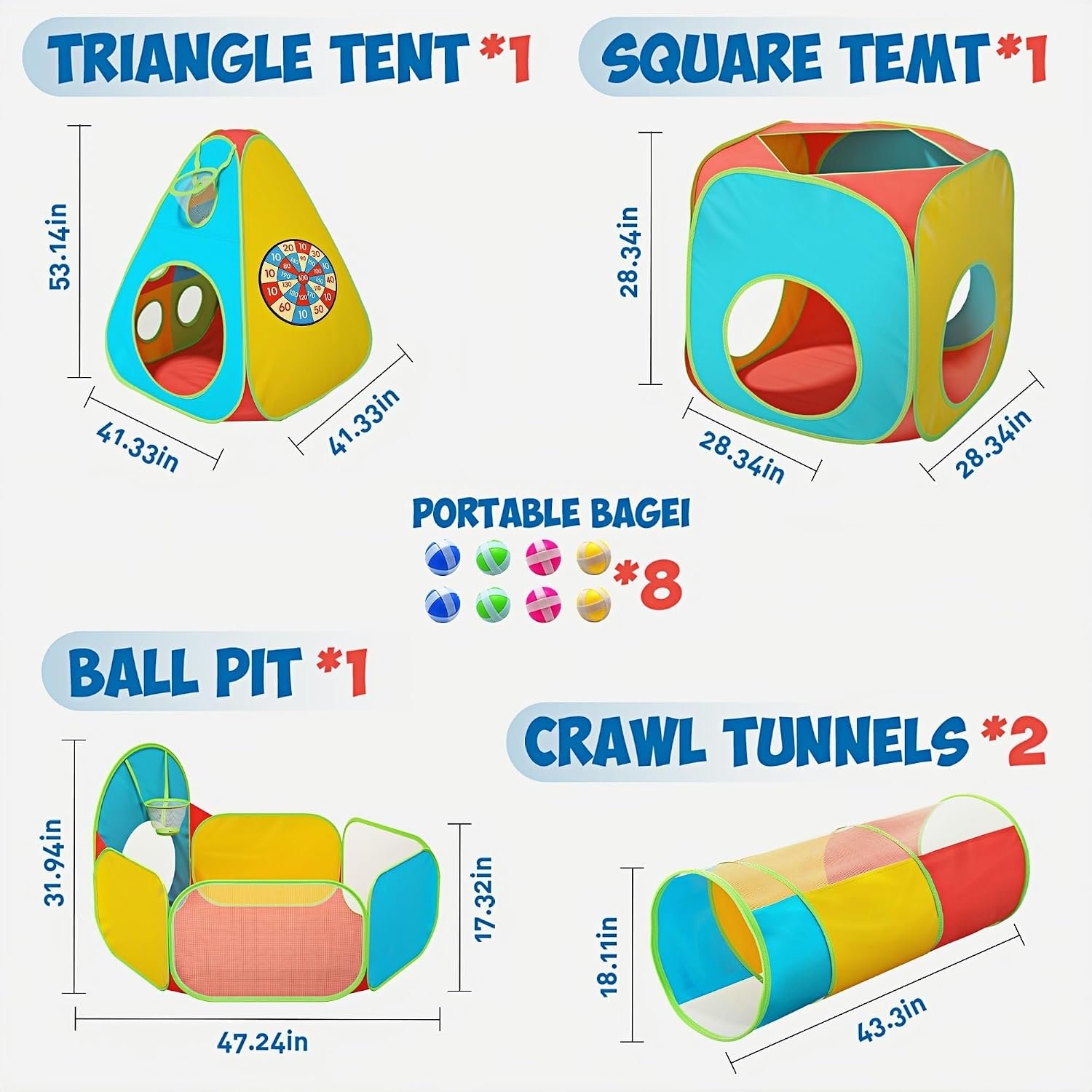
This set includes a play tent, a toddler ball pit, a triangular ball pit tent and two tunnels, packed in a carry bag. The important word is five. A single pop-up tent is fine, but it is a fixed object. Once a child has been in and out of it twenty times, the novelty runs out.
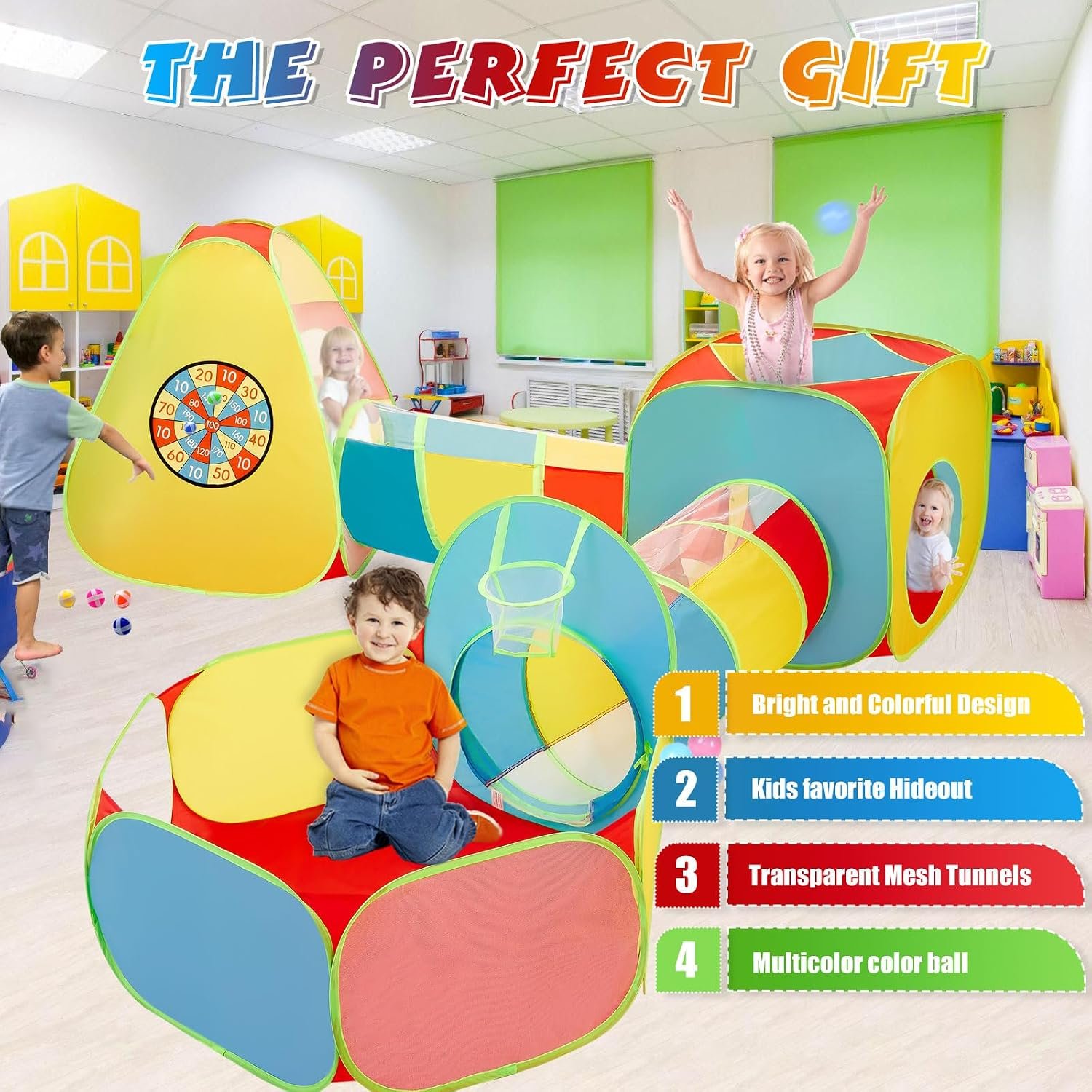
Five pieces behave differently because they can be rearranged. Monday it is a straight hallway run. Tuesday it is a square with the ball pit in the middle. Wednesday one tunnel goes in the bedroom and the rest stays in the lounge. The same box of parts produces a different play space each time, which is why multi-piece sets tend to survive longer in a household than single-item tents.
The build is polyester fabric over an alloy steel frame. That is the standard for pop-up gear, and it is standard because it works. The steel wire holds a circular shape under tension, so when you unpack a piece it opens itself. The polyester is light enough that a child can shove a tunnel sideways without hurting themselves on it.
How pop-up frames work
A pop-up frame is a loop of springy steel sewn into the edge of a fabric panel. Bend the loop and it stores energy. Release it and it snaps back to a circle. Several of these loops along a tube create a tunnel that stands up on its own.
Folding is the part that catches people out the first time. You do not fold a pop-up piece like a blanket. You push the sides together and twist, so the big loop becomes two or three smaller overlapping loops. It feels wrong until you have done it once, then it takes about five seconds. There are plenty of short videos online if the first attempt defeats you, and the motion is identical across almost every collapsible play tent on the market.
Because of that twist-down design, the whole set packs to 50 cm by 30 cm by 30 cm and weighs 948 g. That is light enough to carry one-handed with a toddler on your hip.
Who it suits
The manufacturer puts the range at 36 months to 10 years, which is wider than you might expect. The way children use it changes a lot across that range.
Three and four year olds use it physically. They crawl, they hide, they pop out and laugh, and they do it on repeat. This is the age where a crawl tunnel for kids earns its keep, because the activity itself is the game.
Five to seven year olds start adding stories. The tent becomes a base, the tunnel becomes a secret passage, and the ball pit is a trap or a treasure room. Two siblings at this age will happily spend an hour on rules nobody else understands.
Eight to ten year olds use it less often but still enjoy it at parties, sleepovers and with younger cousins. By then it is a social prop more than a daily toy.
Younger than three is a judgement call. The set is not sold as a baby crawling tunnel, and the age guidance exists for a reason. A pre-walker can enjoy a short tunnel with a parent at each end, but that should be supervised play, not something you leave them to on their own.
Choosing the right layout for your home
Measure before you buy anything. The assembled footprint is listed as 200 cm x 200 cm x 200 cm, so about two metres of clear floor gives you the full spread. If you do not have that, you still have options.
In a narrow hallway, run the two tunnels end to end with the tent at the far door. Children love a long straight sprint and the walls keep everything aligned. In a small lounge, use the ball pit against one wall with a single tunnel leading to it and store the rest. In a bedroom, the triangular ball pit tent on its own makes a reading nook that takes up very little room.
Outdoors you get more freedom. A flat lawn lets you build a loop so children can circle around without stopping. Check the ground first for sticks, stones and anything sharp, because the fabric is light. Keep the set off hot concrete and bring it in before rain.
Surface matters indoors too. On polished boards or tiles, a light pop-up piece can slide when a child launches into it. A rug or a foam mat underneath fixes that and makes the floor kinder on knees and elbows.
Balls, and how many
The ball pit and the triangular tent are both made to hold balls, but the quantity is not specified in this product record, so plan on buying your own. As a rough guide, a small pit looks good with a few hundred standard 5.5 cm to 7 cm balls. You do not need enough to swim in. Enough to cover the base two or three layers deep reads as a ball pit to a toddler and makes tidying up far quicker.
Buy one solid colour if you want a calm look, or a mix if you want the bright version. Keep a bucket or mesh bag nearby, because balls migrate under furniture with remarkable speed.
Looking after it
Care is simple. Wipe the polyester with a damp cloth and a little mild soap when it gets grubby. Do not put it in the washing machine, do not bleach it and do not tumble dry it. Heat and agitation are hard on the stitching that holds the steel frame in place.
Let it dry completely before you fold it. Packing damp fabric into a bag is how you get musty smells and marks. If it has been outside on grass, shake it out first and give it a few minutes in the air.
Store it in the carry bag somewhere dry. A wardrobe shelf is ideal. Damp garages and sheds are not, because long exposure to moisture will tell on any fabric eventually.
Check the fasteners now and then, especially if the set gets heavy use. They are the parts that take the strain when children pull the pieces apart in a hurry.
A word on supervision
Tunnels are low risk, but a few habits help. Keep the set away from stairs, open fires, heaters and glass furniture. Make a rule that only one child goes through a tunnel at a time so nobody gets kicked in the face. And keep an eye on the ball pit with very young children, since small toys and food end up in there and are easy to lose.
None of this is complicated. It is the same common sense you would use with any indoor playhouse for kids.
The short version
A five piece set gives you more play than a single tent for a fairly small jump in price. It opens without tools, folds to the size of a gym bag and weighs under a kilogram, so it travels to parties, grandparents and the park without any fuss.
It suits children from three to ten, with the most intense use happening in the early years. It needs about two metres of floor for the full layout, though you can split the pieces and use far less. Add your own balls, put a rug underneath on hard floors, wipe it clean rather than washing it, and store it dry.
If your child likes crawling, hiding and making up games, this is a toy that earns its cupboard space.