
The complete guide
Choosing A Princess Castle Play Tent, A Practical Buyer's Guide
The problem a play tent actually solves
Children need somewhere that belongs to them. Not a whole room, just a space with walls and a door they control. In most homes that space does not exist. Bedrooms are shared, living rooms belong to everyone, and the space under the dining table only works until someone wants dinner.
That is the gap a play tent fills. It draws a line on the floor and says this bit is yours. What happens inside is up to the child, and that is the point. Give a four year old a castle doorway and they will invent a whole afternoon around it without being asked.
There is a quieter benefit too. A tent gives children a place to retreat to when the house is loud or the day has been long. Parents often notice the tent becoming the spot where a child goes to calm down with a book, not just the spot where games get noisy. If you have been hunting for the best kids play tent for a child who needs a bit of downtime, that retreat function matters as much as the play value.
How this one works
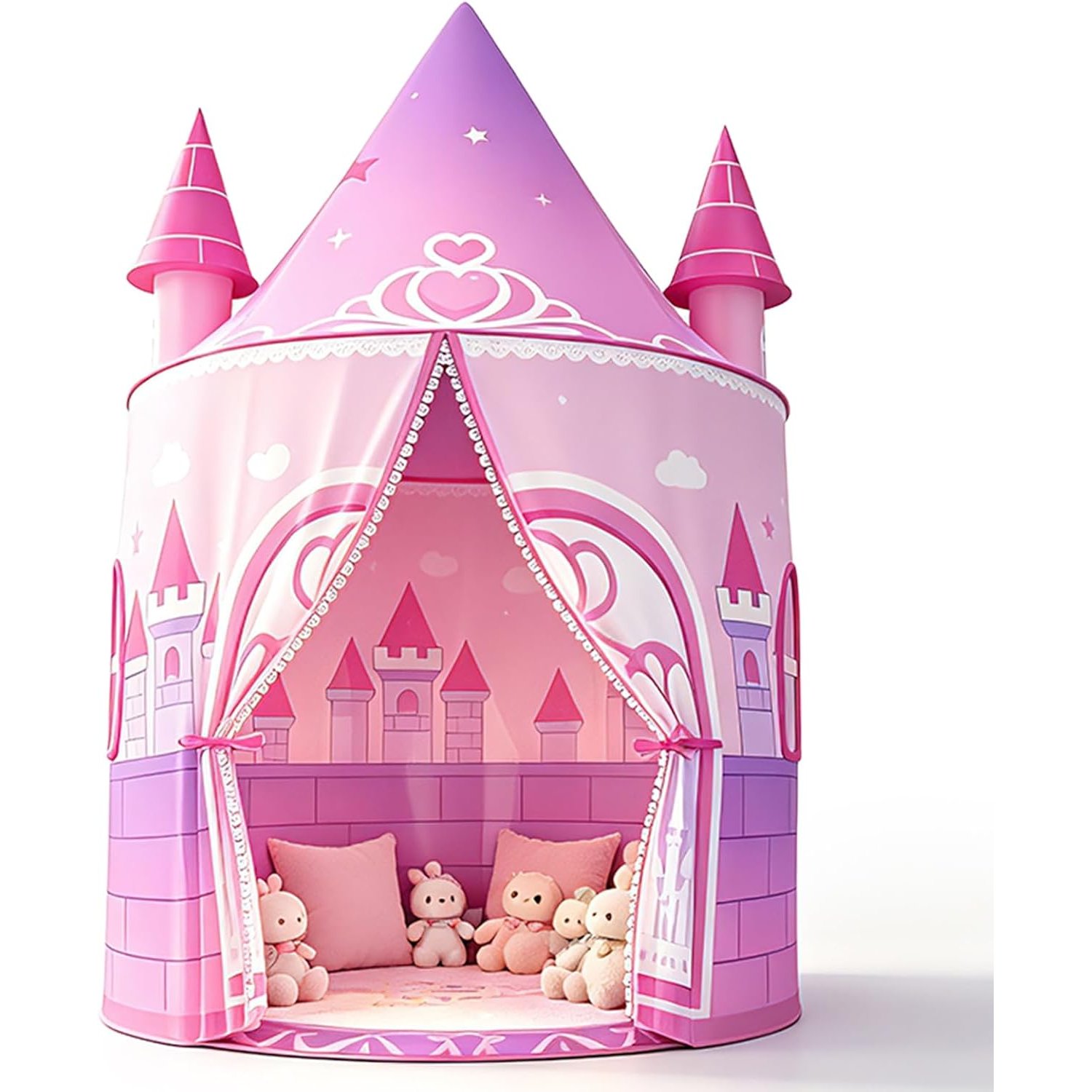
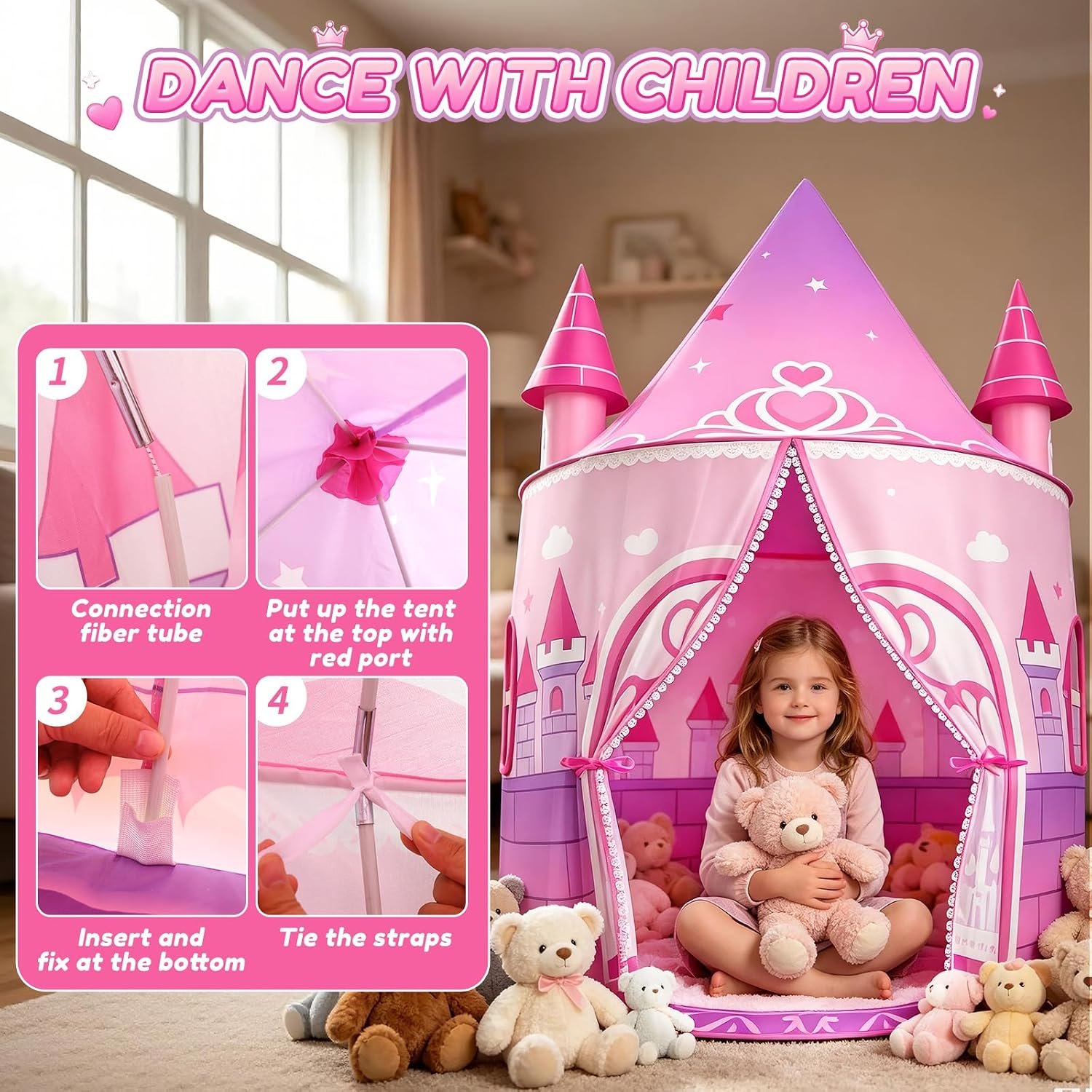
The structure is simple. Six support poles slot together and hold up a printed polyester cover shaped like a castle, complete with crown detailing and tower graphics. Setup is described as a two-step job with no tools, which in practice means you unpack it, insert the poles and stand it up.
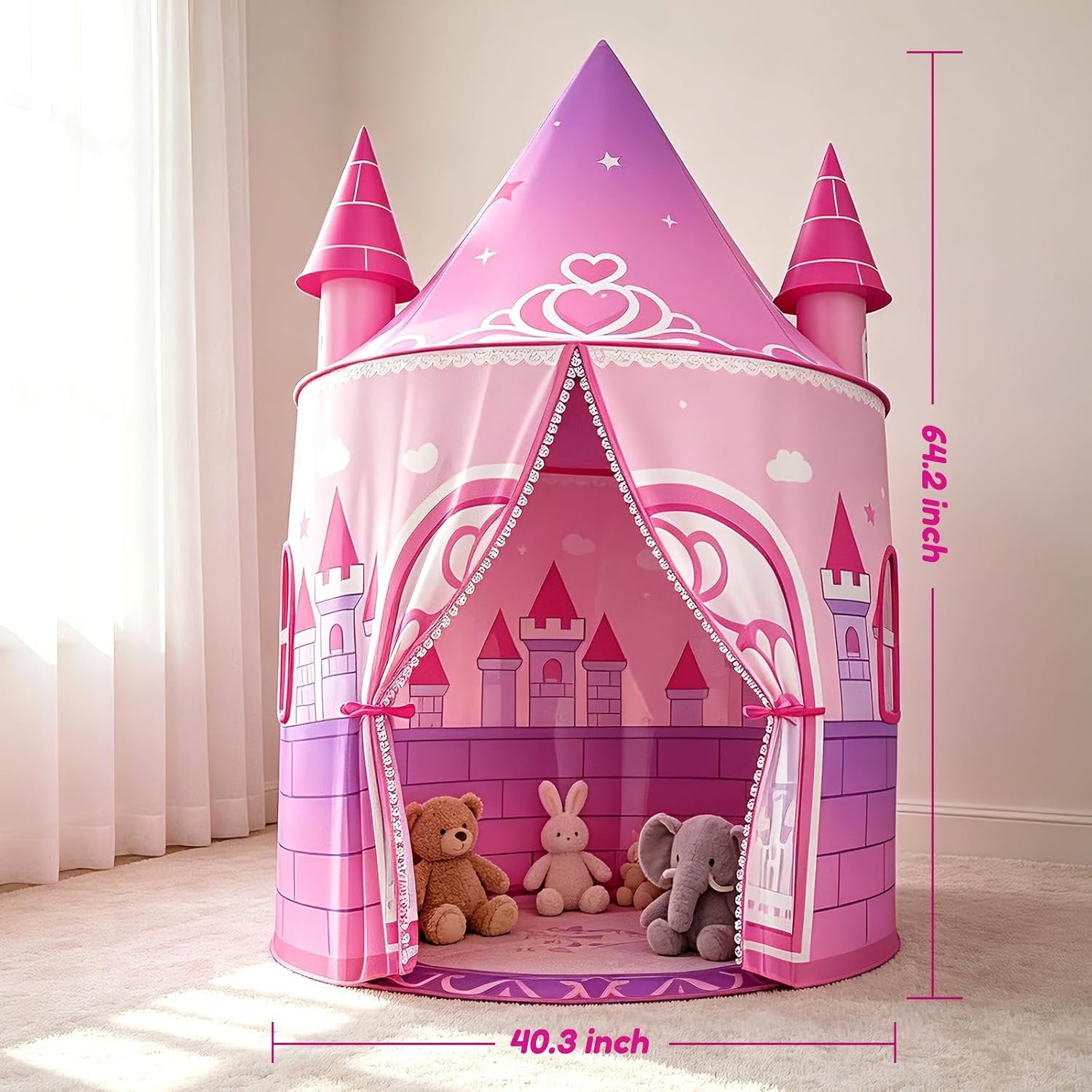
The footprint is about 103 cm deep by 103 cm wide. The peak height is 163 cm. That height is the standout number. A lot of children's tents sit around a metre tall, which means kids crawl in and stay down. At 163 cm, most young children can stand upright in the centre, and that changes how they use the space. They walk in rather than wriggle in, and they stay longer.
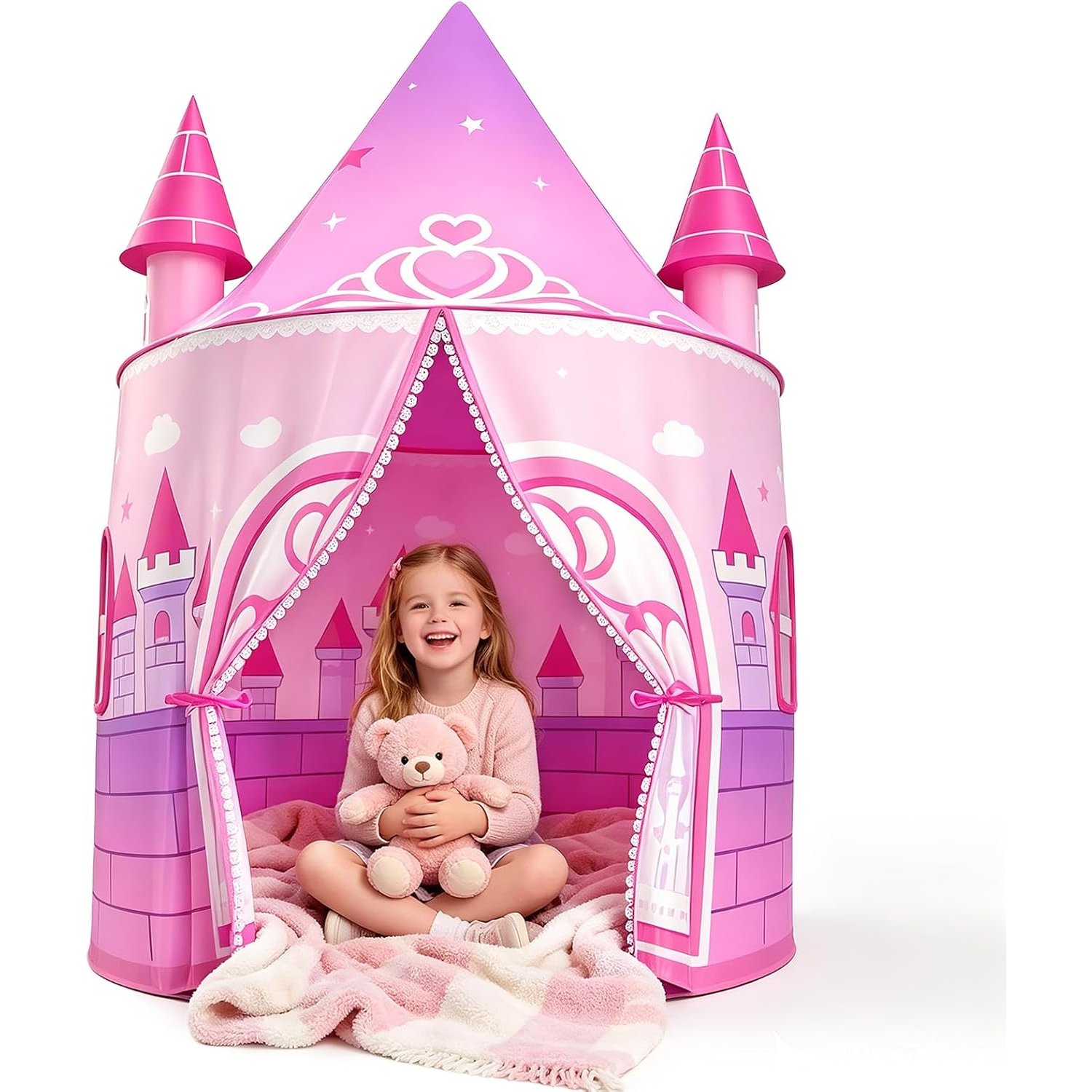
Inside, there is room for up to three children at once. That makes it a social space rather than a solo one. Siblings can share it, friends can pile in during a playdate, and the tent becomes the meeting point rather than the quiet corner on those days.
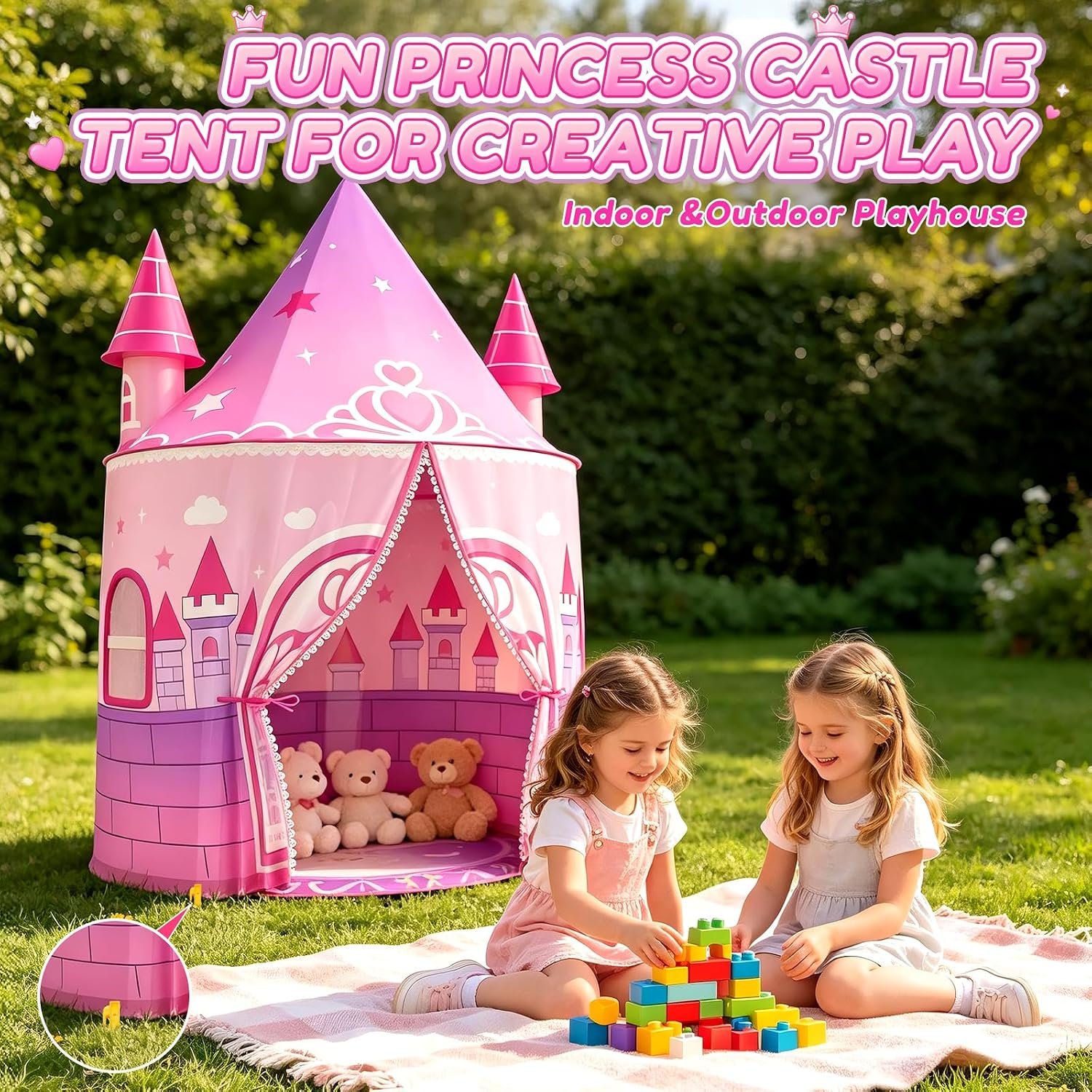
Four ground stakes are included. Those are for outdoor use, pushed into grass to keep the base steady on a breezy afternoon. Indoors you can leave them in the bag. It is a sensible inclusion, because a tent that only works in a bedroom gets half the use of one that can move to the lawn for a picnic.
Who it suits
The recommended age is 3 years and up. That is a reasonable starting point. Around three, pretend play shifts from short bursts into longer stories with characters and rules, and a themed structure feeds straight into that. A princess castle gives a child something specific to build on rather than a blank box.
At the other end, there is no hard stop. Children of six, seven and eight often keep using a tent as a reading corner or a hideout for toys, even as the pretend play changes shape. If you are shopping for the best gift for a 5 year old girl who is into castles and dress-ups, this sits right in the sweet spot.
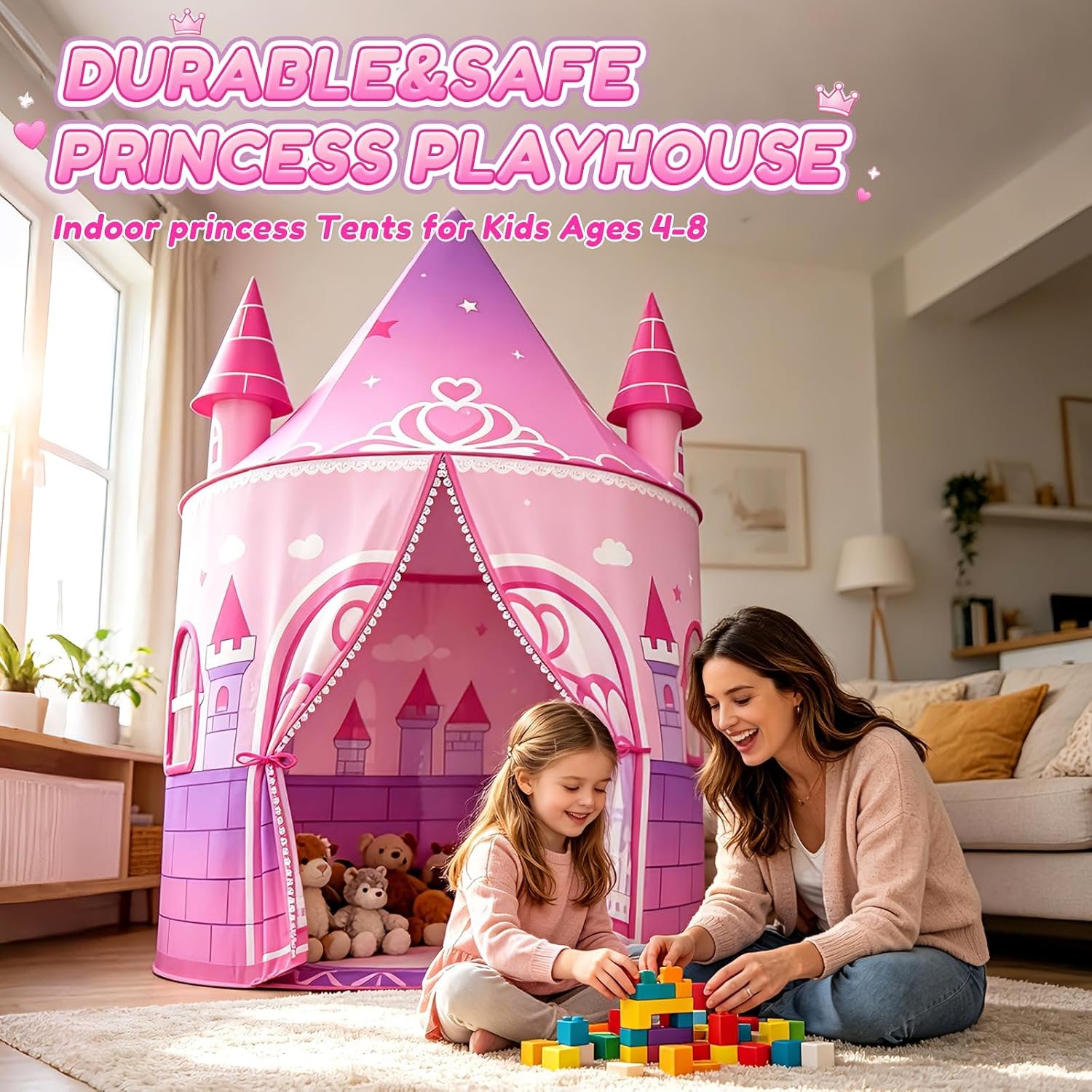
It suits shared bedrooms particularly well. When two children share a room, a tent gives one of them somewhere to go that is theirs alone for a while. It also suits playrooms, living room corners and any space where you want toys contained in one visible spot.
What it does not suit is camping. This is a play tent, not a shelter. Waterproofing is not specified, so it belongs indoors or in the garden on a dry day, not out overnight.
How to choose between play tents
A few things are worth checking before you buy any tent for a child.
Height first. Measure the child, then compare. A tent that forces constant crawling gets less use than one that allows standing. The 163 cm figure here is on the tall side for this category, which is the main reason it reads as a castle rather than a dome.
Then the footprint. Mark out a square of about 103 by 103 cm on the floor with tape and live with it for a day. That tells you more than any photo. Remember to leave clear access to the doorway, and check for a bed frame or wardrobe door that might get in the way.
Setup matters more than people expect. A tent that needs tools and a diagram tends to go up once and never come down, or go down once and never come back up. Two steps and six poles is a design decision aimed at parents, not children.
Materials are worth a thought. Polyester is light, takes print well, and wipes clean with a damp cloth. It does not breathe as well as cotton, so on a warm day outdoors you want shade and an open doorway. For a best polyester play tent in regular indoor use, it is a practical choice.
Finally, think about where it will live when it is not in use. Any tent is going to be put away at some point. A structure that comes apart quickly and folds flat is far easier to live with than one that has to stay up permanently.
Setting it up well
The tent is the frame, not the finished thing. What turns it into a favourite spot is what goes inside.
A soft rug or play mat underneath makes a real difference on floorboards or thin carpet. Two or three cushions give it a den feel. A battery-powered lantern or string light, clipped safely where it cannot be tugged loose, makes it usable in the evening and gives reading a reason to happen in there.
Keep the toy load light. A tent crammed with every toy in the house stops being a space and becomes a storage bin. A small basket of books and a couple of favourite figures works better.
Outdoors, pick a flat patch of grass and use all four stakes. Avoid putting it directly under a tree that drops sap or fruit, and bring it in before dew settles. A dry tent packs away cleanly. A damp one does not.
Looking after it
Care is straightforward. Spot clean marks with a damp cloth and a little mild soap, then let it air dry fully before folding. Skip the washing machine, bleach and tumble dryer, since none of those are kind to printed polyester on a pole frame.
After garden use, wipe the poles dry and shake grass off the base. Store the whole thing somewhere dry rather than in a damp shed or garage corner. If you fold it loosely rather than cramming it, the print stays crisper for longer.
Check the pole joints every so often, especially if the tent gets heavy use or moves between rooms regularly. A quick look takes seconds and catches problems early.
The short version
This is a tall, roomy, castle-themed play tent that goes up in two steps and holds up to three children. At 103 by 103 cm on the floor and 163 cm at the peak, it gives real standing room instead of a crawl space, which is the difference between a tent children use once and one they come back to every day.
It works indoors as a bedroom or playroom den, and moves outside onto grass with the four included stakes. Polyester fabric wipes clean, the whole thing folds away when you need the floor back, and the recommended age of 3 and up covers the years when pretend play is at its most inventive.
If you want a gift that gets used rather than admired, a castle with a doorway and a bit of standing room is a safe bet.