
The complete guide
Choosing a Castle Play Tent That Actually Gets Played In
The problem with most play tents
Buy a cheap play tent and you learn the same lesson a lot of parents learn. It goes up on a Saturday, a child loves it for forty minutes, and by the following weekend one of the poles has bent, a wall sags, and the whole thing lists sideways like a sad mushroom. It ends up in the garage.
The reason is usually structure, not fabric. Thin flexible wire frames and lightweight nylon can look fine in a photo, but children do not treat a tent gently. They lean on the walls. They crawl in at speed. They drag it across the floor instead of lifting it. A play tent needs to survive that, or it was never really a toy in the first place.
The second problem is size. A lot of play tents are built for one small child sitting cross-legged. The moment a sibling or a friend wants in, there is nowhere to go. Children play together, so a tent that only fits one gets abandoned fast.
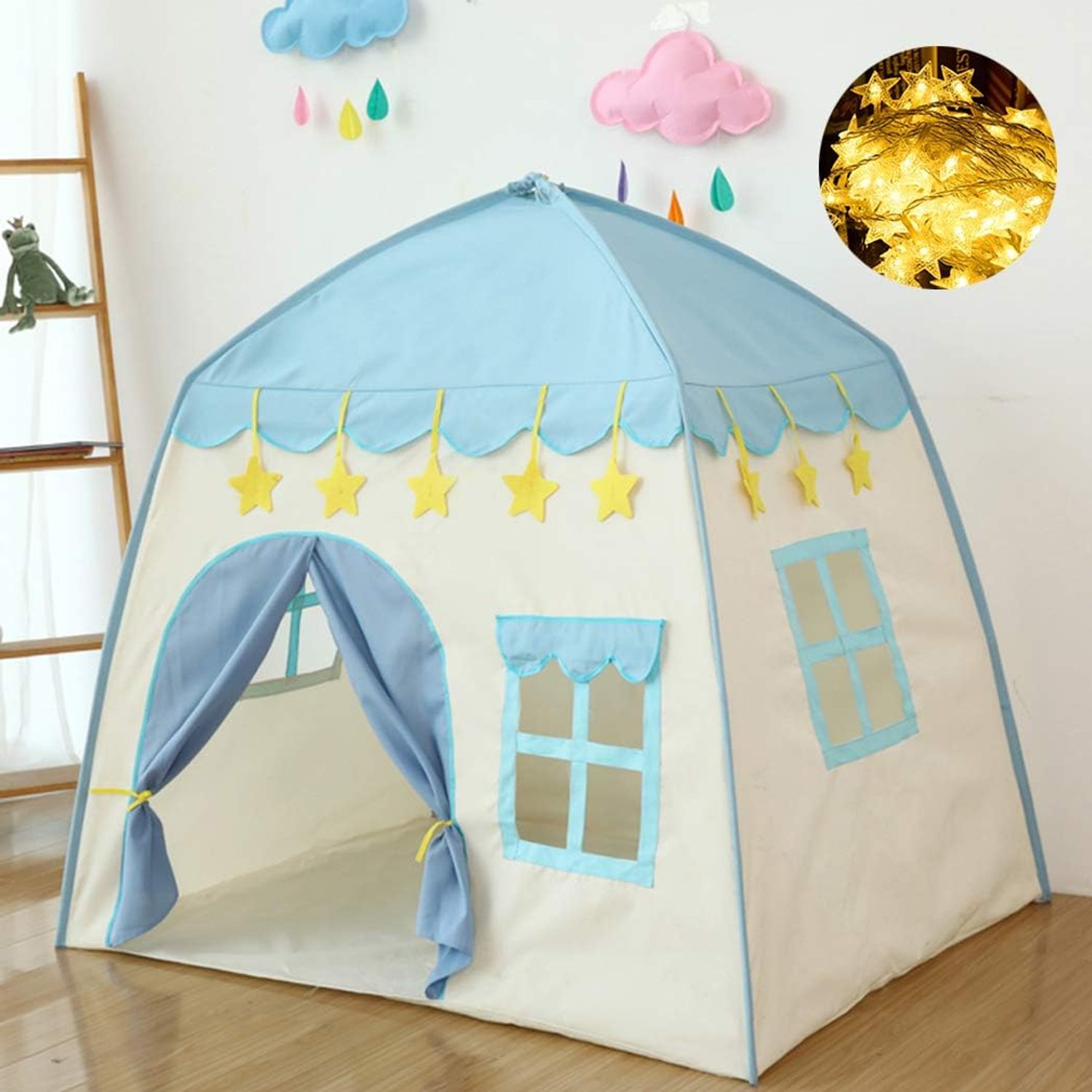
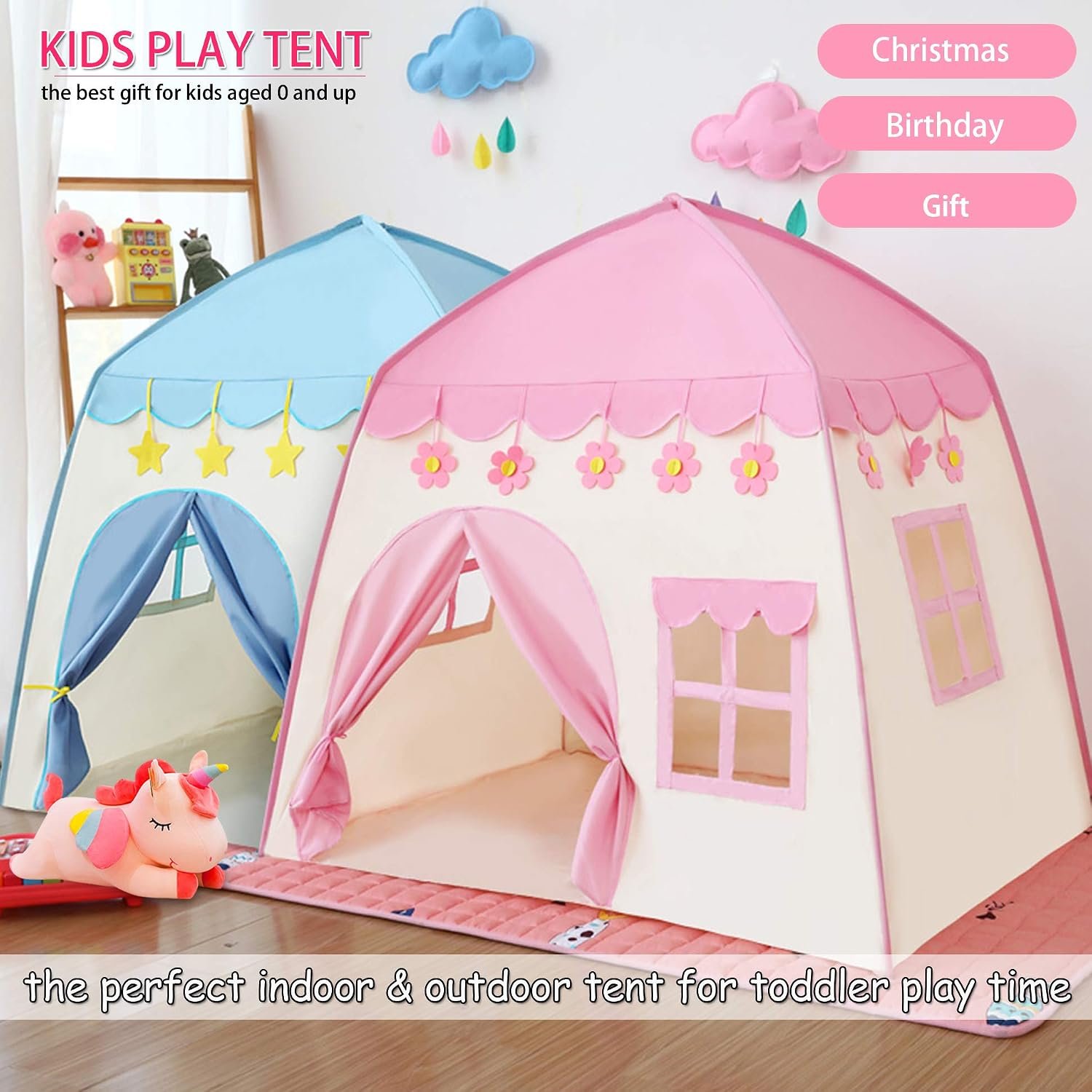
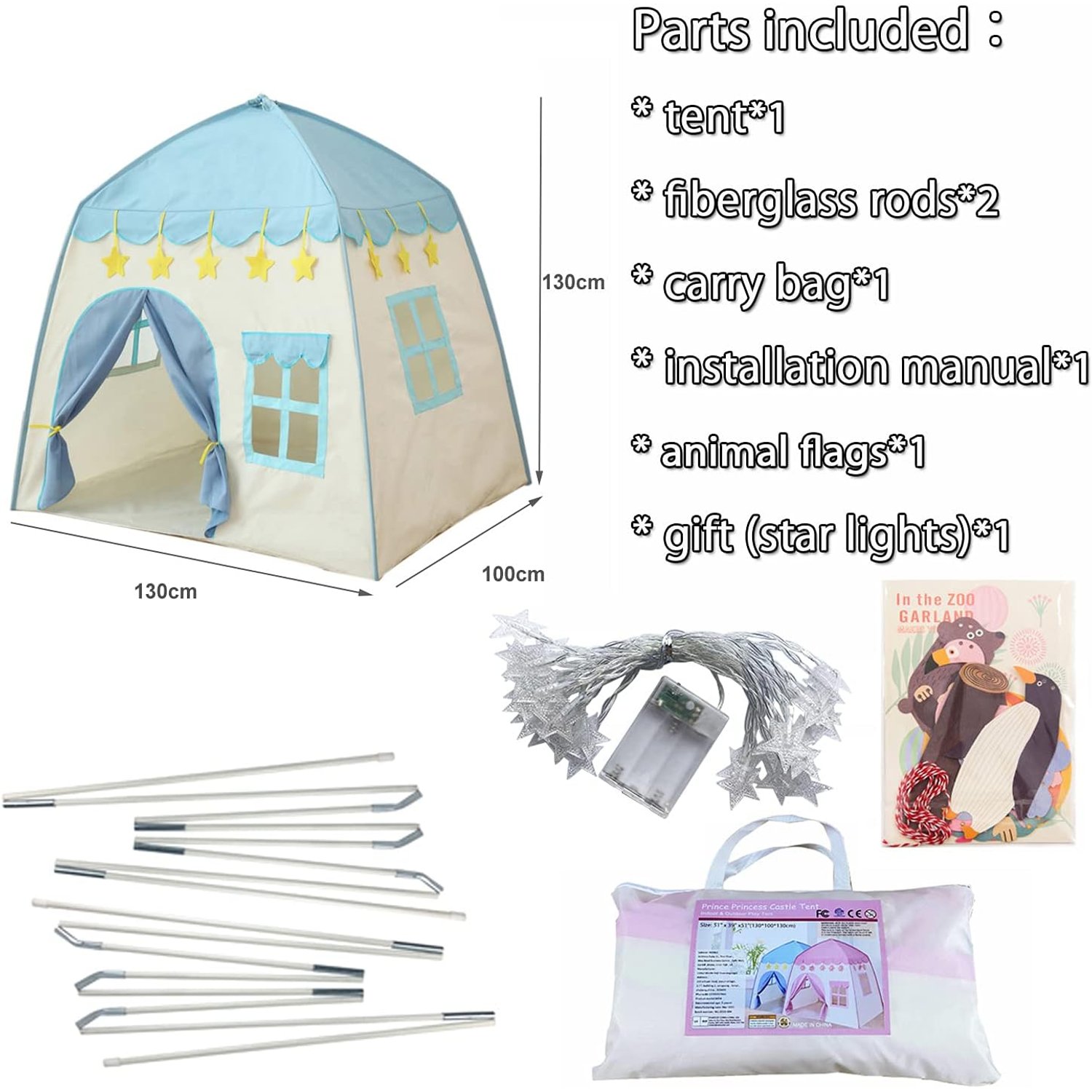
This blue castle play tent addresses both. The oxford fabric shell runs over two fibreglass rods, and the footprint is 130 cm by 100 cm with a 130 cm peak. That is a proper room, not a pod.
How the structure works
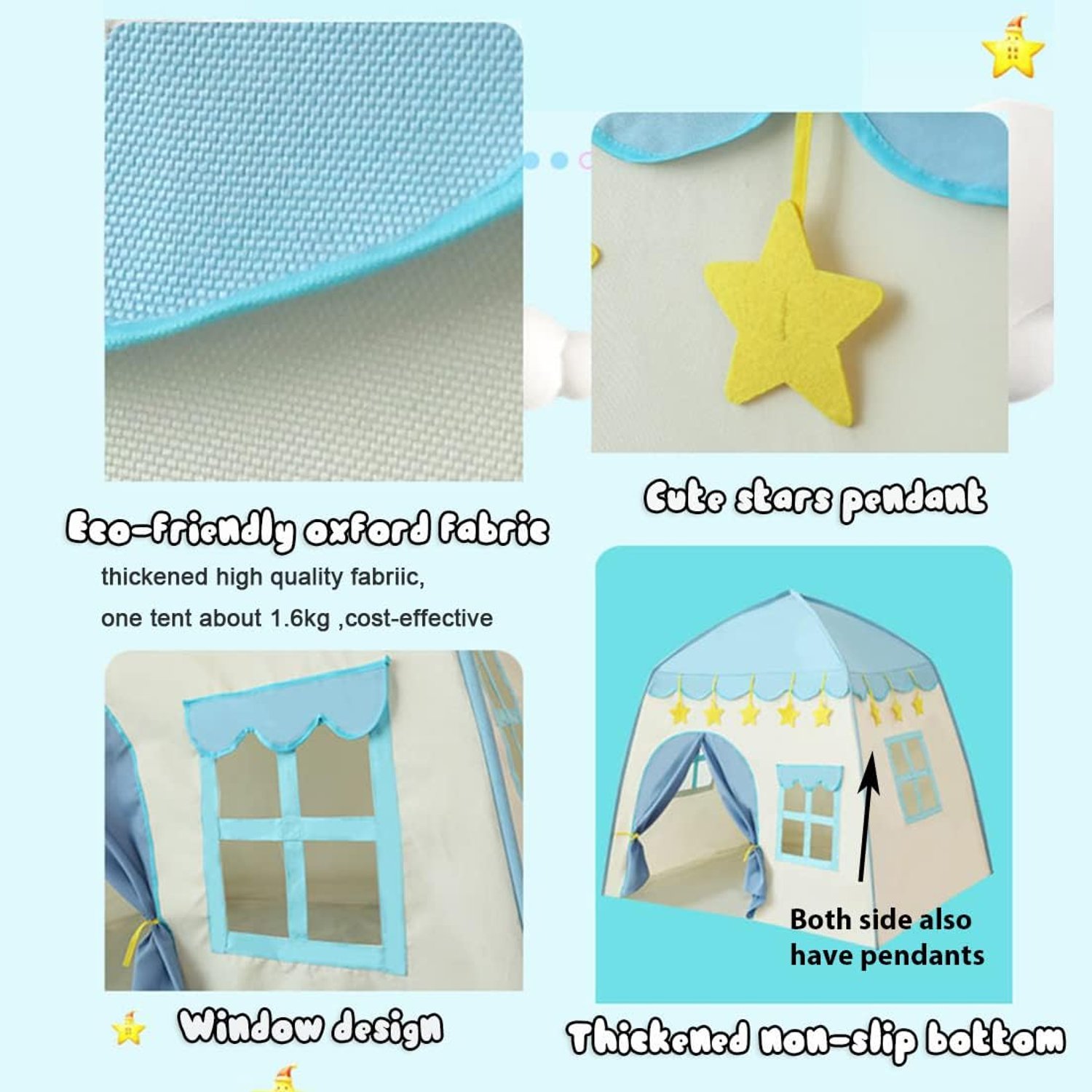
Oxford fabric is a woven polyester. It has a visible basket-weave texture and more body than the thin taffeta you find on throwaway tents. It holds a crease less, takes a scuff better, and keeps its shape when stretched over a frame. That is why you see it on bags and outdoor gear as well as on play structures.
The frame is two fibreglass rods. Fibreglass is worth understanding because it behaves differently to the alternatives. Steel is strong but heavy and it will take a permanent bend if a child falls against it. Rigid plastic is cheap but it goes brittle, especially after a few cold nights in a garage, and then it cracks. Fibreglass bends under load and springs back to shape. For a structure that children will lean against dozens of times a day, that spring is exactly what you want.
Because the rods slide through fabric channels, there is no assembly in the usual sense. Nothing screws together. There are no brackets to lose and no allen key to hunt for. The listing confirms no assembly is required, and most people have it standing within a few minutes of opening the bag.
Who it suits
The manufacturer puts the age range at 36 months to 13 years, which is broad, and in practice different ages use it differently.
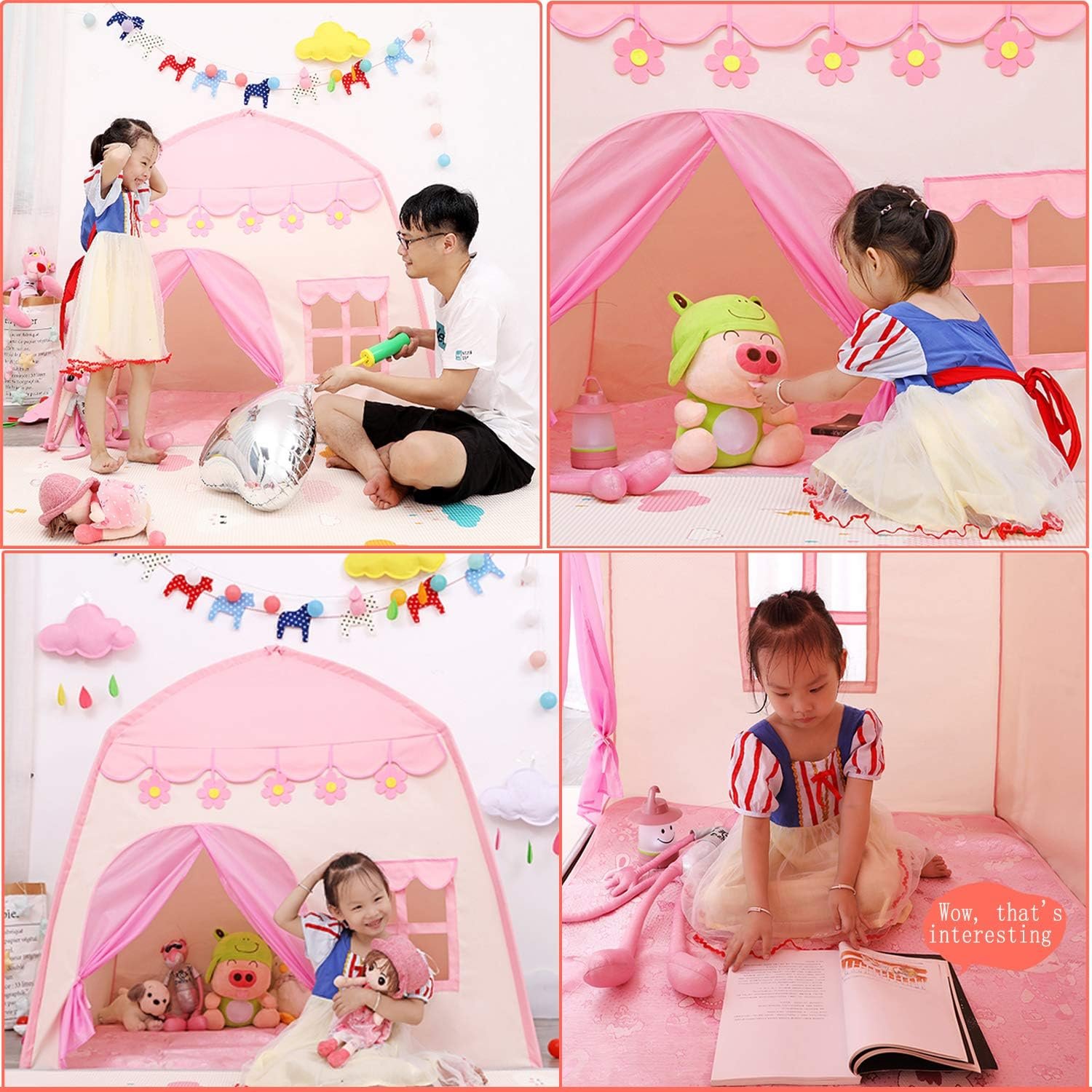
Three and four year olds use it as a house. They move soft toys in, make beds, and announce rules about who is allowed through the door. Five to eight year olds turn it into a base, a shop, a spaceship or a castle under siege, depending on what they watched recently. Older children, nine and up, mostly use it as a private spot, somewhere to read, listen to music or escape a busy household for half an hour. The 130 cm height matters here, because an older child can sit upright inside without their head touching the roof.
It also suits households without much spare space. A permanent wooden playhouse is a commitment. This packs into its carry bag and goes in a cupboard, so the lounge can be a lounge again when guests come.
Making the most of the star lights
The 5 m string of 30 LED star lights that comes in the box is not a throwaway extra. It changes how the tent gets used.
In daylight, a play tent is a fort. At dusk, with a soft string of lights running along the seams, it becomes a reading nook, and that is often the use that lasts longest. Parents who want a calm wind-down spot before bed tend to get more out of the lights than the children do.
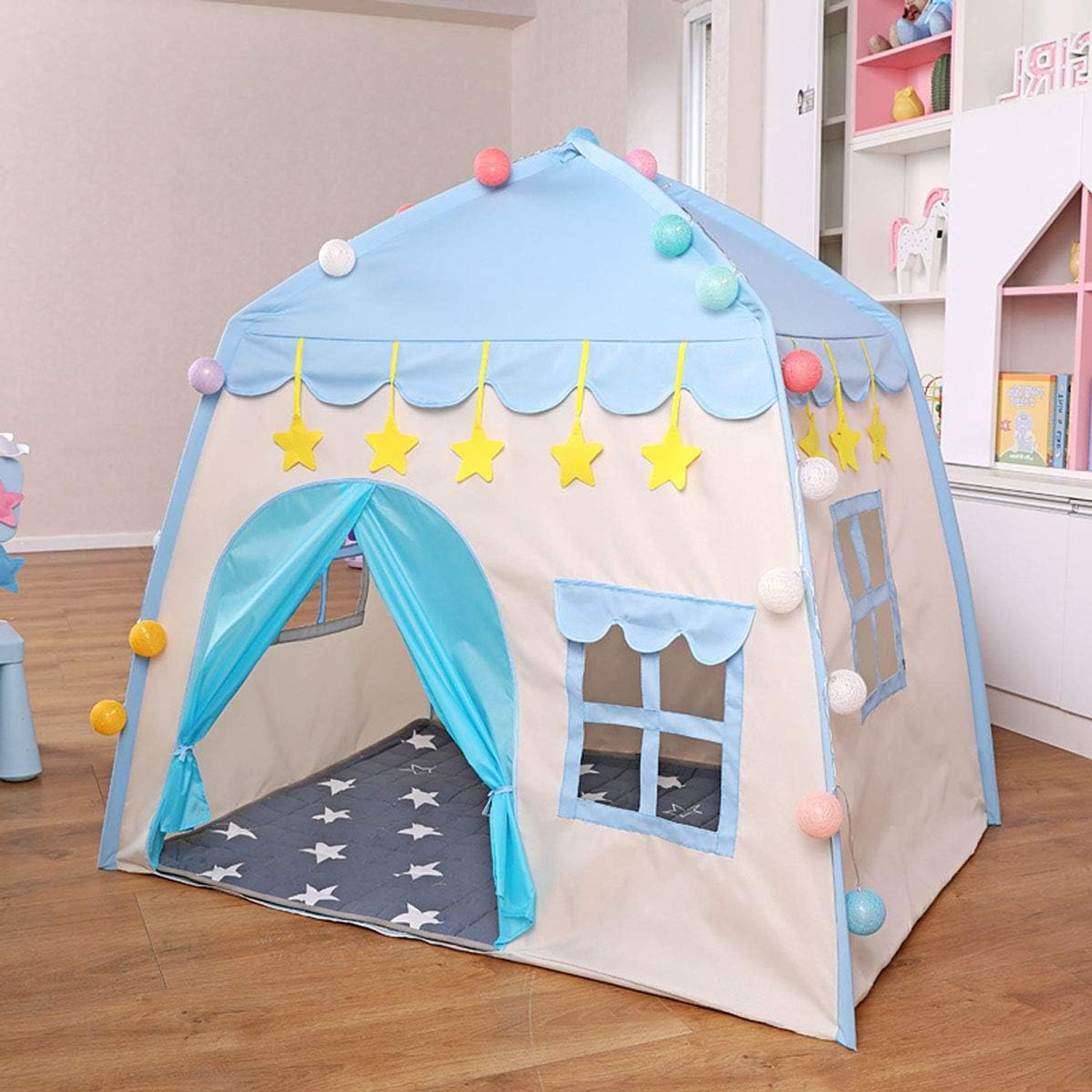
A few practical notes. Thread the string along the inner seams or around the doorway rather than draping it loose across the floor, so nobody tangles in it. Keep it well away from water if the tent is set up outside. Switch it off whenever the tent is unoccupied, which is simply good practice with any decorative light string in a child's room.
The animal flags in the box go along the roofline and finish the castle look. They are small, so keep the bag they came in and put them back there when you pack down.
Setting it up in the right place
Measure before you buy. You need a clear patch of floor about 1.4 m by 1.1 m, plus a bit of elbow room in front of the entrance so a child can crawl in without knocking a bookshelf.
Carpet is the best surface. It grips the base and softens the floor. On hard floors, a rug or a foam play mat underneath does both jobs and makes the inside far more inviting. Keep the tent away from heaters, radiators and open windows with long curtains.
Outdoors, think of it as a shade and play structure rather than a camping tent. It is excellent on a lawn or a patio on a still, dry day. It is not described as waterproof, and a light fabric structure will move in wind, so bring it inside if the weather turns. Pack it away dry, always. Damp fabric folded into a bag is how musty smells start.
Looking after it
Care is simple, mostly because there is not much to go wrong.
Wipe marks off with a damp cloth and a little mild soap, then let the fabric air dry fully before it goes back in the bag. Skip the washing machine, the tumble dryer, bleach and the iron. Heat and agitation distort the panels and the seams.
Check the fibreglass rods now and then. Run a hand along them, and if you feel a rough patch or a splinter starting, wrap it in tape or replace the rod rather than carrying on. Fibreglass is durable but it does fray at the ends with very heavy use.
For the lights, remove the power when they are not in use, keep them dry, and coil them loosely rather than wrapping them tightly around something. Tight coils put stress on the wire joints.
What to compare against
If you are weighing this up against other options, here is the honest comparison.
A pop-up dome tent is cheaper and faster to deploy, but it is smaller, the shape is less interesting, and the spring steel frames in those models are the first thing to fail. A teepee with wooden poles looks lovely in a styled photo, but the poles slide on hard floors and the open-top design gives less of a hidden-away feeling. A wooden playhouse is the most durable choice by a wide margin, and also the most expensive and the least portable, since it is furniture.
This sits in the middle. It gives you the enclosed castle shape and a real amount of interior space, with a frame that handles daily play, and it still folds into a bag. For a family that wants the best indoor playhouse for kids without giving up a corner of the house permanently, that trade-off usually lands in the right spot.
The short version
You are getting a blue castle play tent measuring 130 cm wide, 100 cm deep and 130 cm tall, built from oxford fabric on fibreglass rods, with no assembly hardware required. The box includes the tent, two rods, a carry bag, a manual, animal flags and a 5 m string of 30 LED star lights. The recommended age range is 36 months to 13 years.
It fits two or three children, an adult can sit inside, it packs down into a bag for storage or travel, and the lights are already in the box. Set it up in a corner with a rug and a couple of cushions and you will likely find it is the spot your child picks when they want to be somewhere that feels like theirs.