
The complete guide
How To Choose A Large Play Tent That Children Actually Use
The problem with most play tents
Buy a small play tent and you watch the same thing happen. The child is delighted for twenty minutes, then they try to bring a friend in, and there is not enough room. Or they try to sit up and their head pushes against the fabric. Or they bring in a book and a cushion and suddenly there is nowhere left to put their legs. The tent gets folded away after a fortnight and sits in a cupboard for a year.
Size is the single biggest reason play tents fail. Manufacturers build small because small is cheap to ship, and small photographs fine next to a toddler. Then a real child gets in it and the maths does not work.
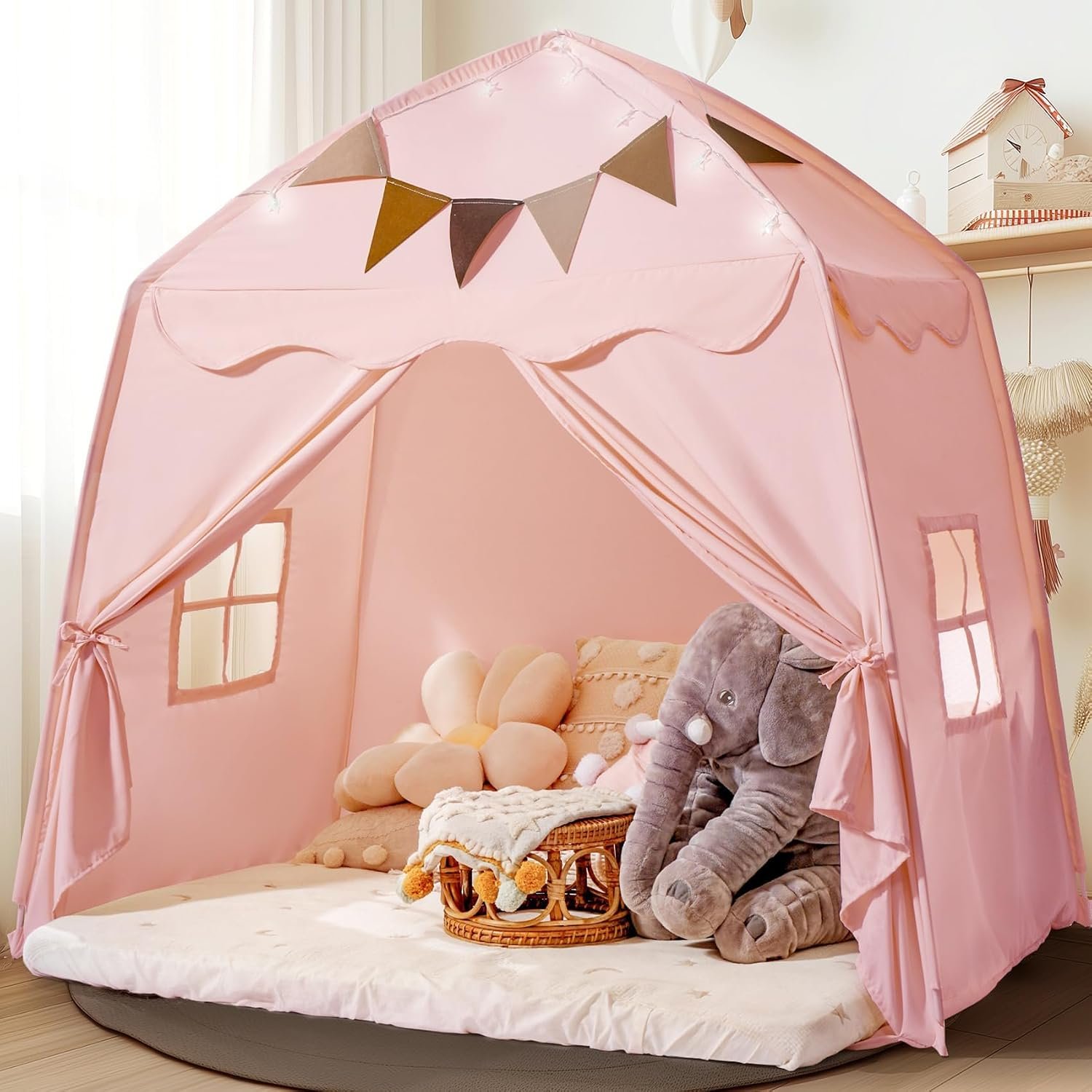
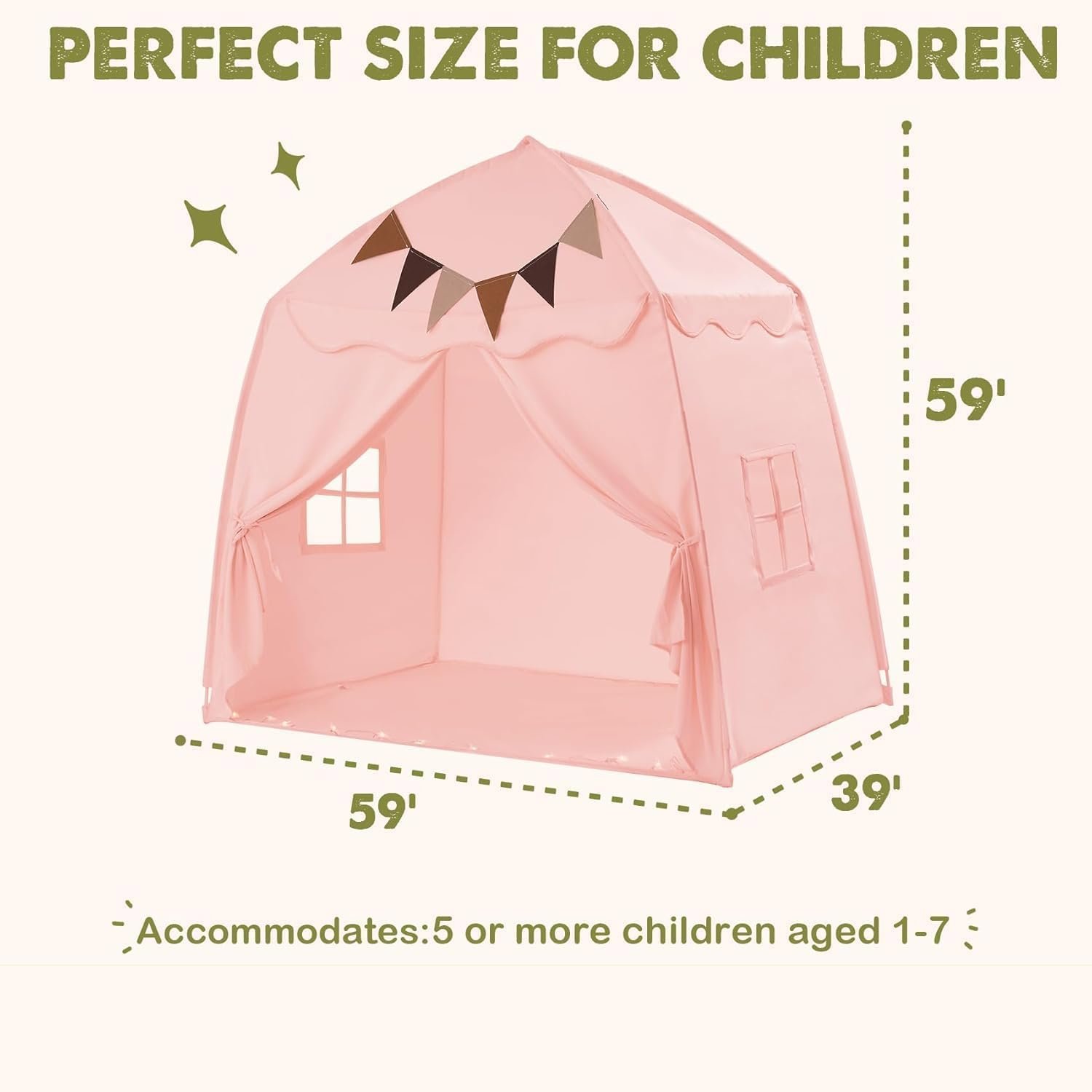
This one is 150 cm wide, 100 cm deep and 150 cm high. That is a proper floor area with real headroom above it. A child of seven can sit up straight inside. Three of them can sit in a circle. That difference in scale is what separates a tent that stays up all year from one that disappears.
How a dome tent is different
Most children's tents are teepees. A teepee is four or five poles leaning together at a point, which looks lovely in a styled photo but wastes most of its height. The usable space is a cone, and cones get narrow fast. A child sitting near the wall of a teepee has fabric pressing on their shoulder.
A dome holds its width much further up. The curve of the roof means the walls stay more or less vertical for the first stretch, then curve over the top. You end up with far more usable volume for the same footprint. That is why camping tents stopped being triangles decades ago, and the same logic applies when the occupant is six.
The frame here is fibre rod. These are flexible poles that thread through fabric sleeves and hold tension against the shape of the cover. They bend instead of snapping, which is the behaviour you want in a room where children move quickly and do not always look where they are going. They are also light, which is how the whole tent weighs 800 g.
Who it suits
Children from about three to around nine get the most out of a tent this size. Younger than three and the recommended age guidance applies, mostly because soft structures need a bit of judgement about what to lean on. Older than nine and children tend to want a door that properly closes, though plenty of ten and eleven year olds still use one for reading.
It suits a few specific households particularly well.
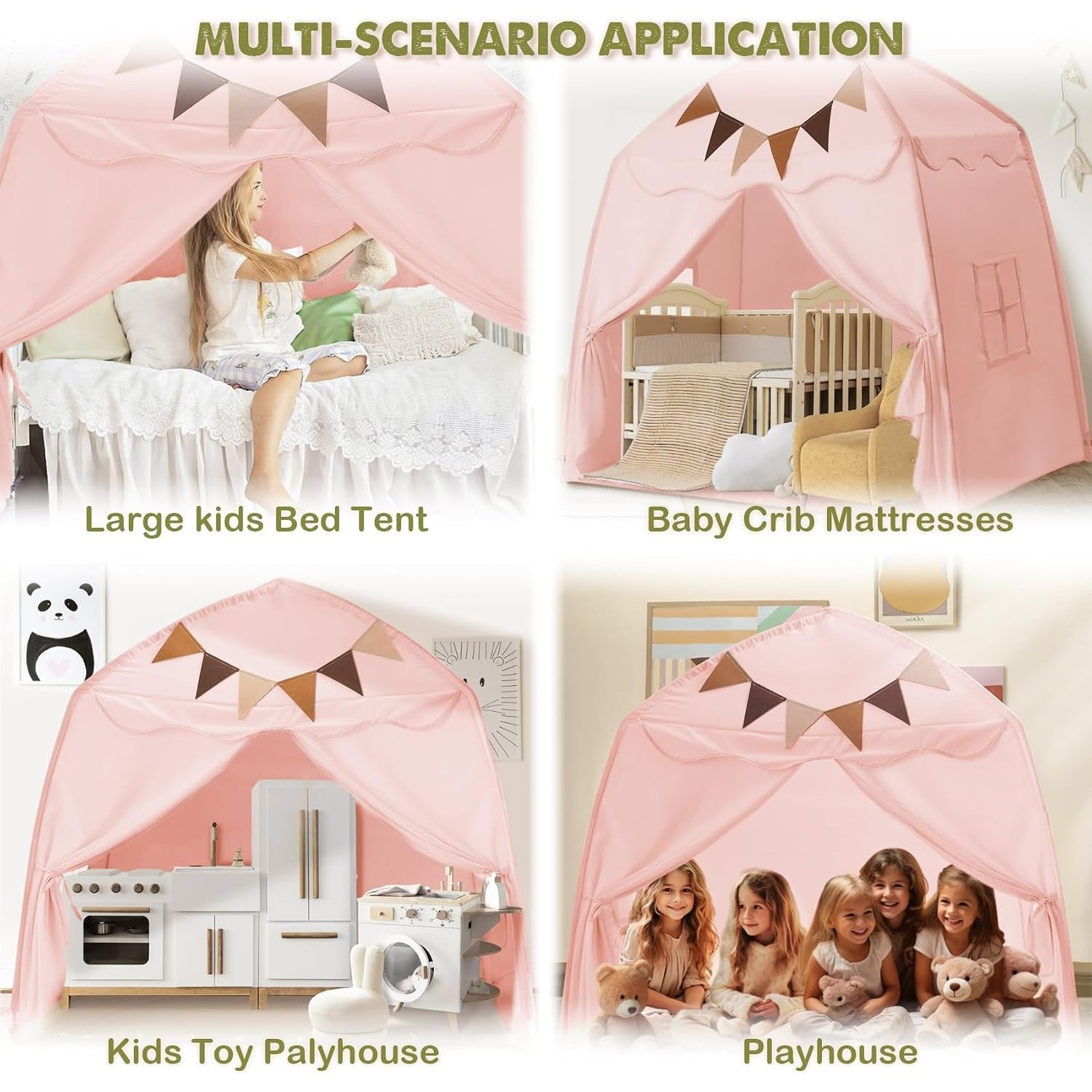
Families in flats and smaller homes, where there is no spare room to turn into a playroom but there is a corner of a living room going spare. The tent carves out a child-sized zone without building anything permanent.
Households with more than one child, because three can fit inside and that means it becomes a shared space rather than another thing to argue over.
Parents of children who get overstimulated. A tent with walls and a roof genuinely lowers the amount of input coming at a child. Several families use one as a calm corner with a cushion and a soft light inside, and it works better than being sent to a bedroom because the child chooses to go in.
And anyone hunting for the best indoor playhouse tent as a gift. Large play tents land well at birthdays because they look substantial when assembled and the child understands immediately what it is for.
Working out whether it fits
Measure before you order. This sounds obvious and people still skip it.
You need 150 cm of width and 100 cm of depth on the floor, plus a bit of clearance so the walls are not jammed against furniture. You also need 150 cm of ceiling height, which is almost never a problem in a normal room but matters under a loft bed, in an attic space or in a room with a sloped ceiling.
If you are putting it over the end of a bed, measure the mattress width. The 100 cm depth of the tent is the dimension that sits along the bed, so a standard single mattress is the natural match. Beds vary between countries more than you would think, so check your own rather than assuming.
Outdoors, pick a flat spot with shade. Fabric and sun are not friends over the long term, and a tent in direct afternoon sun gets warm inside quickly even with two windows. Bring it in before rain.
Living with it day to day
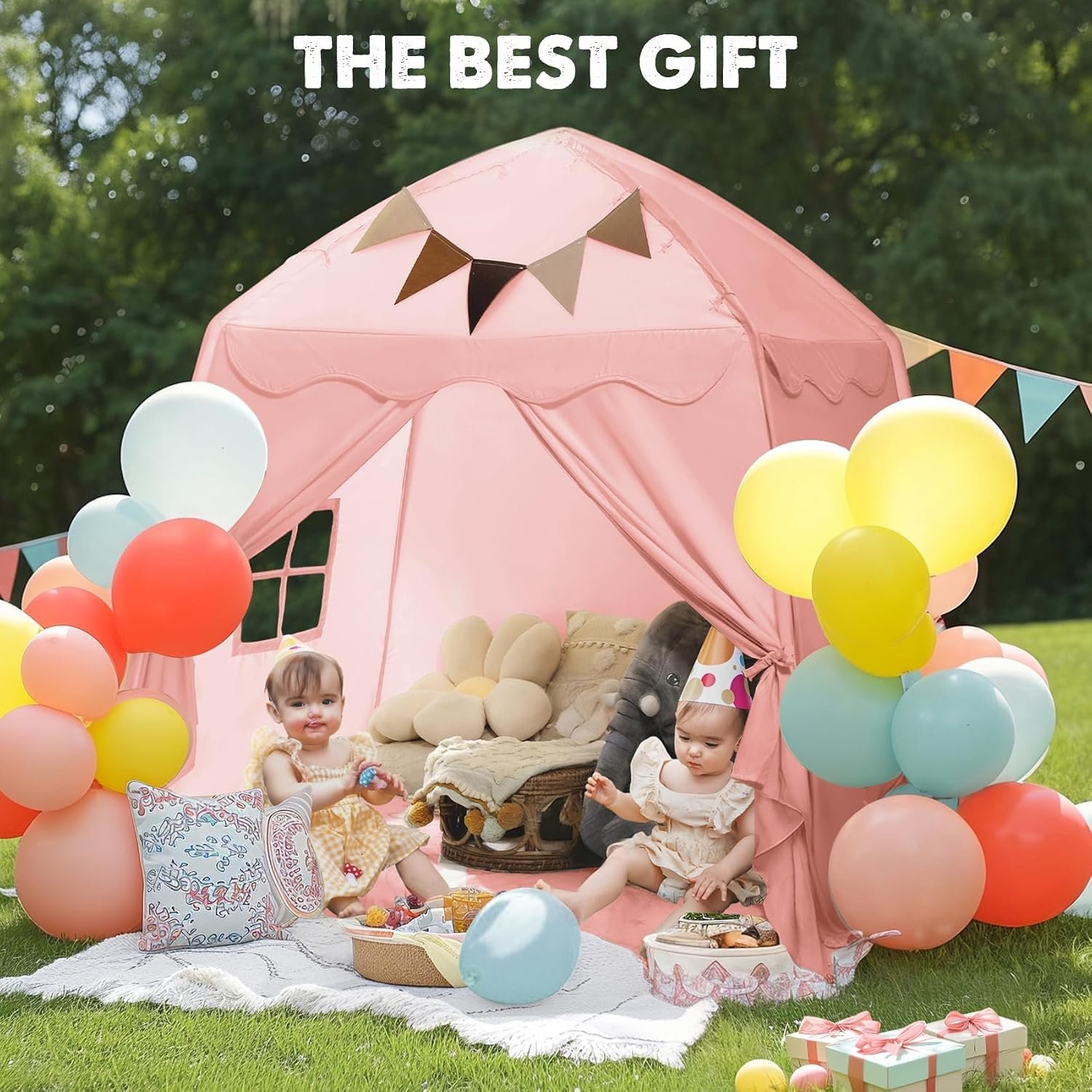
The two entrance curtains tie back, which seems like a small detail until you have used a tent without that feature. Curtains that only hang loose flap into the doorway, get stepped on, and eventually get pulled off. Ties keep them clear of the opening and clear of feet.
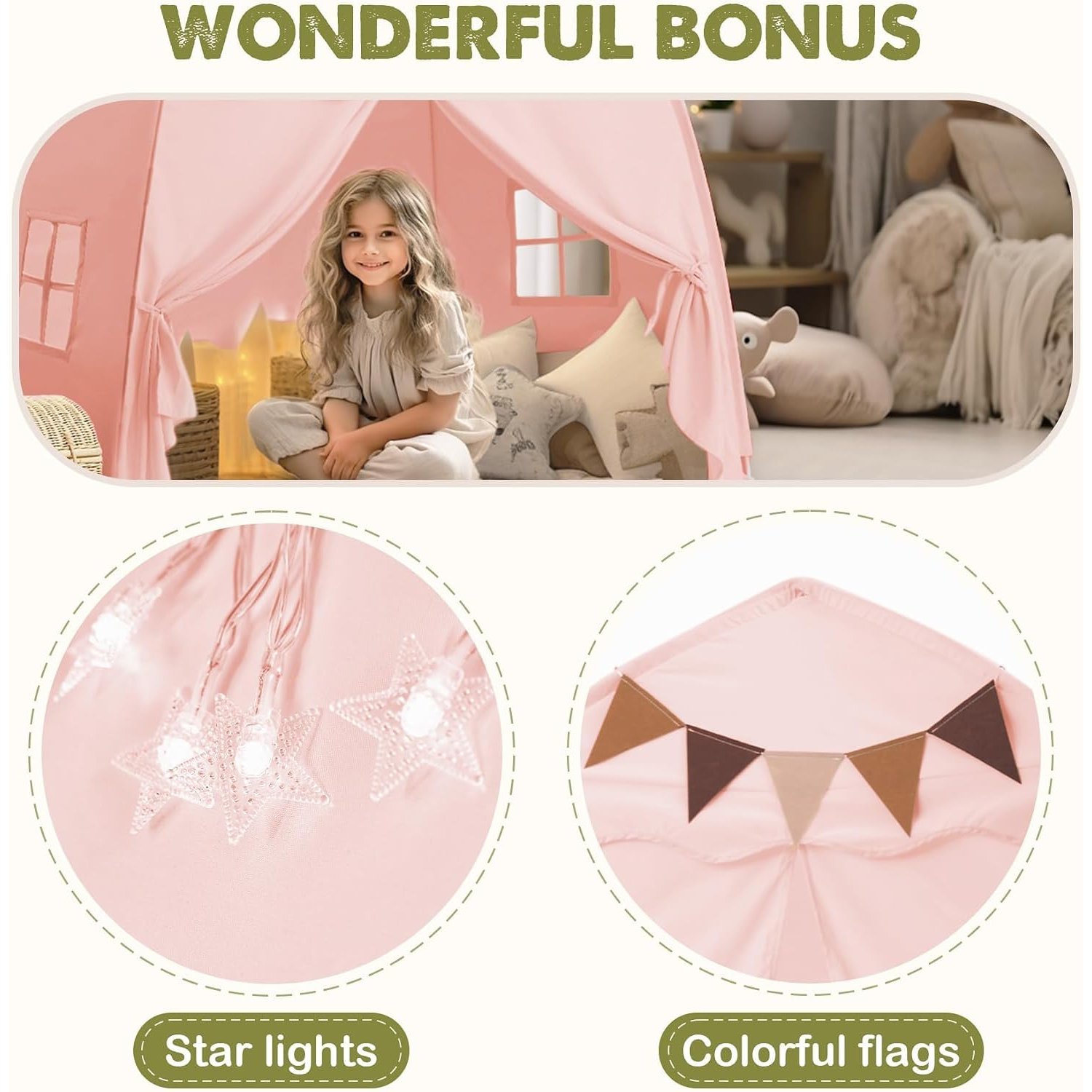
The two windows matter more than the flags, though the flags are what the child notices first. Airflow is the reason a tent stays comfortable through a long afternoon. A sealed fabric box gets warm and stale fast, and children leave. Cross-ventilation through two openings keeps that from happening.
Inside, a rug or a folded blanket on the floor changes everything. Bare floor is cold and hard, and a tent without something soft underneath gets used for play but not for resting. Add a cushion and a small book stack and it becomes a destination.
Cleaning and keeping it going
The fabric is machine washable, and you should actually use that. Play tents get filthy in ways parents underestimate. Crumbs work into the corners, felt tip finds the walls, and juice finds everything.
Take the rods out first. Every time. Washing a tent with the frame still in it is how sleeves tear and rods warp. Once the fabric is free, a cool gentle cycle with a mild detergent handles most of it. Skip the fabric softener, which can leave a residue that attracts more dirt.
Air dry it. Hang it over a line or a clothes airer and let it go completely dry before reassembly. Fabric that goes back on the frame slightly damp will develop a smell inside a week. Heat from a tumble dryer can shrink panels enough that the rods no longer fit properly, so it is not worth the shortcut.
The rods need nothing more than a wipe with a damp cloth. Check the ends occasionally for splintering and keep them bundled together when stored so they do not bend against each other.
For storage, dry and dark is the rule. A cupboard shelf or under a bed is perfect. Garages and sheds are not, because fabric stored in damp air picks up mould spots that do not come out.
The short version
A play tent lives or dies on its size, and this one is genuinely large. 150 cm wide, 100 cm deep, 150 cm tall, with a dome roof that keeps the headroom usable rather than pinching it into a point.
It is pink fabric on fibre rods, weighs 800 g, has two tie-back curtains and two windows, and carries pennant flags across the top. It needs assembly, no tools, and it folds flat when you want your floor back. The fabric washes, which is the feature that decides whether a tent lasts three months or three years.
It is made for ages three and up, works indoors or in a shaded outdoor spot, and holds three children for reading, playing or a nap. Measure your corner, check your ceiling, and if the numbers work, it is a straightforward buy.