
The complete guide
Choosing an Indoor Play Tent That Kids Keep Coming Back To
The problem with most kids' hideouts
Children want a space that belongs to them. Not a shared playroom, not a corner of the lounge with a toy box in it, but somewhere with walls they can go into and pull a flap shut behind them. That urge shows up early, which is why so many families end up with sheets draped over the dining chairs and a kitchen that is out of action for the afternoon.
The usual fix is a play tent. The trouble is that a lot of them are too small, too flimsy, or too dull to hold attention past the first week. A child crawls in, finds there is nowhere to actually sit with a book, and crawls back out. The tent gets folded into a cupboard and stays there.
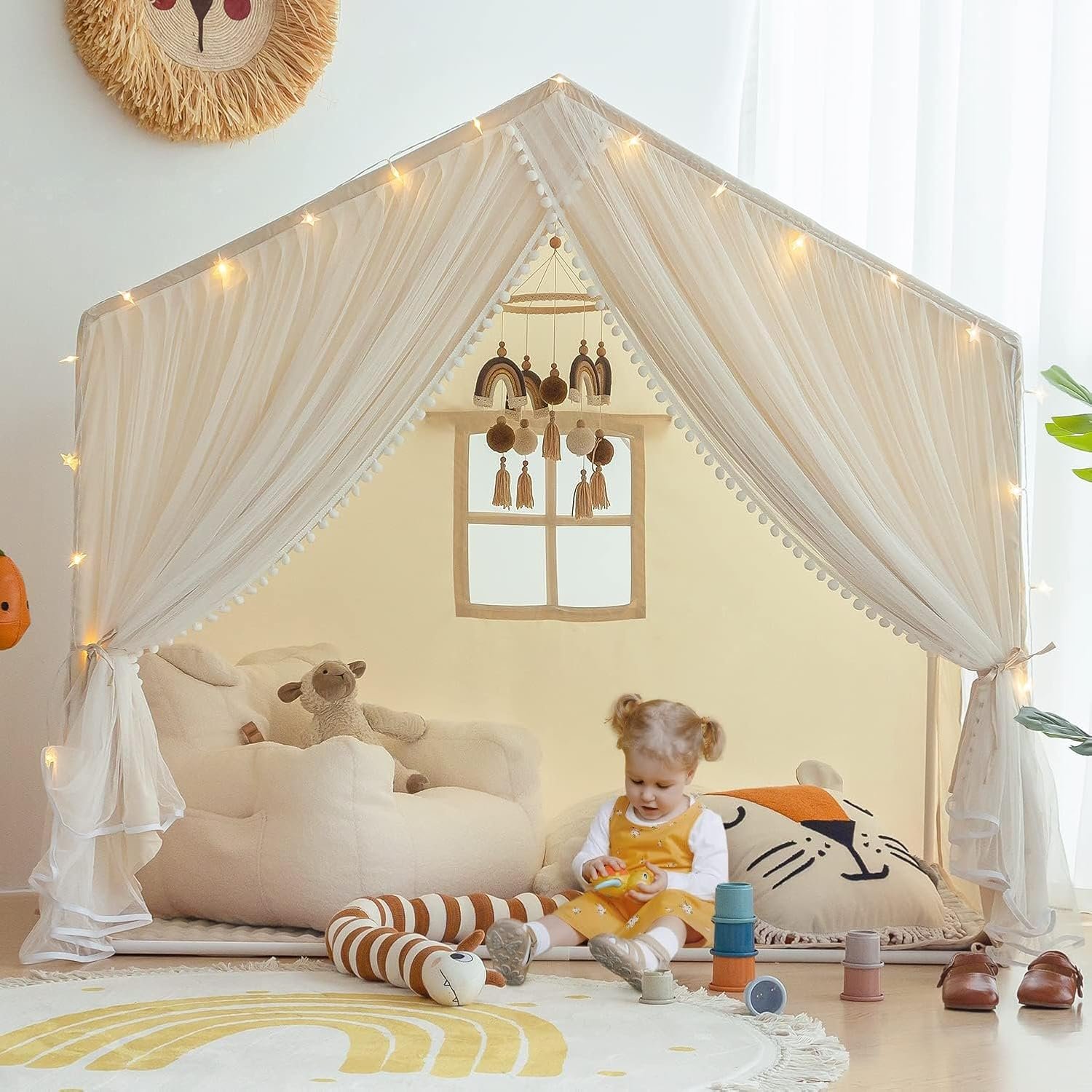
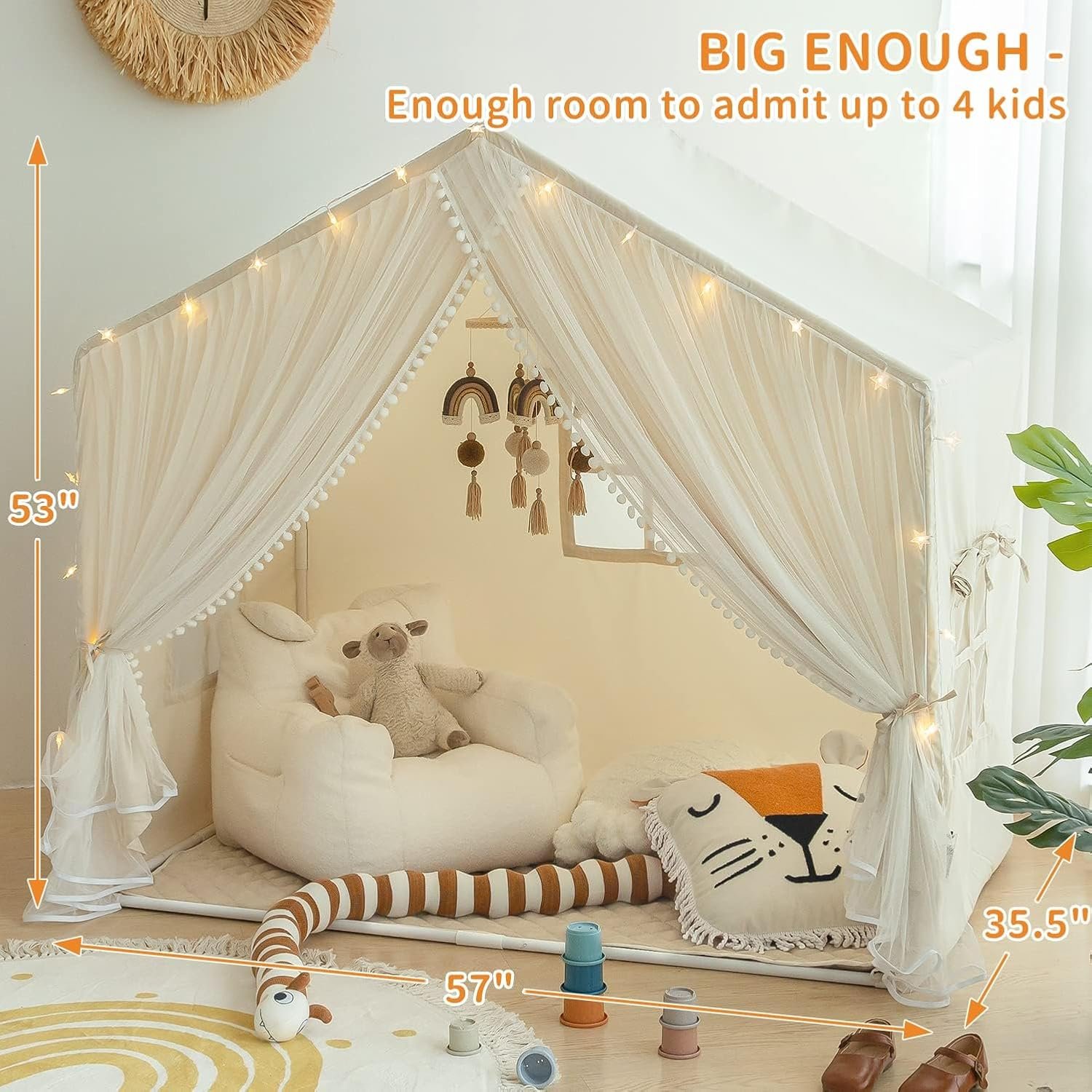
What makes the difference is size, comfort underfoot, and some reason to stay. This large play tent with washable mat covers all three. It is 145cm wide and 135cm tall, so a child is not hunched over. It has a mat, so the floor is not cold boards. And it has star lights, which is the thing that turns a fabric box into somewhere worth being after dark.
How this one is put together
The tent measures 90cm deep, 145cm wide and 135cm high when it is set up. Those numbers matter more than the word "large" on a box, so it is worth marking that footprint on your floor with a tape measure before you order. In practice it fills a corner of a bedroom or the end wall of a playroom without dominating the room.
It is made from nylon and polyester over a pole frame. The whole thing weighs 1.2kg, which is light. That is good news for moving it, folding it and storing it, and it is also a reminder that this is a fabric structure rather than furniture. It stands well for sitting, reading and pretend play. It is not built for climbing on.
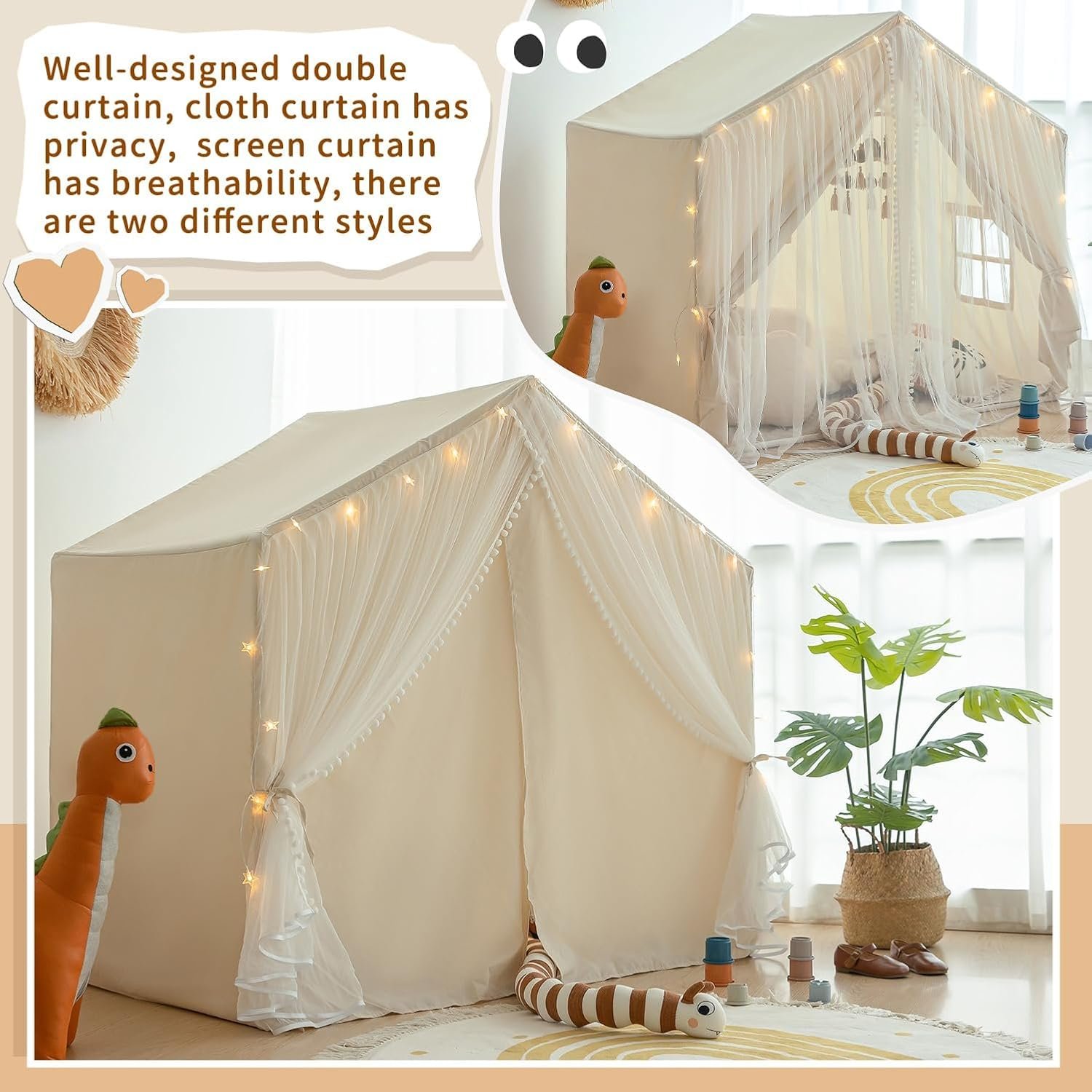
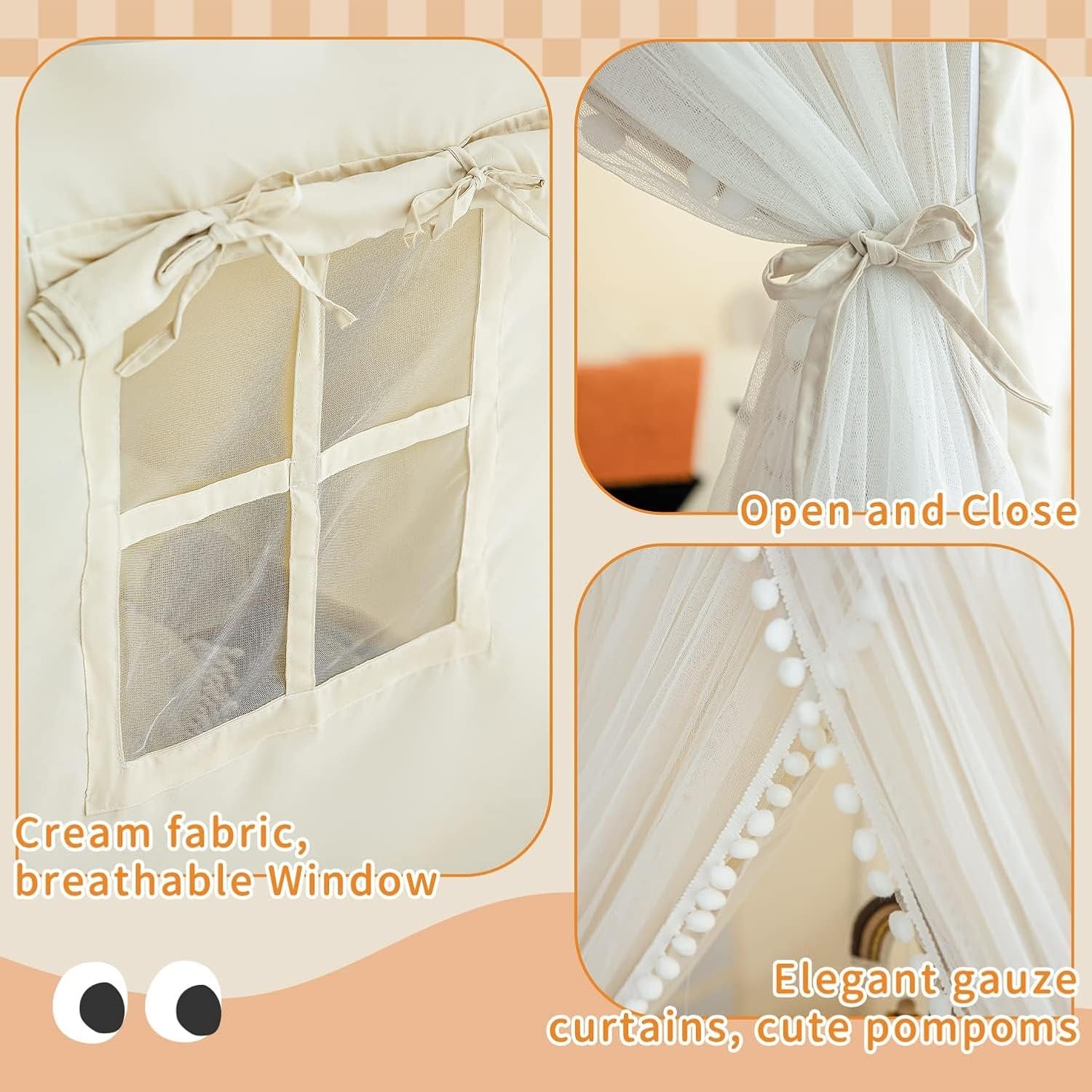
Mesh windows run through the design. They do two jobs. First, they keep air moving, which matters when two kids are inside with the flap closed on a warm afternoon. Second, they let you look in without going over and opening anything up. Most parents want to know what is going on without being part of it, and mesh is the simple answer.
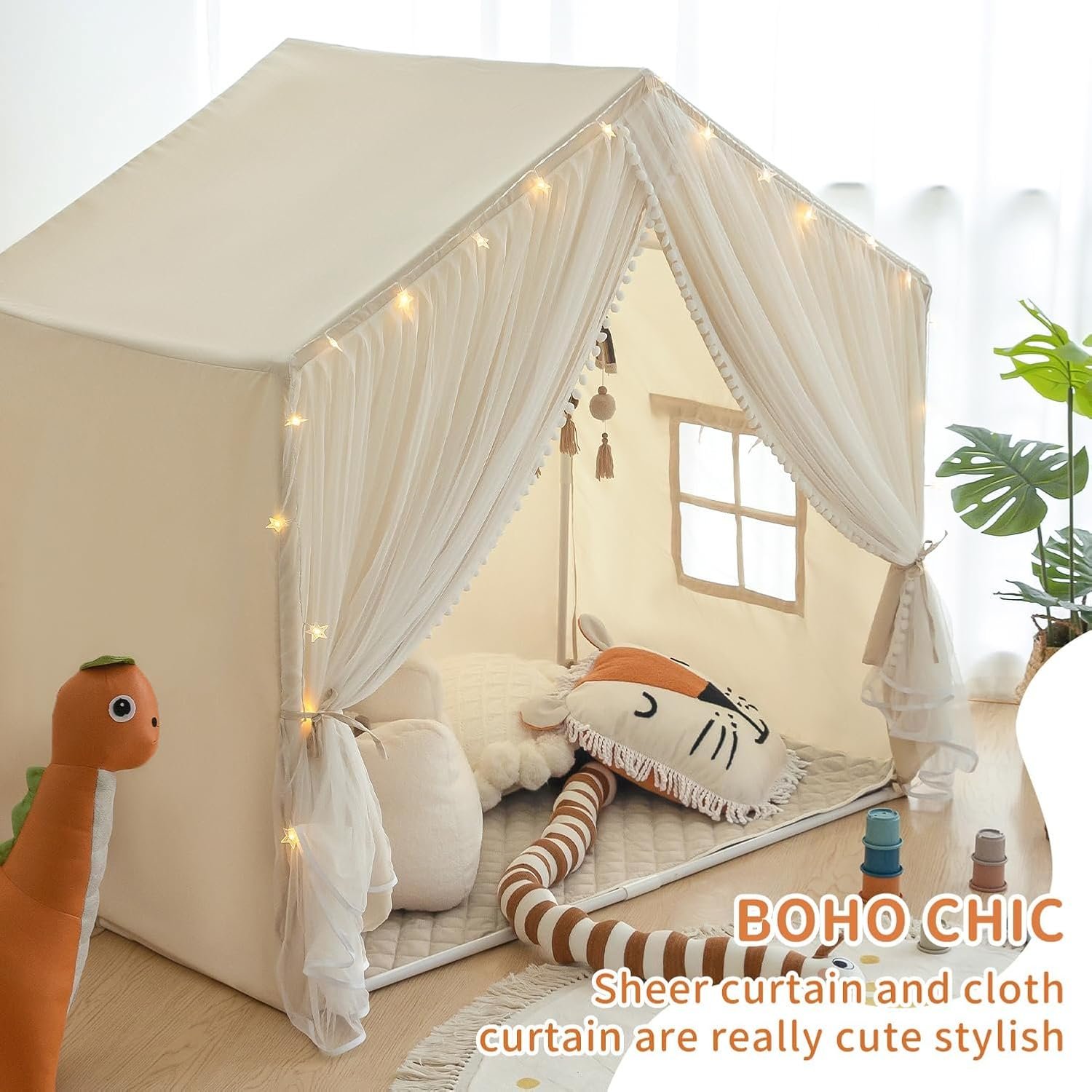
The star lights are included rather than sold separately. They hang inside and give a soft glow. A lot of the appeal of a play tent with lights is psychological. Flick them on, dim the main room light, and the tent stops being a toy and becomes a place. Children settle differently in there.
Assembly is required. The frame is collapsible by design, so it is made to go up and come down repeatedly rather than being a one-time build. First setup takes the longest. After that it is quick.
The mat is the part people underestimate
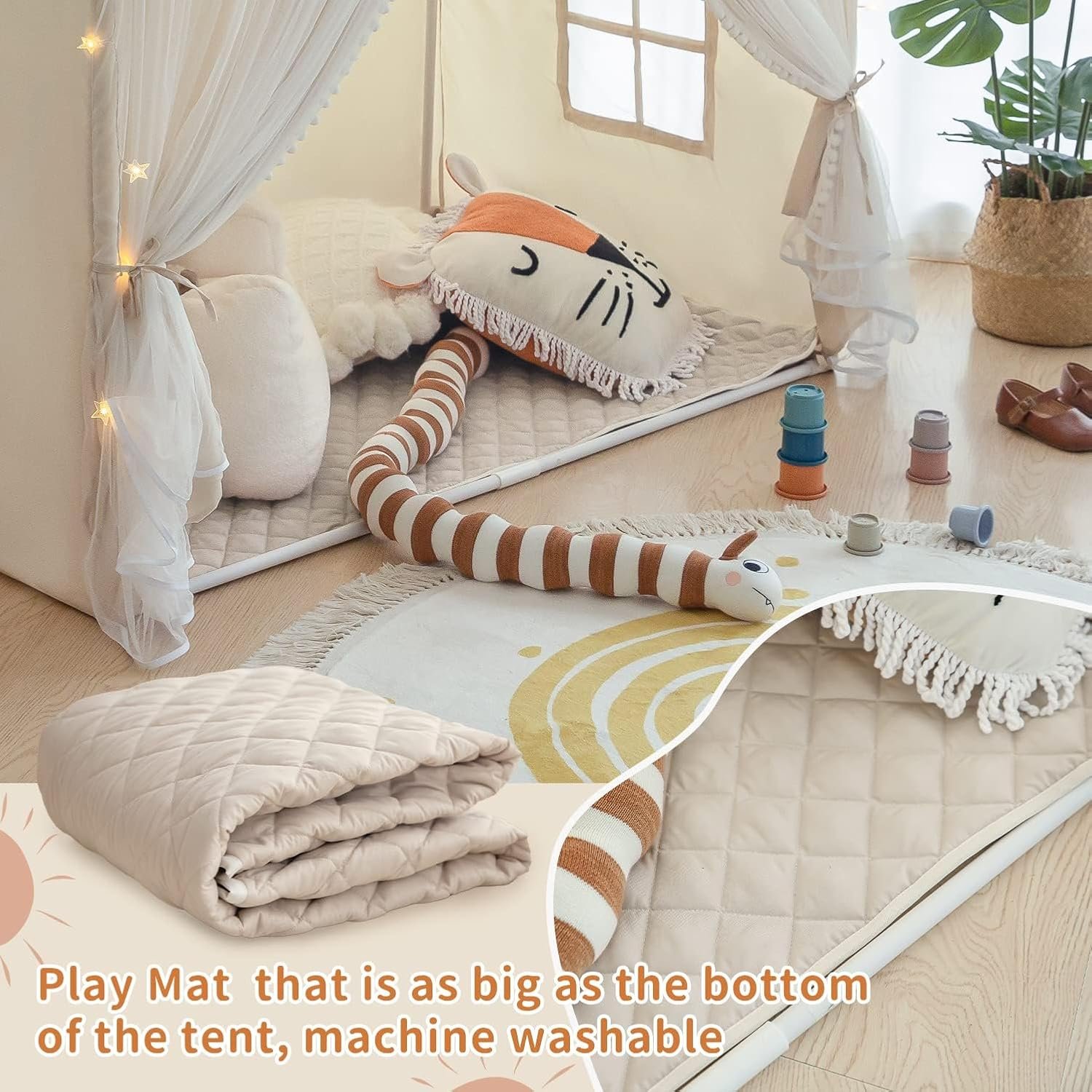
Plenty of play tents are just a shell. You stand them on the carpet and that is that. It sounds fine until you watch how children actually use the space. They sit, they lie down, they tip out a box of blocks. A bare floor is hard, cold in winter, and shows every crumb.
A mat changes the behaviour. With something soft underneath, kids stay in the tent for longer stretches, which is the whole point. And because this mat is washable, it stays pleasant. Snacks happen. Felt tip happens. Being able to lift the mat out, clean it and put it back is the difference between a tent that stays in use and one that quietly becomes unpleasant.
If you are comparing a play tent with floor mat against a cheaper shell-only option, factor in what you would have to buy separately to make the shell comfortable. The gap usually closes fast.
Who it suits
The manufacturer recommends ages three and up. That feels about right. A three year old can get in and out independently, understands the idea of a den, and will play imaginatively inside it. Older primary-age children use it differently, more as a retreat with a book or a tablet, and the 135cm height means they are not folded in half.
It works well for siblings who share a bedroom and need a bit of separation. It works for an only child who wants somewhere that is not the middle of the family. It suits families with limited space, because it folds away. And it suits households where the same room has to be a playroom in the afternoon and an adult room in the evening.
If you have a child who finds busy rooms overwhelming, a small enclosed space they can choose to enter is often calming. The mesh windows keep it from feeling shut off. This is not a therapeutic product, just a sensible bit of design.
For a toddler under three, think carefully. The age guidance is there for a reason and the light string in particular needs supervision with very young children.
How to choose between tent styles
Shoppers usually land on one of three types. Teepees are tall and narrow, look good in photos, and have a small floor area. Pop-up cubes are cheap and instant but tend to be short and cramped. Larger frame tents like this one give you real internal space at the cost of needing assembly.
Ask yourself what the tent is for. If it is mostly decorative, a teepee is fine. If it is for a toddler to crawl into for five minutes at a time, a pop-up does the job. If you want an indoor playhouse for kids that gets used daily by more than one child, go for floor area and height. 90 x 145cm with 135cm of headroom is in that bracket.
Then think about storage. If the tent will live permanently in one corner, the collapsible feature matters less. If it has to disappear before visitors arrive, a 1.2kg foldable play tent is a very different proposition to a wooden playhouse.
Finally, look at what is included. Lights and a mat bought separately add up, and they are the two things that most improve how a tent actually gets used.
Setting it up well
Pick a corner rather than the middle of a room. Two walls behind the tent make it feel more enclosed and stop it being knocked from behind. Leave a few centimetres of clearance so the fabric is not pressed hard against skirting or furniture.
Keep it away from heaters, radiators and open flames. Keep the light string clear of loose blankets and make sure nothing is hanging in a way a small child could get tangled in. These are basic precautions and they take thirty seconds to check.
Add two cushions and a soft throw on top of the mat. That small step does more for how much the tent gets used than anything else you can do. A couple of books inside helps too.
Keeping it in good shape
Take the mat out and wash it to its care label, then dry it flat before it goes back. Do not put the tent fabric through the machine. Spot clean it with a damp cloth and mild soap, and let it dry completely before folding, because damp fabric folded into a cupboard will smell.
Wipe the star lights with a dry cloth only and keep them away from water. If any part of the string looks damaged, stop using it.
When you fold the frame, go gently. Forcing poles is the most common way these tents get damaged. Store the whole thing somewhere dry and out of strong sunlight, since prolonged sun fades and weakens light fabric over time.
The short version
This is a large, light, indoor play tent with a mat and star lights included. At 90 x 145 x 135cm it gives children a space they can properly sit in, which is the thing that separates a tent that gets used from one that gets ignored. The mesh windows keep the air moving and let you keep an eye in. The washable mat keeps it comfortable and clean. It folds away when the room needs to be a room again.
Recommended for ages three and up. Assembly is required, and it weighs 1.2kg. If you want somewhere for a child to read, hide, build and wind down without giving up a whole room, this is a sensible pick.