
The complete guide
How to Choose a Kids Play Tent That Actually Gets Used
The problem with most kids' tents
Plenty of play tents get opened on a birthday, used hard for a fortnight, and then quietly fold into a cupboard. It is rarely because the child lost interest in the idea of a den. Children love dens. It is usually because something small about the tent made it annoying.
The floor was cold. There was only one door, so two kids could not both be in there without an argument. It was so bright and cartoonish that it looked wrong in the living room, so it got banished to a bedroom where nobody played. Or it was fiddly enough to set up that it never came out again after the first pack-down.
A good play tent sorts those small things out first. The fun part takes care of itself.
What this one actually is
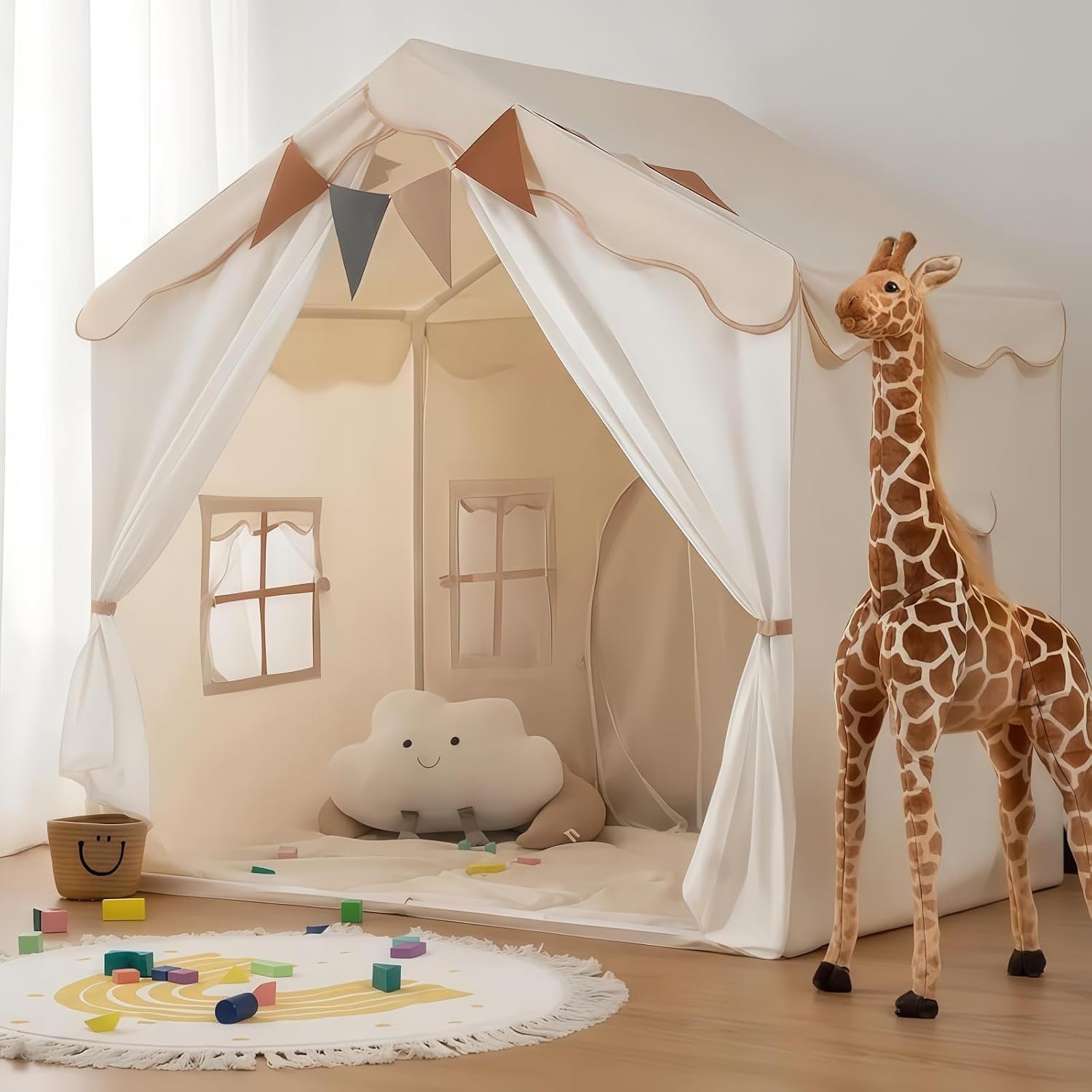
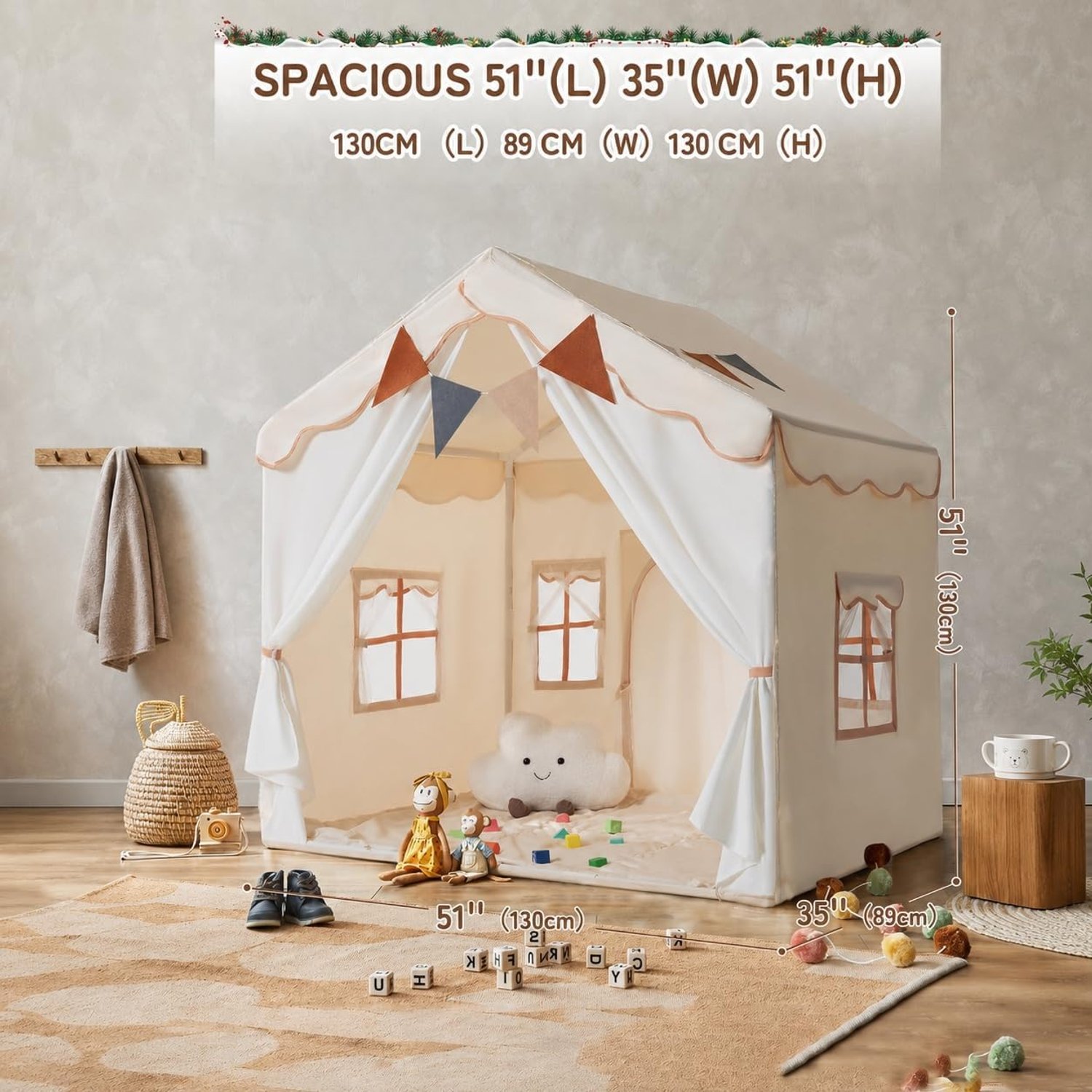
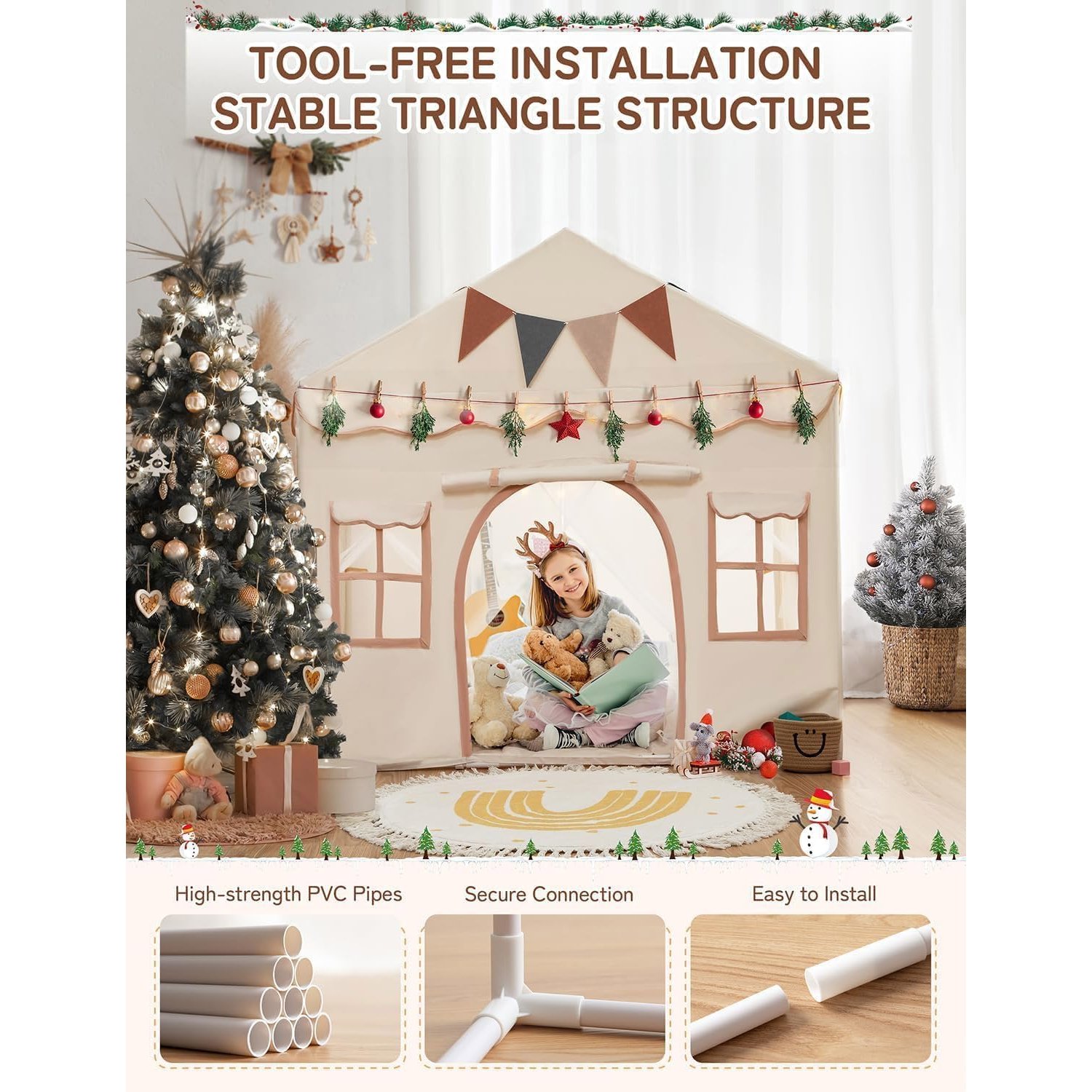
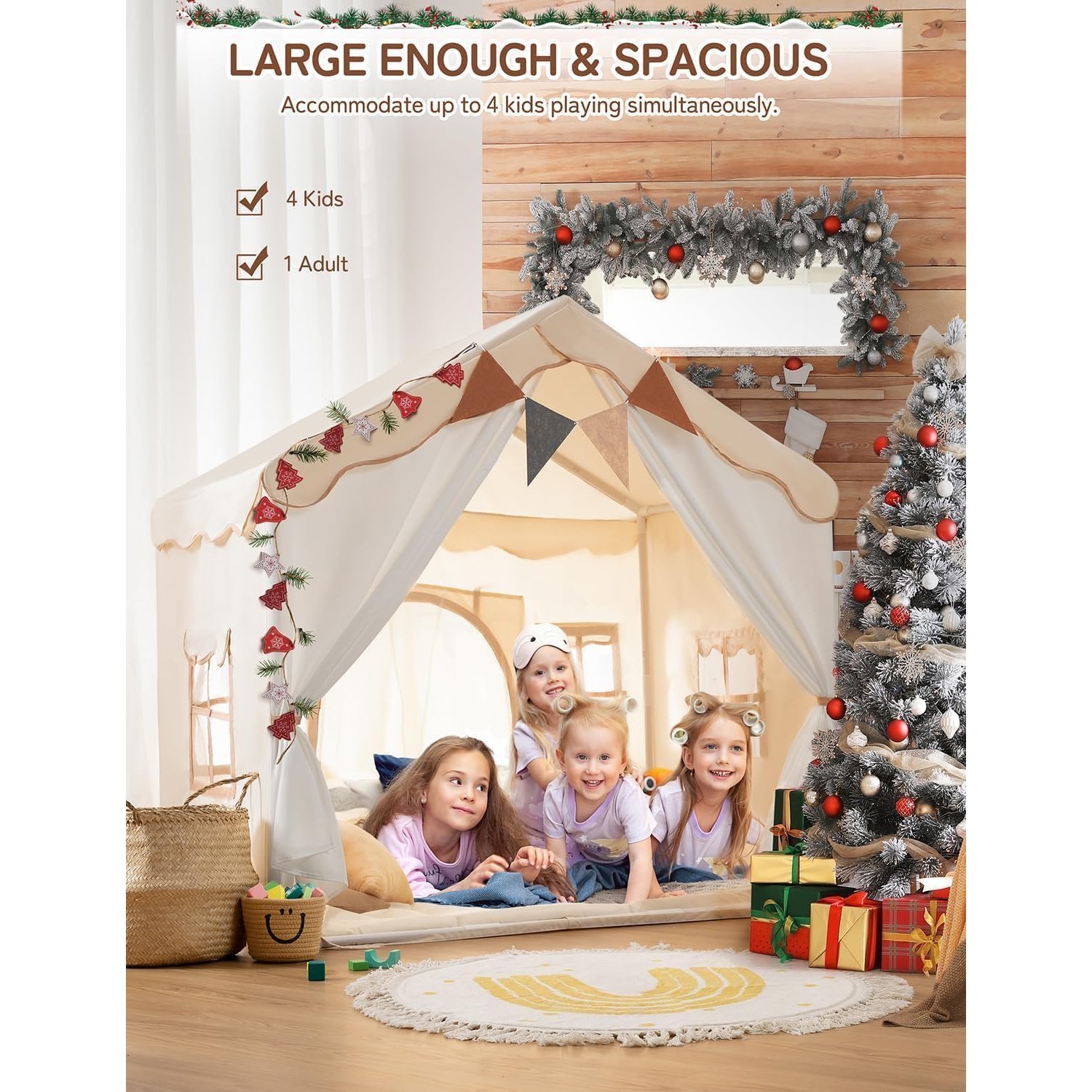
This is a 130 cm tall fabric playhouse with an 89 cm square base, made from fabric and PVC in beige and white, with a soft safari theme and a giraffe character detail. It has two doors and four windows. It comes with a padded floor mat and decorative bunting, and the frame collapses so you can put it away. Assembled, the whole thing weighs 2.5 kg. It is recommended for children aged three and up, and it is rated for indoor or outdoor use.
That is the full picture. Nothing in it is unusual on its own. What makes it work is that the three pieces most tents skimp on, the floor, the second door and the colour palette, are all handled.
Why the floor matters more than you think
Ask a parent why a play tent stopped being used and the floor comes up a lot. On carpet, a tent with no base is perfectly fine. On floorboards, tile or a patio slab, it is not. Children sit down, the floor is hard and cool, and within ten minutes they are off doing something else.
The padded mat included here solves that directly. It gives a soft, defined base, which is also why the tent reads as a proper little room rather than a fabric shell. A mat has a second benefit too. It holds the base square, so the walls hang evenly instead of bowing inward.
If you are comparing options, a play tent with floor mat included is almost always better value than buying the tent and then hunting for a rug that fits an 89 cm square.
Two doors, four windows
One door sounds like enough. It is, right up until a second child wants in. Then one of them is crawling across the other, and the fabric gets yanked, and someone cries.
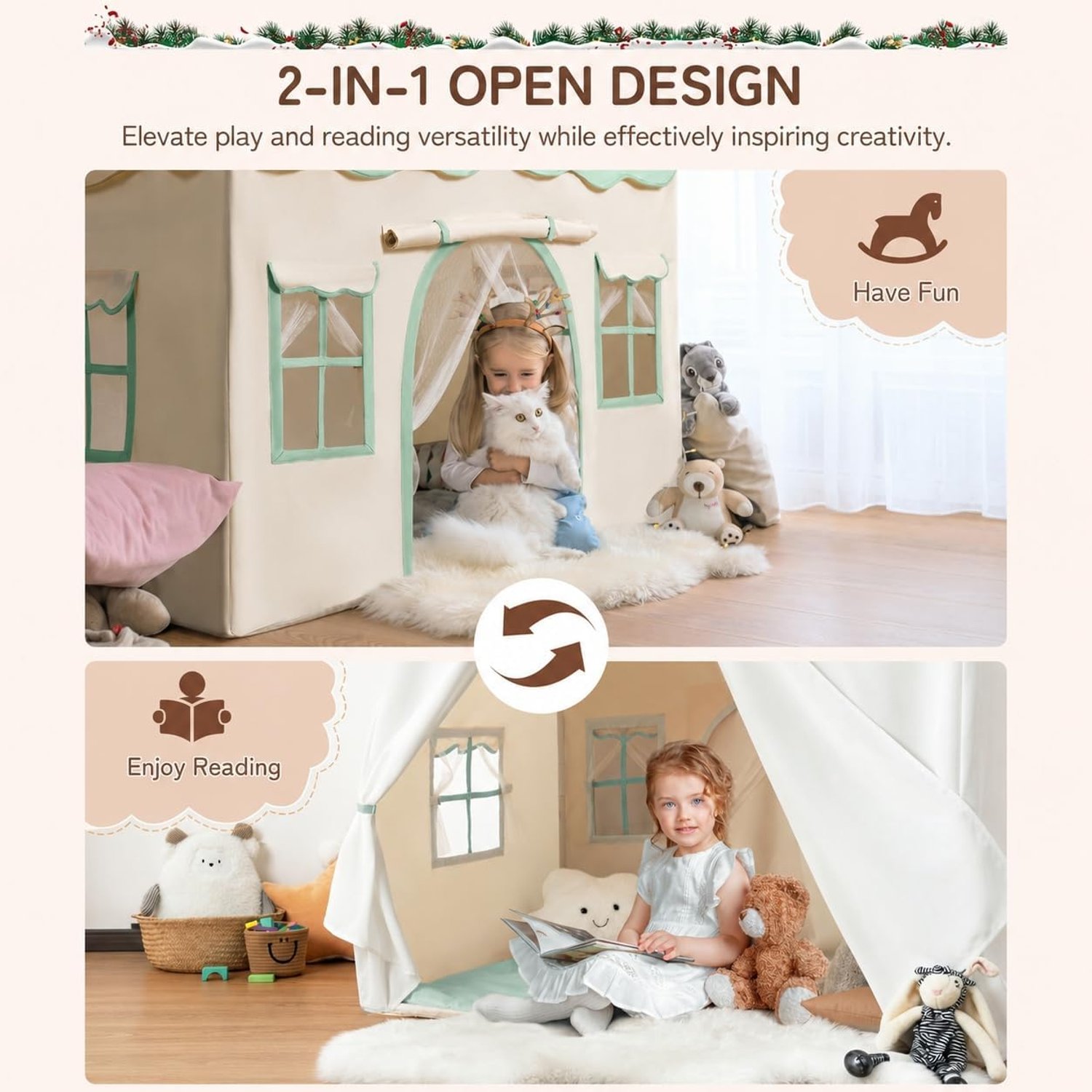
Two doorways mean a clear way in and a clear way out. Children loop through, which turns out to be most of the game. The four windows do a related job. They let light in, they let a child see out, and they let you check on things from the sofa. Some younger children are uneasy in a fully enclosed space, and a playhouse with windows is much easier for them to settle into.
Will it suit your home?
This is the part people underestimate. A tent lives in your house, usually in a room you can see from the kitchen. If it clashes, it moves to a bedroom, and once it is out of sight it is out of use.
Beige and white with a quiet safari motif is about as easy to place as a kids' tent gets. It sits happily beside natural timber, rattan, linen and plain painted walls. There is no licensed character to date it, and no primary-colour block to fight with the rest of the room. The giraffe detail and the bunting give it enough personality for a child without making it loud.
It is also genuinely neutral, so it works for any child and passes down to a younger sibling without feeling like a hand-me-down from someone else's taste.
Getting the space right
Before you order, put a tape measure on the floor. You need an 89 cm square, plus a little clearance so the walls are not pressed against furniture. Height is 130 cm, which clears almost anything except a very low sloped ceiling or the underside of a loft bed.
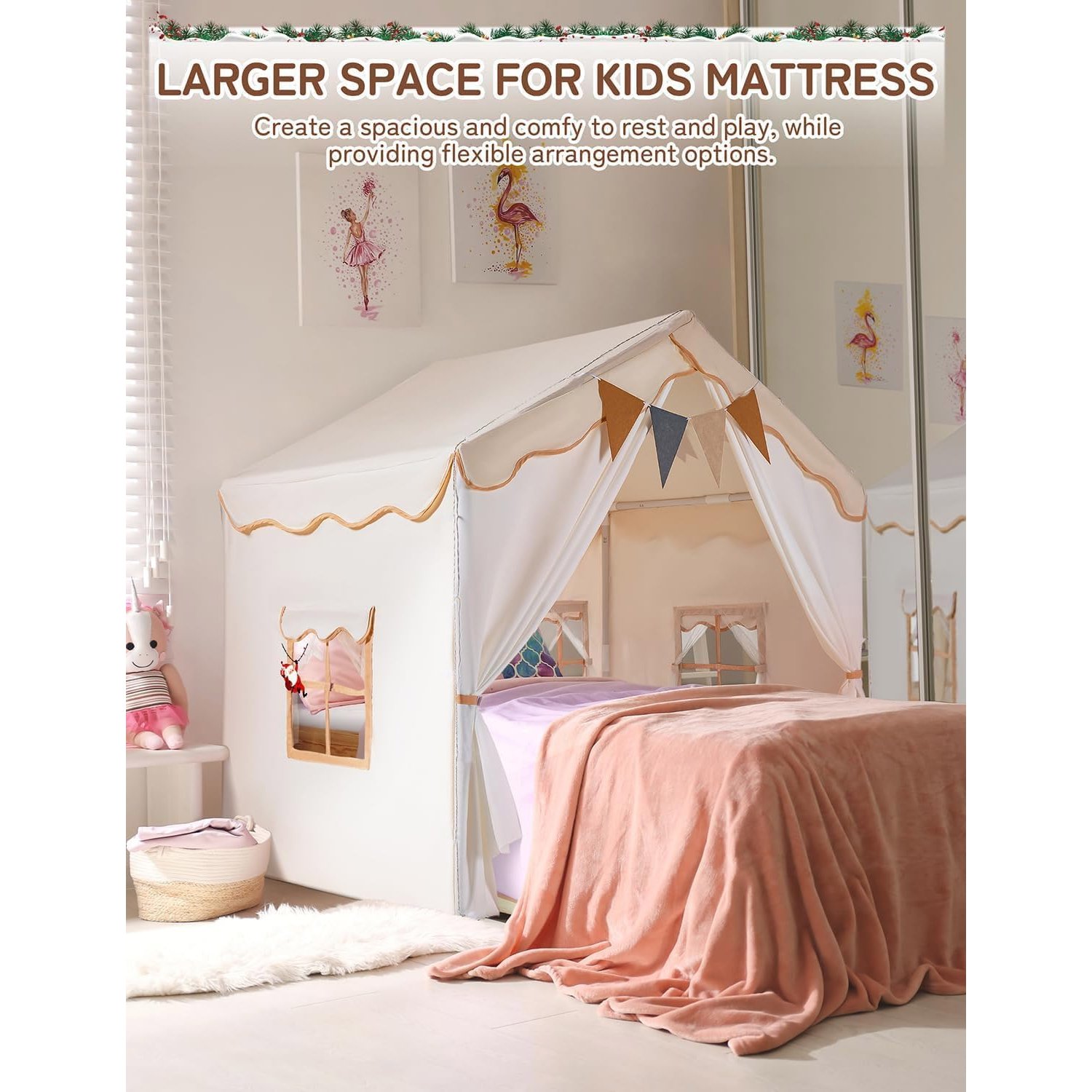
Corners work well. The tent has something to lean against, it stays out of walkways, and the two doors still both stay accessible if you angle it slightly. Next to a bed or under a window are both popular spots for a reading nook tent for kids.
Outdoors, pick flat ground on a dry day. Grass, decking and paving all work. There are no pegs in the set, so a calm day is better than a breezy one, and the tent should come back inside afterwards.
Setting it up without the frustration
The frame is a push-together pole structure with the fabric cover going over the top. Done right, it is a few minutes' work.
There is one mistake almost everyone makes once. If a pole joint is not pressed fully together, the frame ends up marginally longer than it should be, and the cover will not stretch over it. It feels like the cover is too small. It is not. Go around every joint, push each one firmly home until it seats, then try again. After that the cover slips on without a fight.
Take-down is the same process in reverse, and because it collapses, a foldable kids tent like this stores under a bed or on a wardrobe shelf. That is worth having even if you plan to leave it up most of the time, because it means you can clear the floor when visitors come or when you want the room back.
Looking after it
Fabric play tents are easy to maintain if you are consistent. Wipe marks off the panels with a damp cloth and a little mild soap, then let everything air dry fully before folding. Spot clean the padded mat rather than soaking it, and dry it flat.
Skip the bleach, the tumble dryer and the iron. None of them do fabric play equipment any favours.
The one rule that matters most is storing it dry. If the tent has been on grass, or it has picked up damp from a patio, let it dry out properly before it goes in a cupboard. Folding a damp tent away is how mildew starts, and mildew is much harder to remove than a crayon mark.
Each time you set it up, run a hand over the pole joints and check they are still firm. That takes five seconds and keeps the structure solid.
Who it suits
This one is a good match if you have a child around three to seven who likes a space of their own, and you want something that can live in a shared part of the house without looking out of place. It is also a sensible pick if your floors are hard, because the mat is already included.
It is less suited to a child who wants to stand up inside and run around, since 130 cm is sitting-and-kneeling height for most school-age kids. And it is not an outdoor structure in the weatherproof sense. Think fine-weather garden play tent, then back indoors.
As a gift it is an easy one. Neutral colours mean you do not need to guess preferences, and it arrives compact.
The short version
Look for three things in a kids' tent and you will not go far wrong. A floor you can actually sit on, more than one way in, and a look you can live with in your own home. This two door play tent with bunting covers all three, adds the decorative flags so you are not shopping for extras, and folds down when you need the space back.
Set it up properly the first time, press every pole joint home, keep it dry, and it will be the spot your child disappears into for a long while yet.