
The complete guide
Choosing a Dome Play Tent, A Practical Buyer's Guide
The problem with most kids' play tents
Plenty of families buy a play tent, and plenty of those tents end up in the garage within six months. The reasons are usually the same. The tent is too small, so a child outgrows it almost immediately. Or it is flimsy, and one enthusiastic afternoon collapses it. Or it is so bright and busy that it dominates a bedroom and the adults quietly get rid of it.
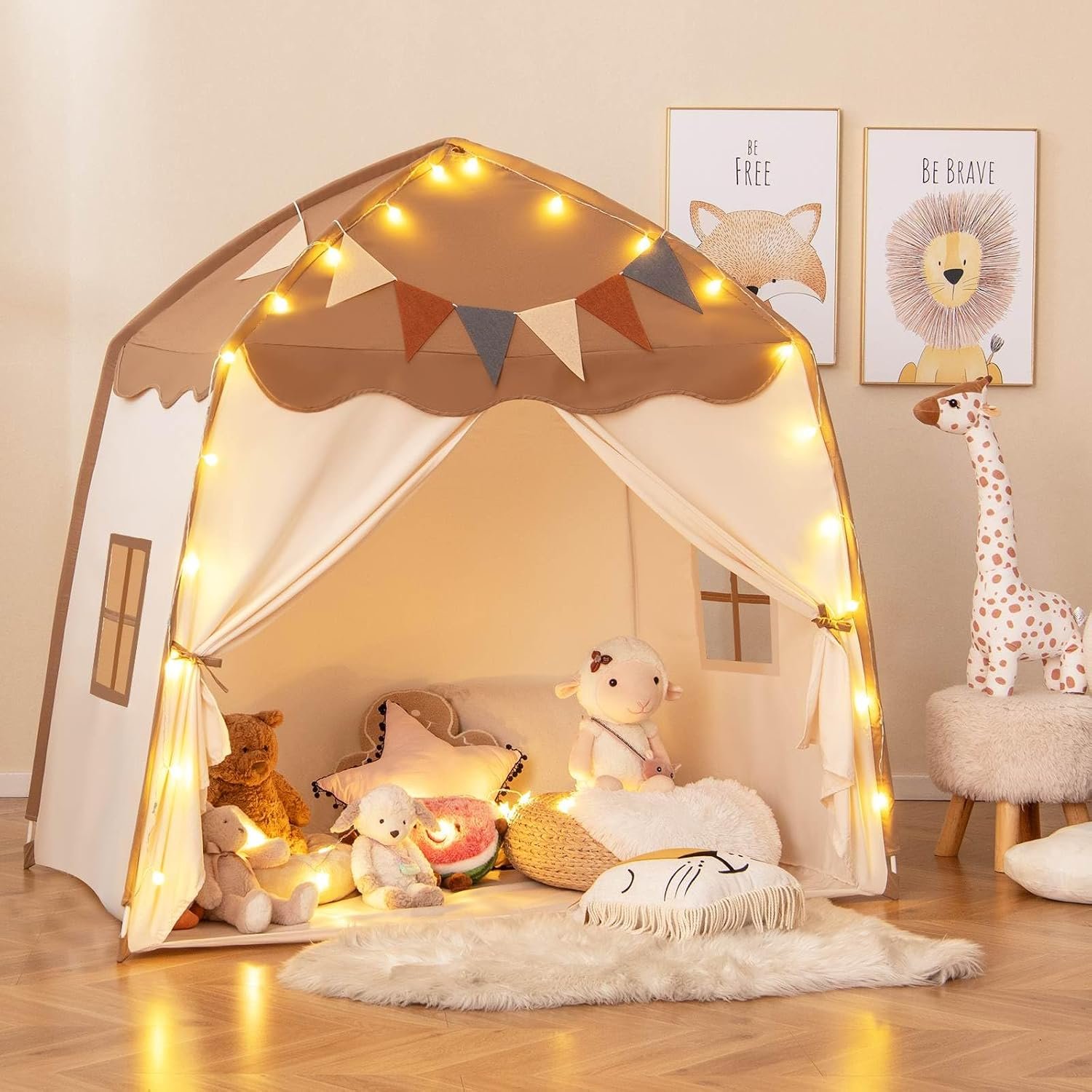
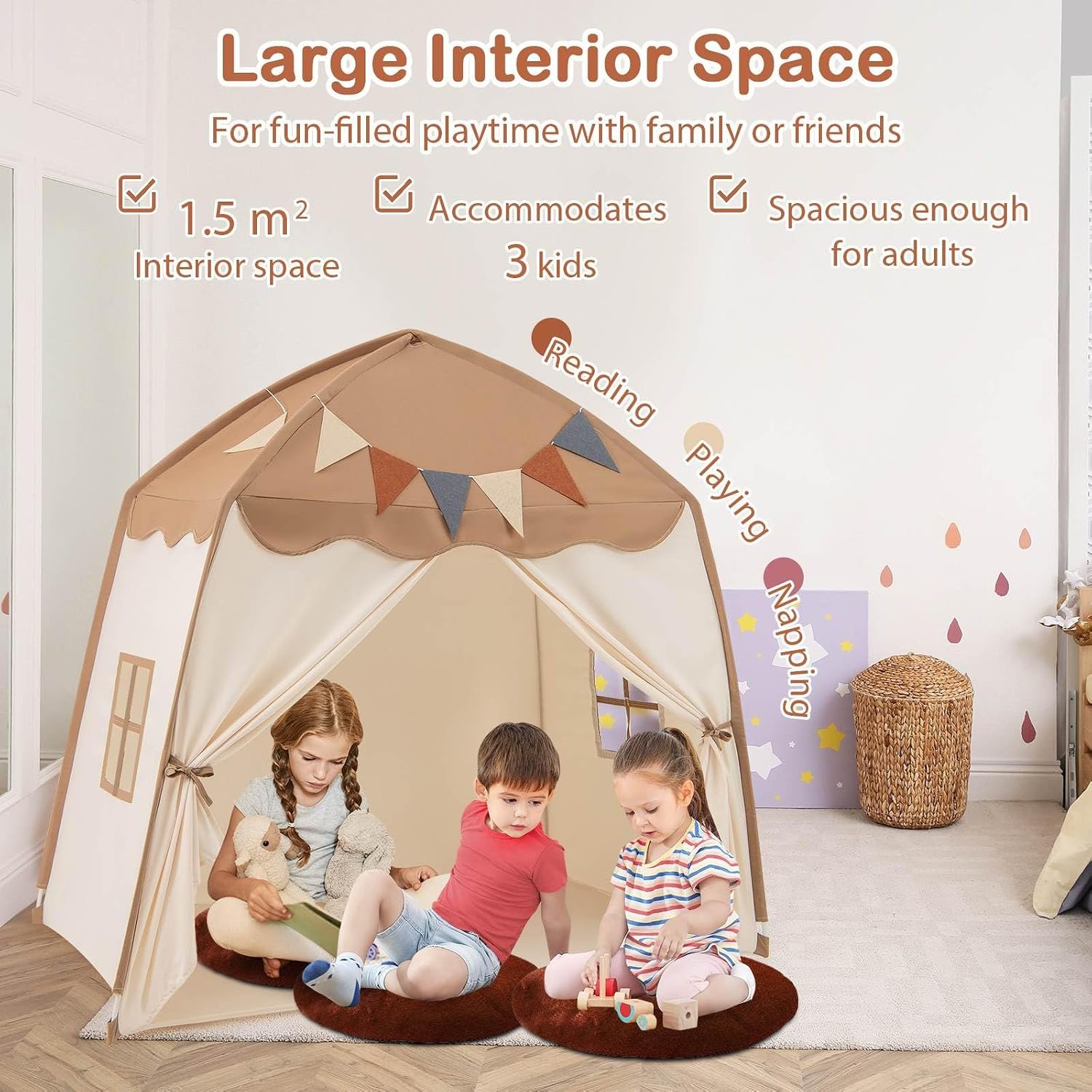
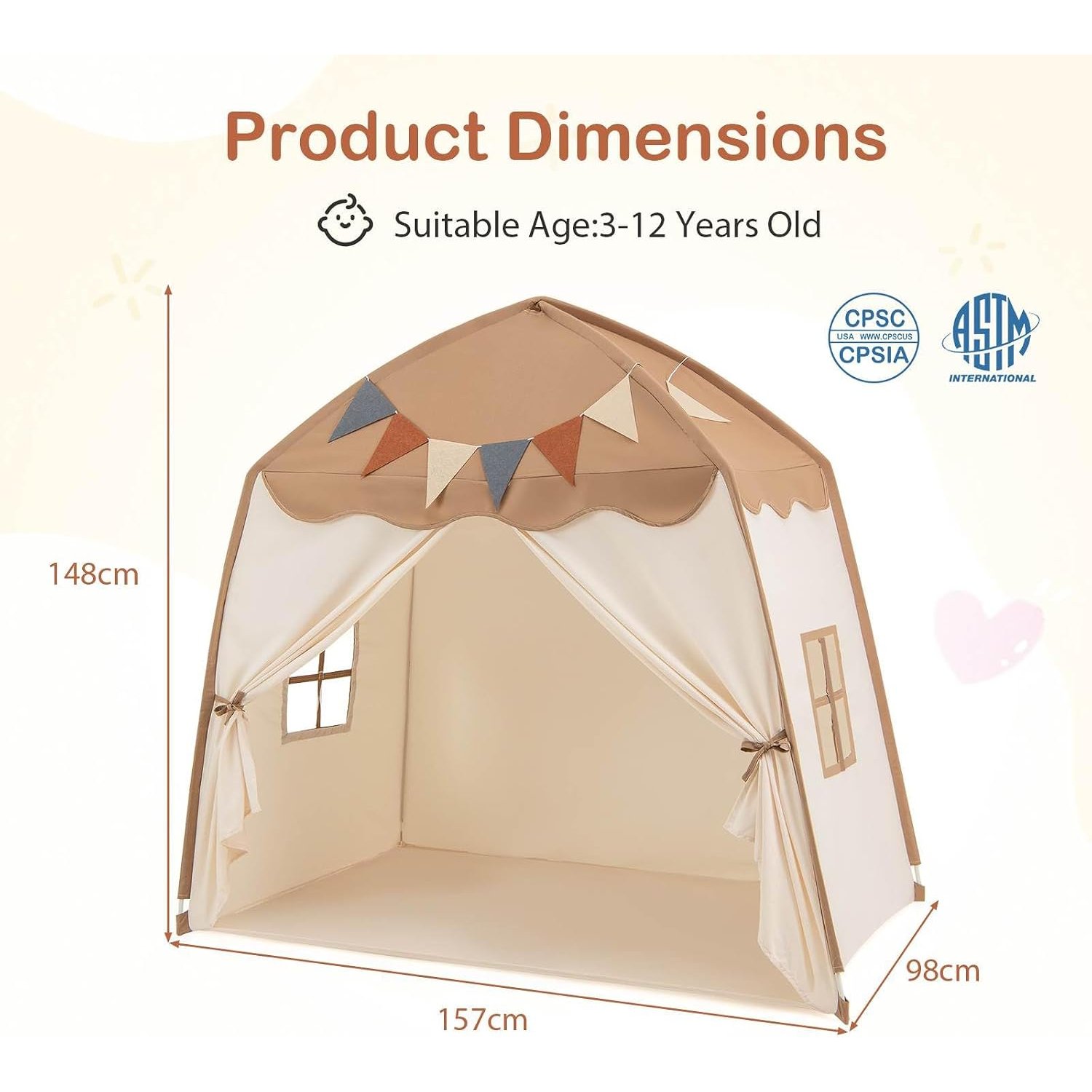
A dome play tent with lights and flags addresses the first two problems directly. At 157 cm long, 98 cm wide and 148 cm high, this is not a toddler pop-up. It is a structure a child can walk into, sit up in, and share with a friend or two. The fibreglass rod frame holds the dome shape under normal play, rather than folding the moment someone leans on a wall.
The third problem comes down to colour and placement, which we will get to.
What a child actually does in a tent
It helps to be realistic about use. Children do not play "tent". They play inside a tent, and the activities change by age and mood.
For a three or four year old, it is mostly a den. They drag in soft toys, pull the curtains shut, and hold conversations with nobody in particular. For a six or seven year old it becomes a base for whatever game is running in the house, or a place to read without a sibling bothering them. By eight or nine, the appeal shifts again, usually toward sleepovers, screen time in a den, or a spot to hide with a snack.
That range is why interior height matters more than people think. A tent you have to crawl into gets used lying down, and then only until the child is too long for it. A tent you can sit up in comfortably keeps working for years. The 148 cm height here puts it firmly in the second category.
How the construction works
The design is straightforward. Flexible fibre rods thread through channels in a polyester cover and bend into a curve. When the ends connect, the tension holds the dome up. It is the same principle as a lightweight camping tent, scaled for a bedroom.
The practical benefit is that the whole assembly weighs 2.4 kg. You can pick it up and carry it, which sounds minor until you want the lounge floor back before guests arrive. Flat-pack furniture it is not, so moving it is not a project.
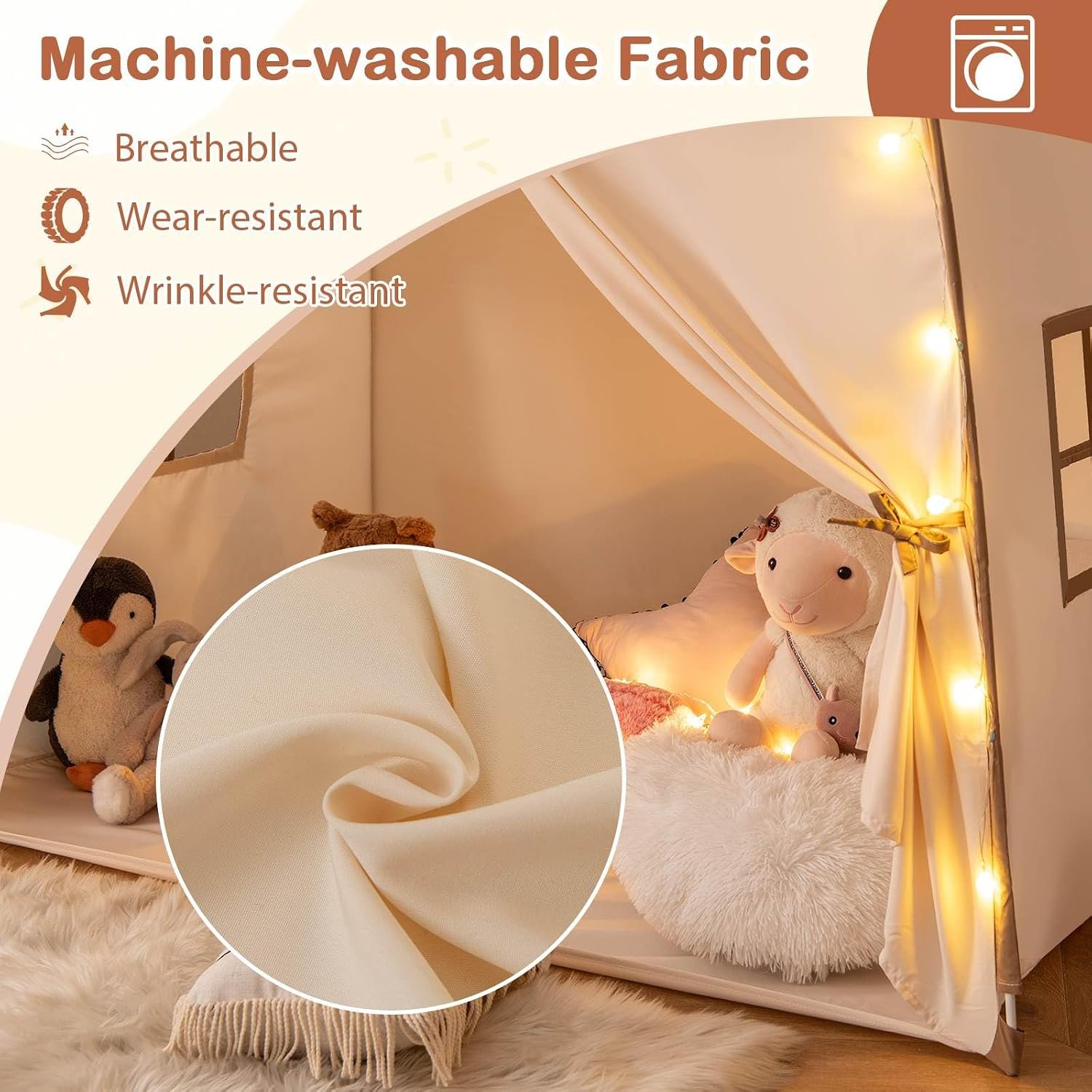
The polyester cover is described as soft and wear-resistant, and it is machine washable once you remove the rods and the decorative pieces. That one feature does more for the lifespan of a play tent than almost anything else, because the real enemy of fabric play gear is not damage, it is grubbiness. A tent that can go through the wash stays in the house.
The lights and the flags
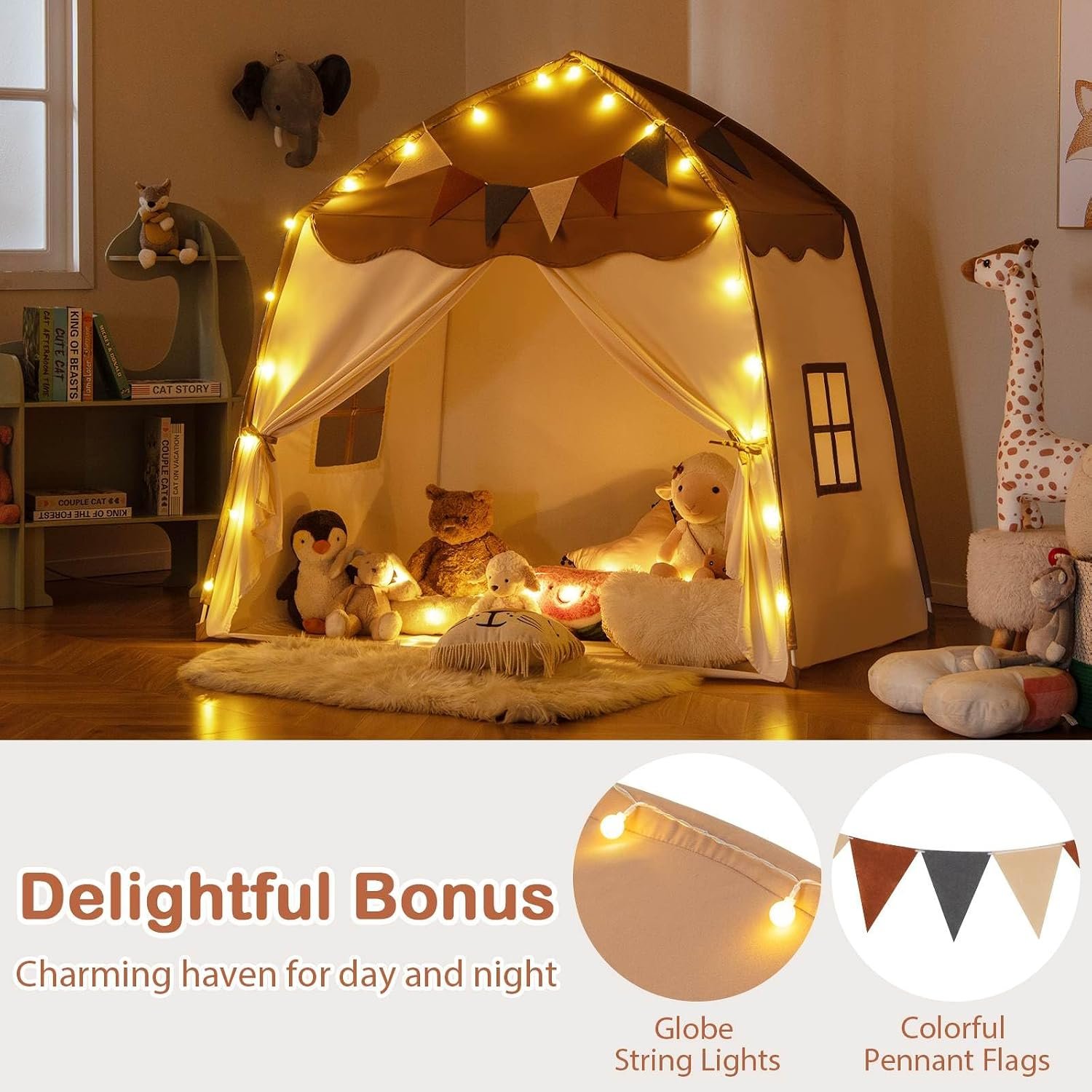
The fairy string light is the part children notice first. Soft light inside a fabric dome creates a very different feeling from an overhead bedroom light, which is why these tents so often become the wind-down spot before bed. The pennant banners add a bit of occasion to the outside of the tent and make it read as something special rather than just another toy.
Two curtains close the entrance, and both can be tied back. Keep them tied open for everyday play and let children close them when they want privacy. Two windows handle ventilation, and they earn their place once the curtains are shut and two or three kids are inside on a warm afternoon. Airflow is a comfort issue, not a decorative one.
Who this suits
This is a good match if you have more than one child, or a child who regularly has friends over. The footprint is built for company. It also suits a family who wants a calm corner in a bedroom rather than a bright plastic play structure, since the Model 2-Coffee colour is neutral enough to sit alongside normal furniture.
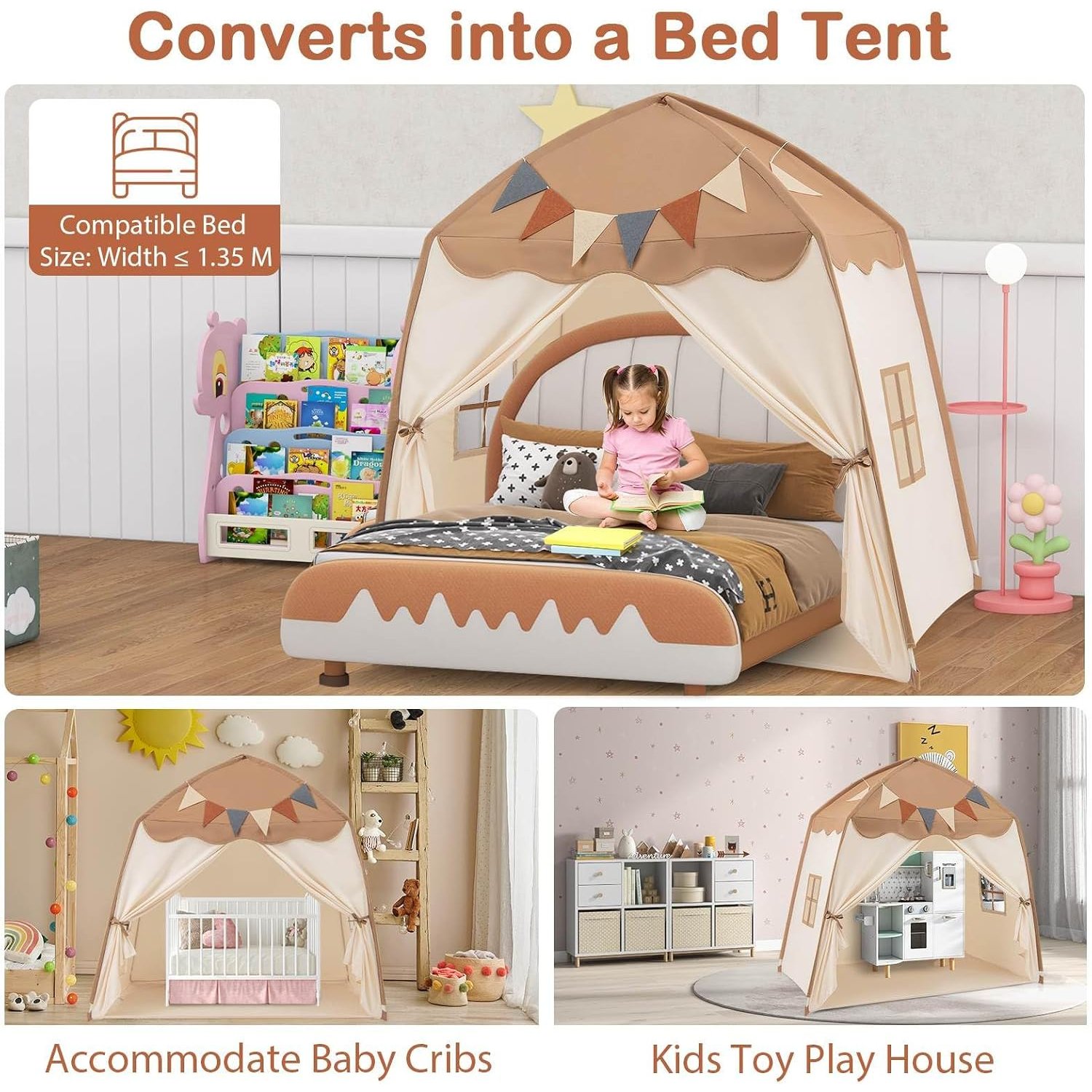
It suits households with some floor space to give up. Be honest here. You need roughly 157 cm by 98 cm of clear floor plus walking room. In a shared bedroom with two beds and a wardrobe, that may not exist. Measure before you order.
It is less suited to very young toddlers. The recommended age is three and up, and younger children in fabric structures need close supervision. It is also not a camping tent. There is no weather rating in the product record, so outdoor use should mean a dry, shaded, sheltered spot, with the tent brought back inside afterwards.
How to choose between tent styles
Shoppers usually weigh up three formats.
Pop-up tents are cheap and fold away in seconds, but they are small and the spring-steel hoops lose their shape. They suit a travel toy more than a permanent fixture.
Teepee frames with wooden poles look attractive and sit well in a styled bedroom, though the narrow cone shape wastes floor space at head height, and the poles can be knocked over.
Dome tents sit in the middle. You get usable headroom across more of the floor than a teepee, with a lighter frame than a wooden structure. The trade-off is that assembly takes a little longer the first time and the tent does not collapse flat in one motion. For a tent that stays up in a bedroom for months at a time, that trade-off is usually worth making.
Setting it up well
Give the first assembly an unhurried half hour. Lay every part on the floor and identify the rods before you start threading. Feed each rod through its channel slowly so the fabric does not bunch and catch. If a rod feels stuck, back it out and check the channel rather than forcing it.
Once the dome is standing, think about placement. A corner is usually best, since it keeps walkways clear and gives the tent two solid sides. Keep it away from heaters, lamps, power points and curtain cords. Put a rug or play mat underneath. The floor is the one thing a tent cannot improve, and a bare floorboard will make the inside feel cold no matter how good the lighting is.
Then let the child arrange the inside. That part matters. A tent a child has set up themselves gets used far more than one an adult has staged.
Keeping it in good shape
Spot clean marks as they happen with a damp cloth and a little mild soap. Every month or two, strip the cover off the frame, remove the string light and banner, and run it through a cool gentle wash. Air dry it out of direct sun, never in a tumble dryer.
Wipe the rods with a dry cloth now and then and look at the joints. A rod that is splitting at the end should be taken out of service, because fibreglass splinters are unpleasant. Store the tent dry and loosely folded, and keep the rods bundled together so none wander off into a toy box.
As a gift
A tent is a strong birthday or holiday present precisely because it is not a single-purpose toy. It becomes whatever the child needs that week. For grandparents or relatives buying from a distance, the age guidance of three and up is wide enough to be a safe bet, and the neutral colour means the parents are unlikely to resent it appearing in the lounge.
If you are wrapping it, leave it flat-packed and let the setup be part of the fun on the day.
The short version
This is a large fabric dome tent, 157 by 98 by 148 cm, built on a fibreglass rod frame with a polyester cover that washes. It comes with a fairy string light, pennant banners, two tie-back curtains and two ventilation windows, and it weighs 2.4 kg so you can move it around. Recommended for ages three and up, and assembly is required.
Buy it if you want a hideaway that two or three children can share and that stays useful past the toddler years. Measure your floor space first, keep it out of the weather, and wash the cover when it needs it. Done that way, it will stay in the house long after most play tents have quietly disappeared.