
The complete guide
How to Choose a Kids Play Tent That Actually Gets Used
The problem with most play spaces
Children want a space of their own long before they get a room of their own. You see it in the way they drag blankets over dining chairs, or build a wall out of cushions, or crawl behind the sofa with a torch. The instinct is strong and it shows up early.
The trouble is that the blanket-over-chairs version collapses every ten minutes, and the grown-ups need their chairs back by dinner. A proper play tent solves that. It holds its shape, it stays up for as long as you want it up, and it comes down cleanly when the room needs to be a room again.
That last part is where a lot of purchases go wrong. Plenty of play tents are bought with real enthusiasm and then quietly resented, because they take up a third of the floor and there is no sensible way to store them. The foldable kind avoids that fate.
What this tent actually is
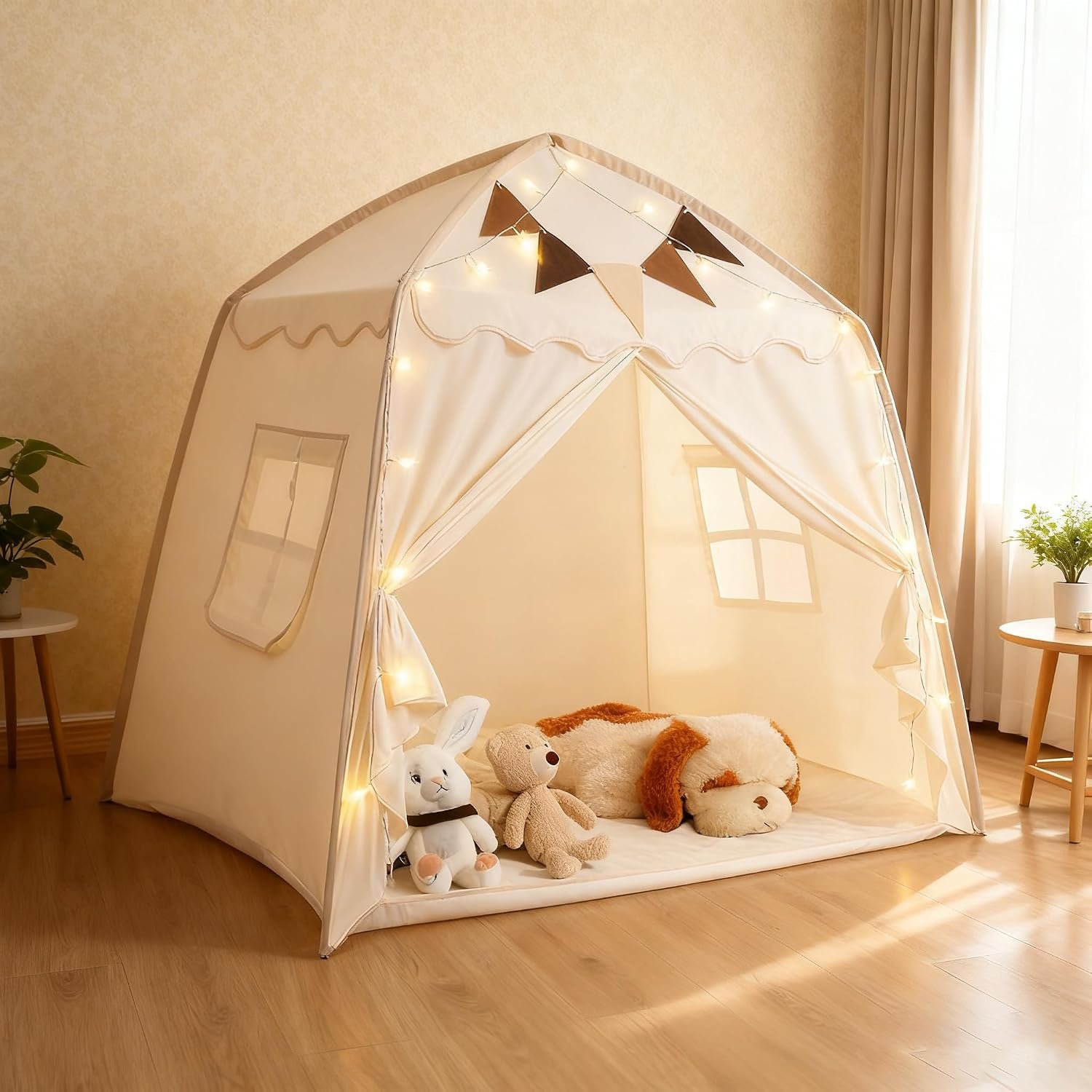
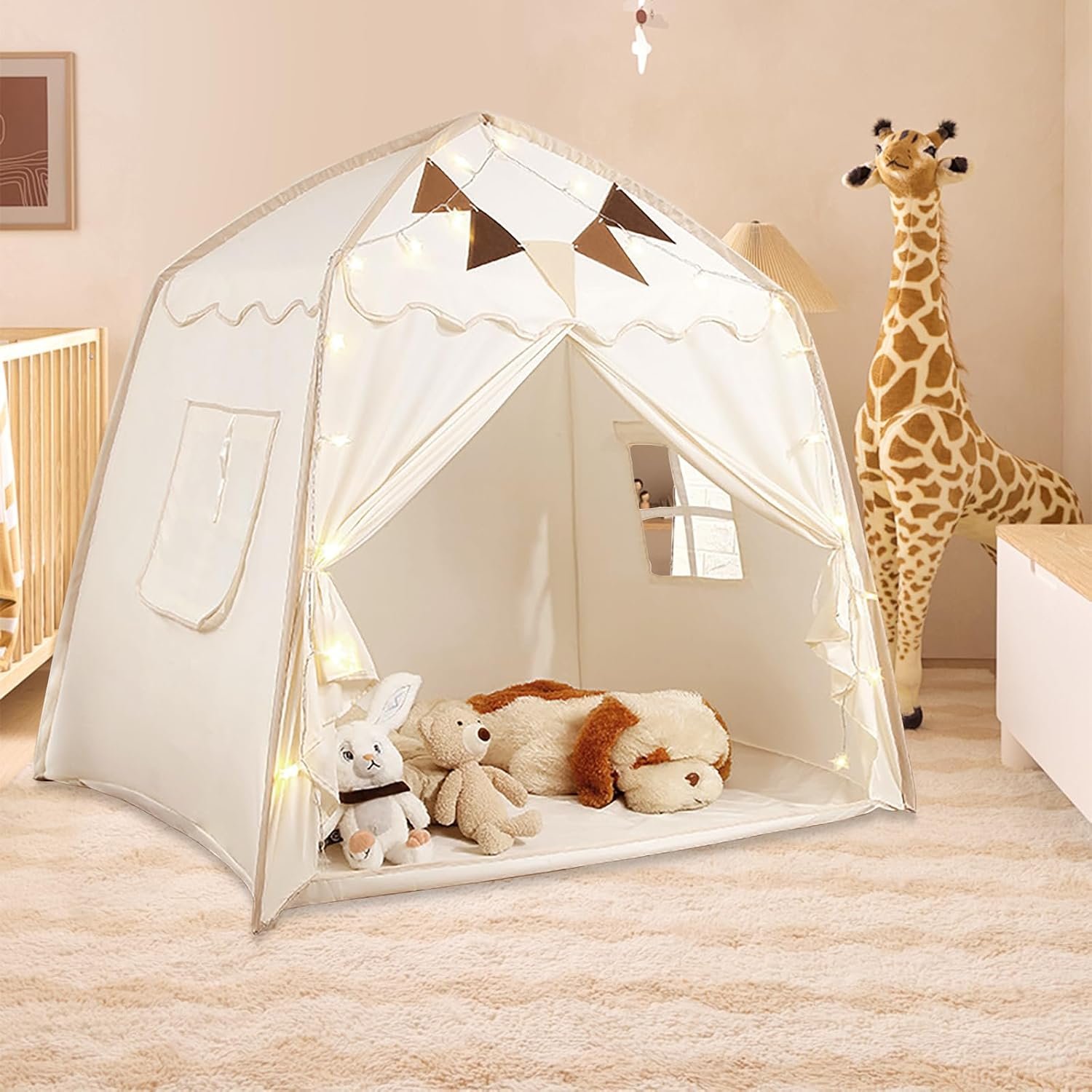
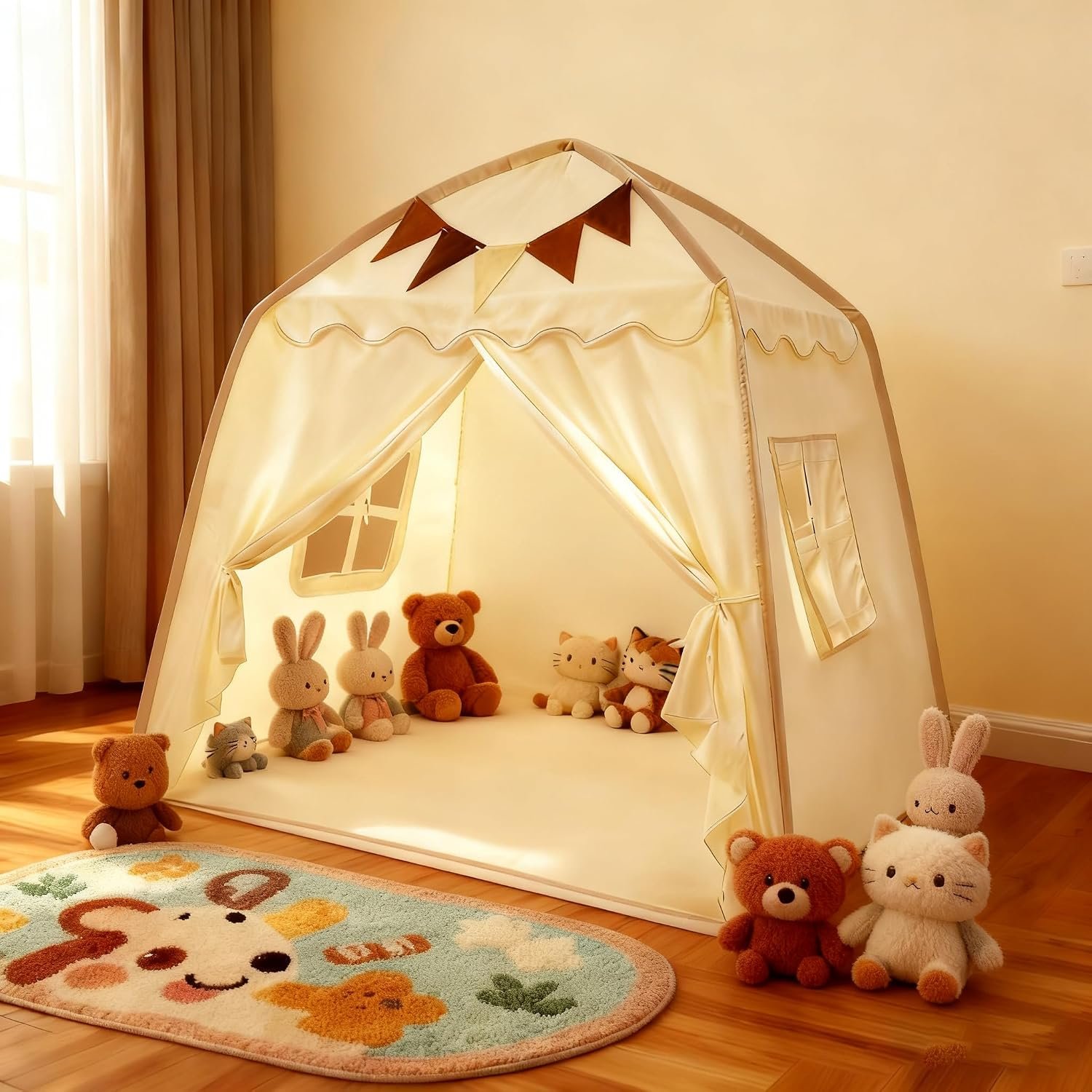
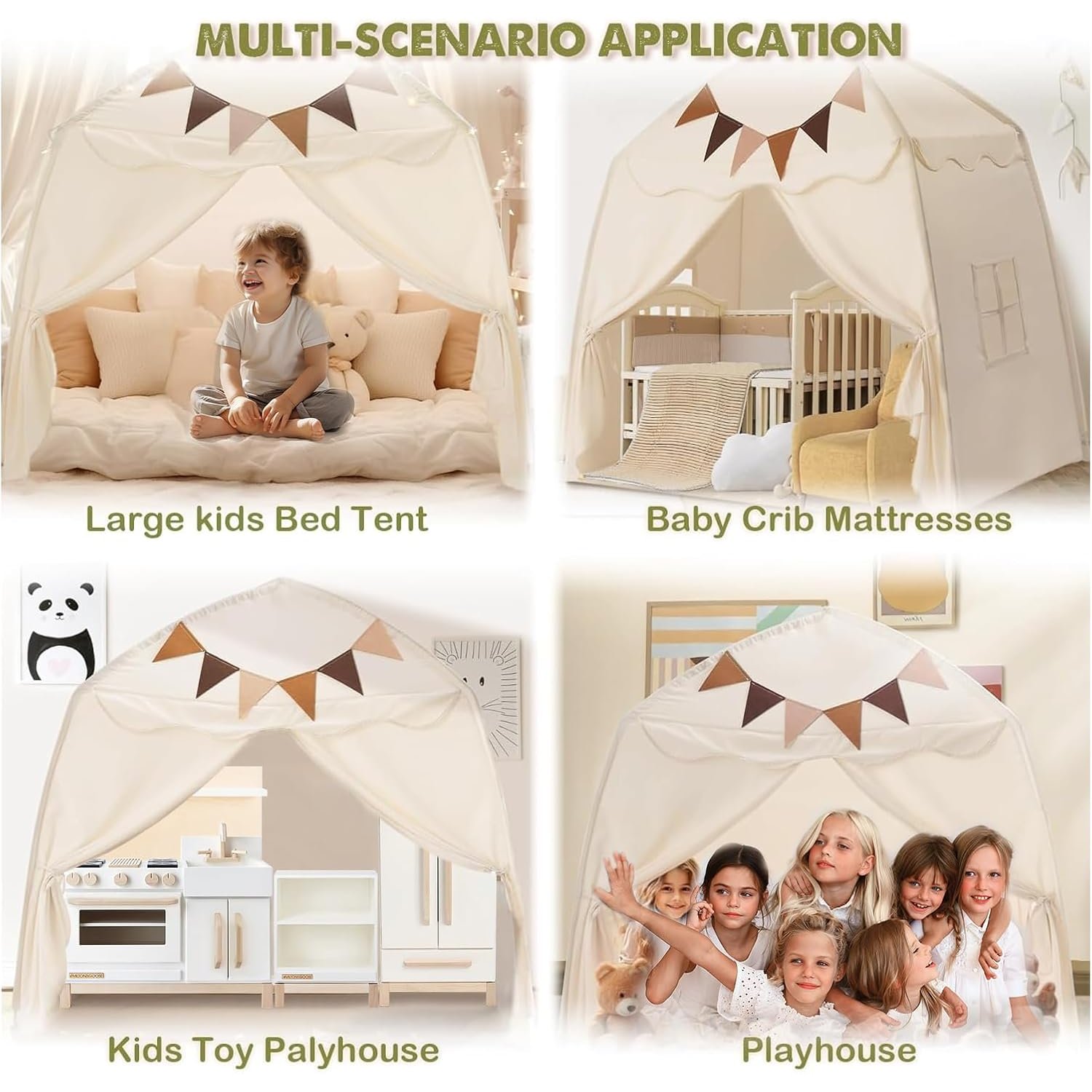
This is a cotton play tent on a PVC pole frame, measuring 130 cm long, 100 cm wide and 130 cm high. That height matters more than people expect. A lot of small tents are tall enough to crawl into and not much else, which means a child lies down, gets bored and crawls out. At 130 cm tall, most children under about ten can sit up straight inside with a cushion behind their back.
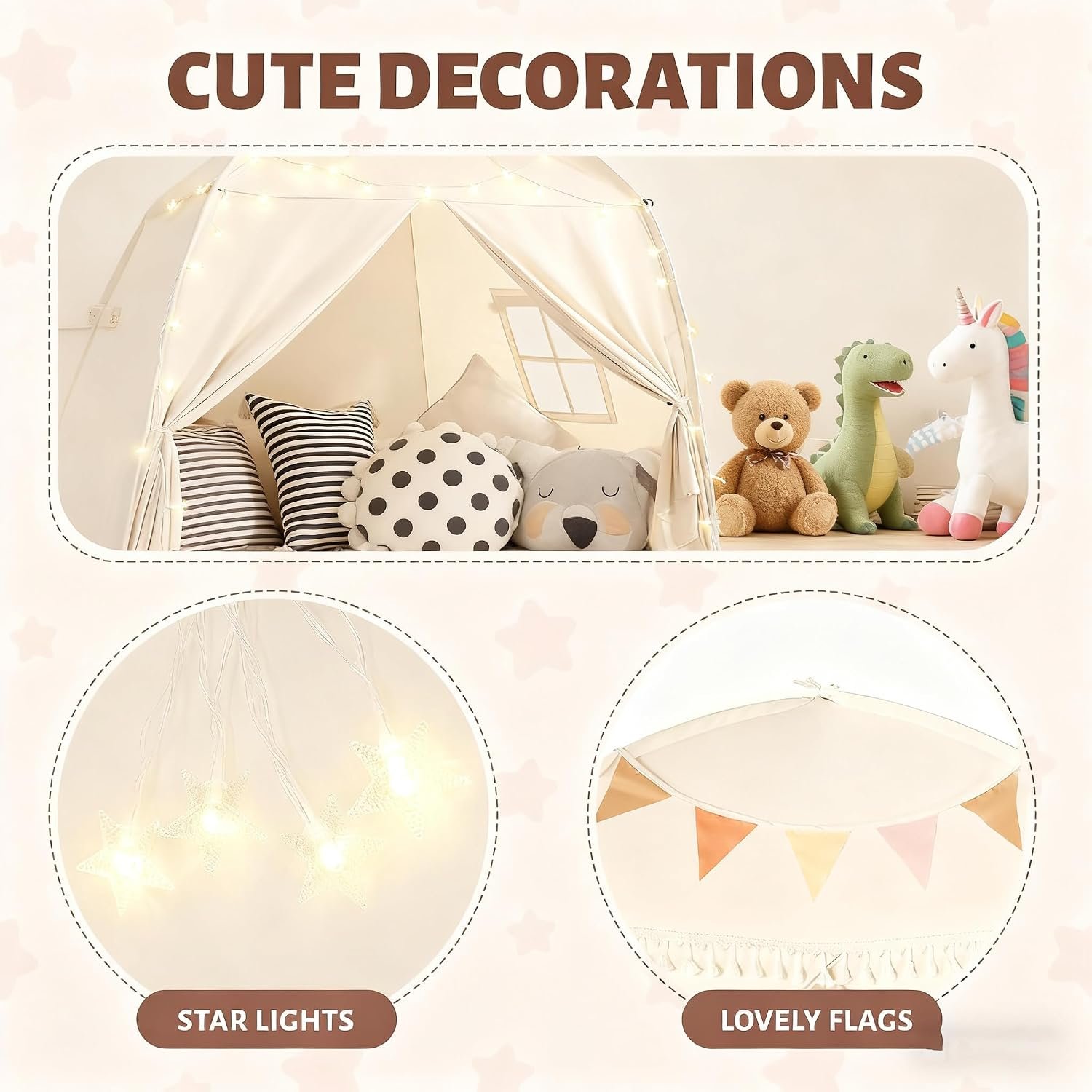
The set includes flags, a light and a mat. The flags string along the top for a bit of colour, the light threads around the frame for a soft evening glow, and the mat sits on the floor so a hard surface is not the first thing a child feels. The light runs on 2 AAA batteries, which are not included, so put a pack in the shopping basket at the same time.
Mesh windows with curtains are built into the sides. They let air move through, which keeps things comfortable during a long session, and they let you glance in from across the room without opening anything. The curtains close when a child decides the world should be shut out for a while.
How the frame works
The frame uses a double-pole design. The poles slide through channels sewn into the fabric, and once they are in place the tension holds the tent in shape. There is no complicated hub, no instruction sheet full of lettered parts.
Assembly is required and a step-by-step guide comes in the box. The first build is the slowest. After that, most people can put it up and take it down without thinking much about it, which is exactly what you want from something that is supposed to be temporary.
PVC poles are light. That is the main reason this tent is easy to shift across a room or carry out to the garden on a nice afternoon. The trade-off is that it is not built to be leaned on or climbed. Treat it as a fabric structure rather than furniture and it will hold up fine.
Who it suits
The manufacturer recommends it from 24 months and up. In practice, the sweet spot is a bit broader than one age bracket, because children use a tent differently as they grow.
A two or three year old treats it as a den. They crawl in, pile toys around themselves and come out again. A five year old starts making rules about who is allowed inside. By seven or eight, it is often a reading spot, and the string lights do a lot of work there, because reading in a slightly glowing tent feels different from reading on the sofa.
It also earns its keep for children who need somewhere quiet. A room with closable curtains and a known shape is easier to retreat to than a vague corner. Some families keep it up permanently for exactly that reason.
Choosing the right size for your room
Before you order anything, measure the spot. A 130 x 100 cm footprint takes about the same floor space as a cot. In a generous playroom that is nothing. In a shared bedroom with two beds and a wardrobe, it might be the whole remaining floor.
Think about height too. The tent needs 130 cm of clear vertical space, which rules out putting it under a low shelf or a sloped section of a loft ceiling. Check the corner in three dimensions, not two.
If the space is genuinely tight, the folding design is your friend. Up on a Saturday, down on a Sunday night. Plenty of families run it that way and it works better than you would think, because the tent staying special is part of the appeal.
Indoors or outdoors
Indoors is the default. On grass or paving in dry weather, it works outside too, and a shaded spot on a warm afternoon is a lovely place for it.
Just be clear about what it is not. This is a play tent, not a camping tent. It is not waterproof, it is not pegged down, and a gust of wind will move it. Bring it inside before rain and keep the battery light dry. If you follow those two rules you will not have a problem.
Keeping it in good shape
Cotton responds well to simple care. Spot clean marks with a damp cloth and a little mild soap, then let the fabric dry all the way through before folding. Damp fabric folded into a cupboard is how a tent ends up smelling like a cupboard.
Wipe the poles with a dry cloth every so often and check the joints for grit, especially after outdoor use. Grit in a pole joint is a small problem that becomes a sticky pole later.
For the lights, take the batteries out if the tent is going away for more than a few weeks. Leaking batteries ruin battery compartments and it is an easy thing to prevent.
Shake the mat out regularly. Crumbs end up in play tents, because snacks end up in play tents, and there is no stopping that.
Getting more out of it
A few small additions change how much a tent gets used. A couple of cushions and a soft blanket make the difference between somewhere a child visits and somewhere they stay. A shallow basket of books inside, swapped every week or two, keeps things interesting.
Keep heavy items off the frame. Hanging a bag of toys from a pole puts load where none was intended. Decoration is better done with fabric and light than with weight.
Let the child set it up with you once. Children who helped build the thing tend to use it more, and it takes the mystery out of what happens when a pole comes loose.
The short version
This is a 130 x 100 x 130 cm cotton play tent on a light PVC frame, with flags, a light and a mat in the box and mesh windows for airflow. It needs assembly, it needs 2 AAA batteries for the light, and it folds flat when you are done.
If you want a play space that is big enough to sit up in, pretty enough that a child actually wants to be in it, and sensible enough that it does not permanently claim a corner, this is a solid pick. Measure your floor, charge up on batteries, and let them get on with it.