
The complete guide
Choosing a Princess Play Tent That Actually Gets Used
The problem with forts
Every child builds a den at some point. Chairs, a blanket, maybe a clothes horse if the household is ambitious. The idea is lovely. The execution has a short life. The blanket slides off, the chairs get reclaimed at dinner time, and the whole construction has to start again tomorrow from scratch.
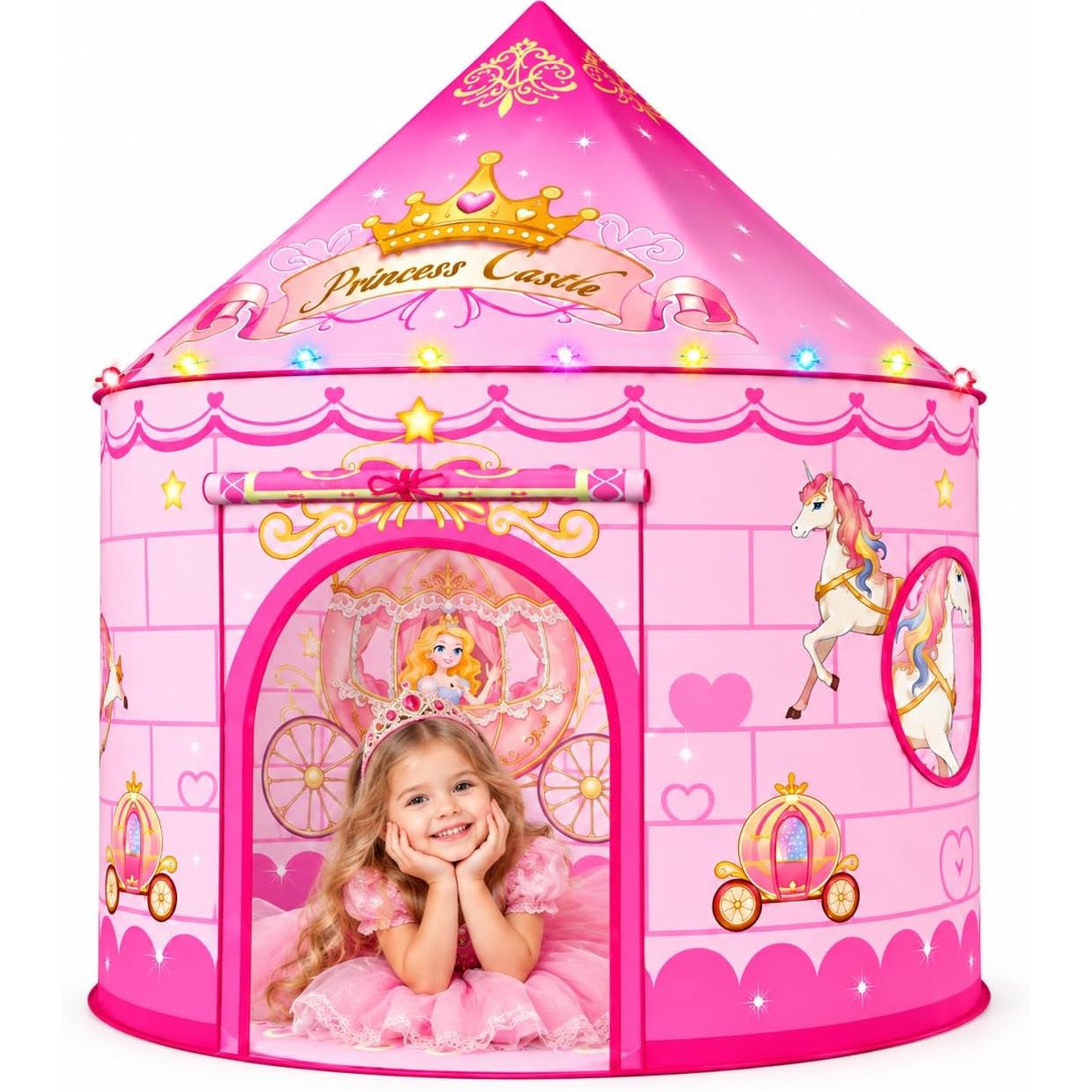
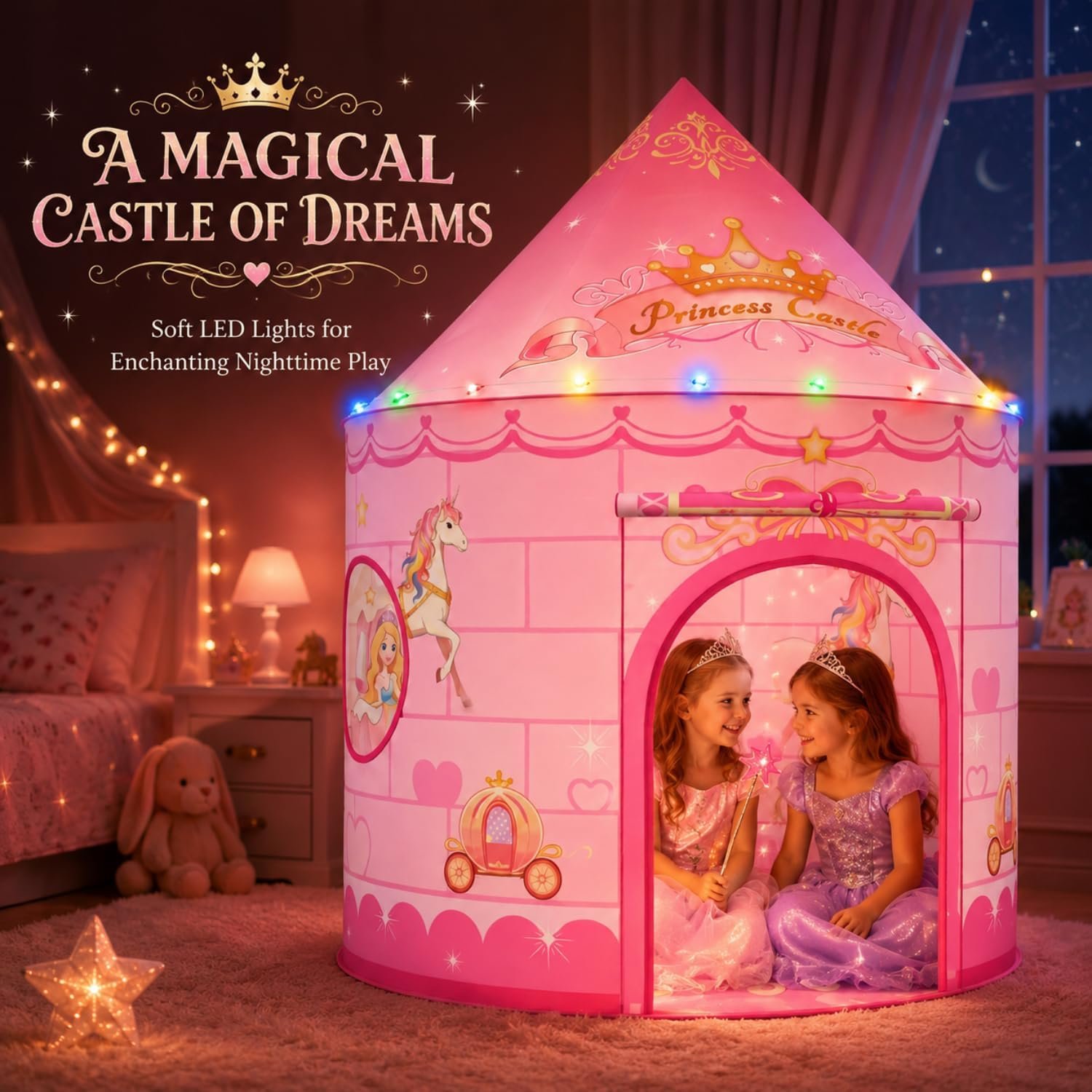
What a child is actually after is not a blanket. It is a space with a wall around it, a doorway they control and a size that fits them rather than adults. A princess pop up tent with lights gives them that in a form that stays standing, folds away without argument and comes back out tomorrow in the same shape.
That is the real appeal. Not the novelty of a new toy, but a small piece of territory in a house that is otherwise built for grown-ups.
How a pop up tent works
The mechanism is simple and it is why these tents are so quick to live with. A flexible sprung frame is sewn into the edges of the fabric panels. Packed, that frame is twisted into a flat circle and held there. Release it and it snaps back into its natural shape, pulling the panels up with it. There are no poles to thread and no corner pegs to match up.
Folding it back down is the part that catches people out. It is a twisting motion rather than a flattening one, and the first attempt usually ends in a slightly bent tent and a small amount of muttering. By the third go it takes seconds. If you are buying this for someone else, it is worth demonstrating the fold once before you hand it over.
This model does list assembly as required, so allow a few minutes on the first setup for the light string and getting the panels sitting properly.
What the lights actually add
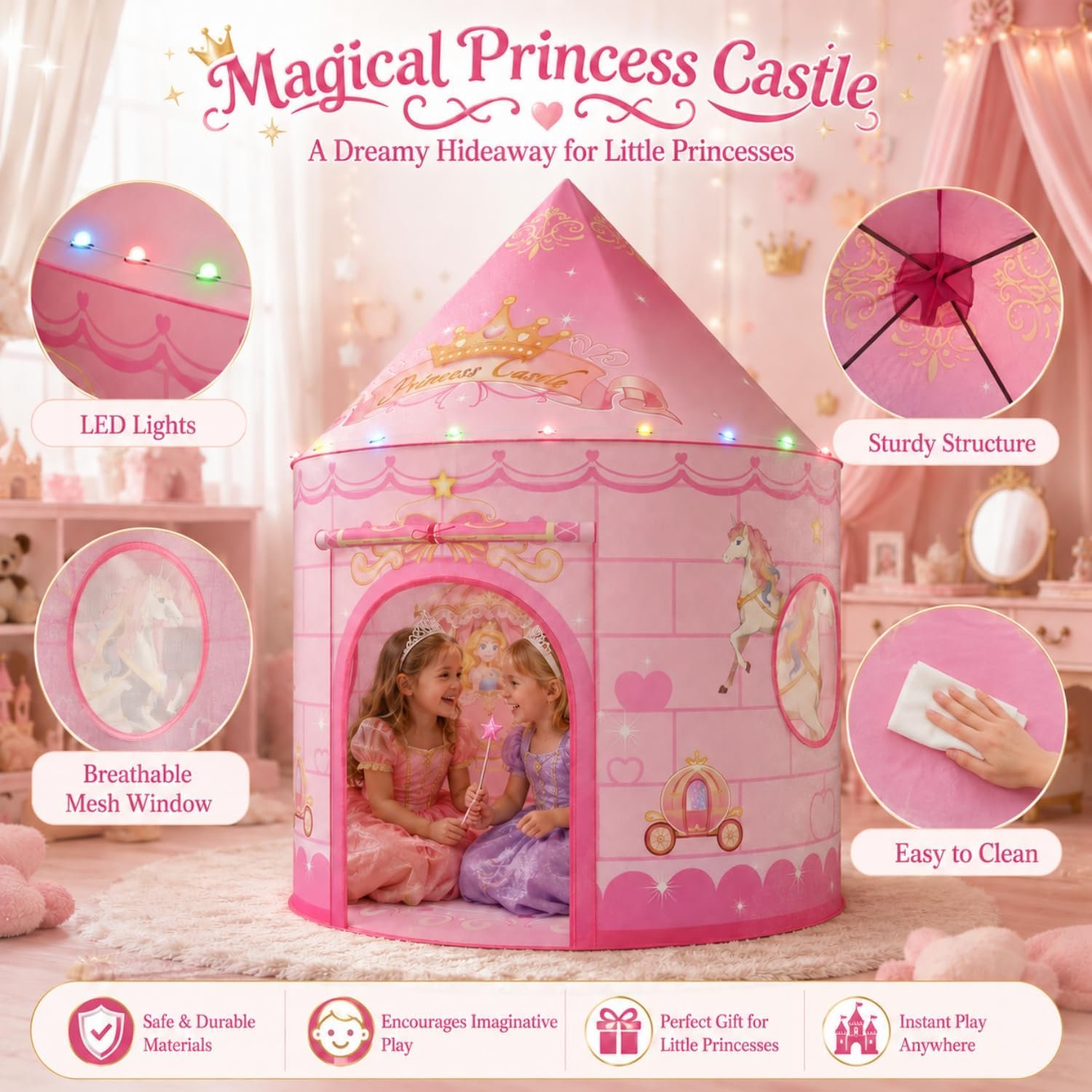
It is easy to dismiss the LED string as a decorative extra. In practice it changes how the tent is used. During the day the tent is a base for dolls, drawing, snacks and whatever game is currently running. In the evening, with the room lights down and the string glowing, the same tent becomes somewhere to sit still.
That shift is useful. A child who will not settle on a sofa with a book will often settle inside a lit tent with the same book, because the setting makes it feel like an occasion. If you are shopping for the best light up play tent for a reader, that is the effect you are paying for.
A sensible rule is to treat the lights as a story-time feature rather than a nightlight. Switch them off before sleep. It is better practice generally and it saves power if the string is battery run.
Who it suits
The manufacturer recommended age here is 6 to 8 years. That is a good guide, and it says something about how the tent is intended to be used. At that age children run longer, more detailed pretend games, often with a cast of dolls and a plot that carries over from one day to the next. A fixed setting helps enormously with that.
Children a little younger often love a tent like this too, and plenty of eight-year-olds keep using one. The honest answer is that interest depends more on the child than the birthday. A child who enjoys dress-up, small-world play or hiding with a book will get months of use. A child who is permanently outdoors on a bike may use it for a fortnight.
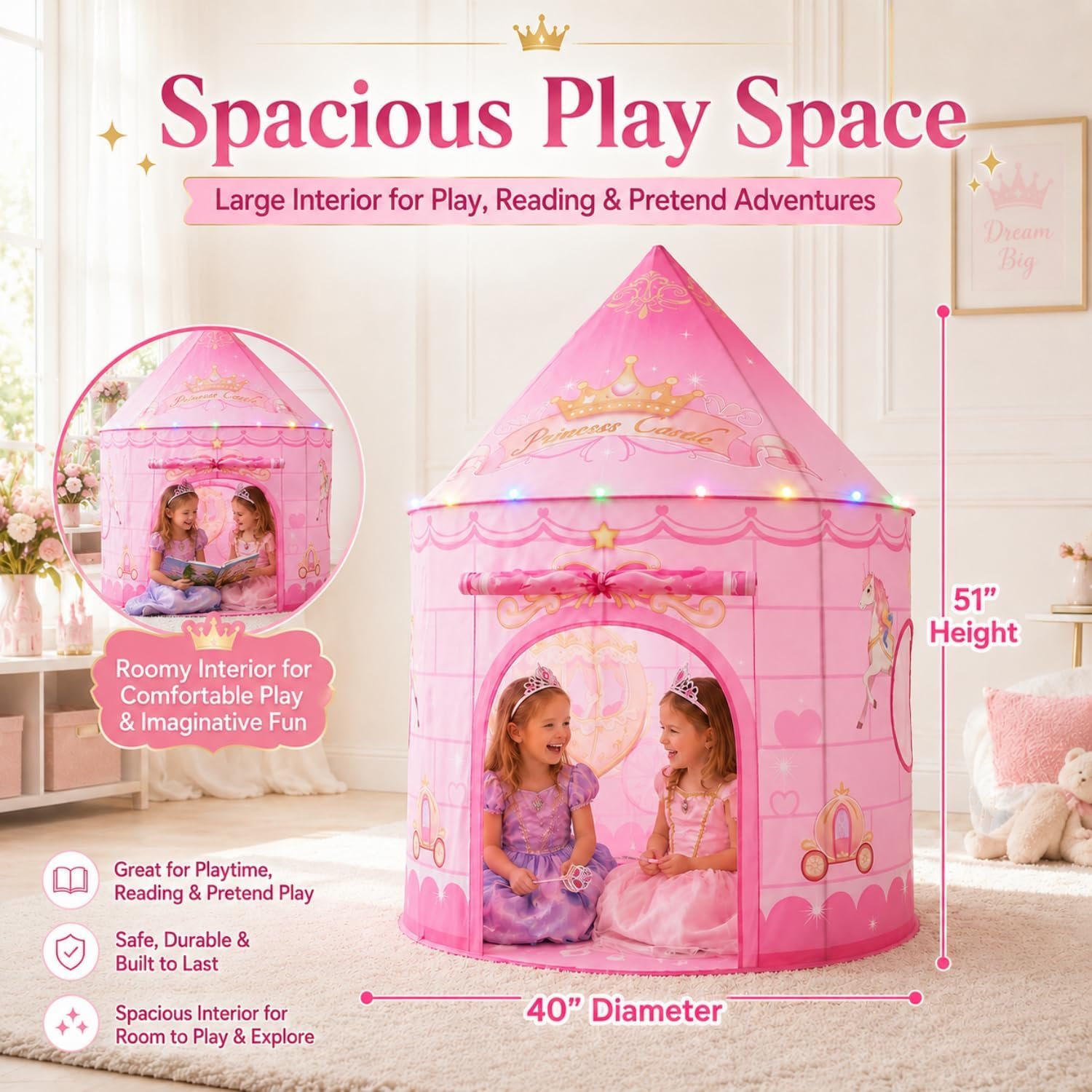
Think about the room as well. The best indoor playhouse for girls is the one that has a corner to live in. If every square metre of the bedroom is already spoken for, the tent will end up folded in a cupboard, which helps nobody.
How to choose
A few things are worth weighing up before you order any girls pop up playhouse.
Space comes first. Measure the corner you have in mind, including height if the room has a sloped ceiling. This tent packs down to 440mm D x 40mm W x 340mm H, which tells you how little storage room it needs, but the standing footprint is what matters day to day. Leave a clear path to the doorway so your child can get in and out easily.
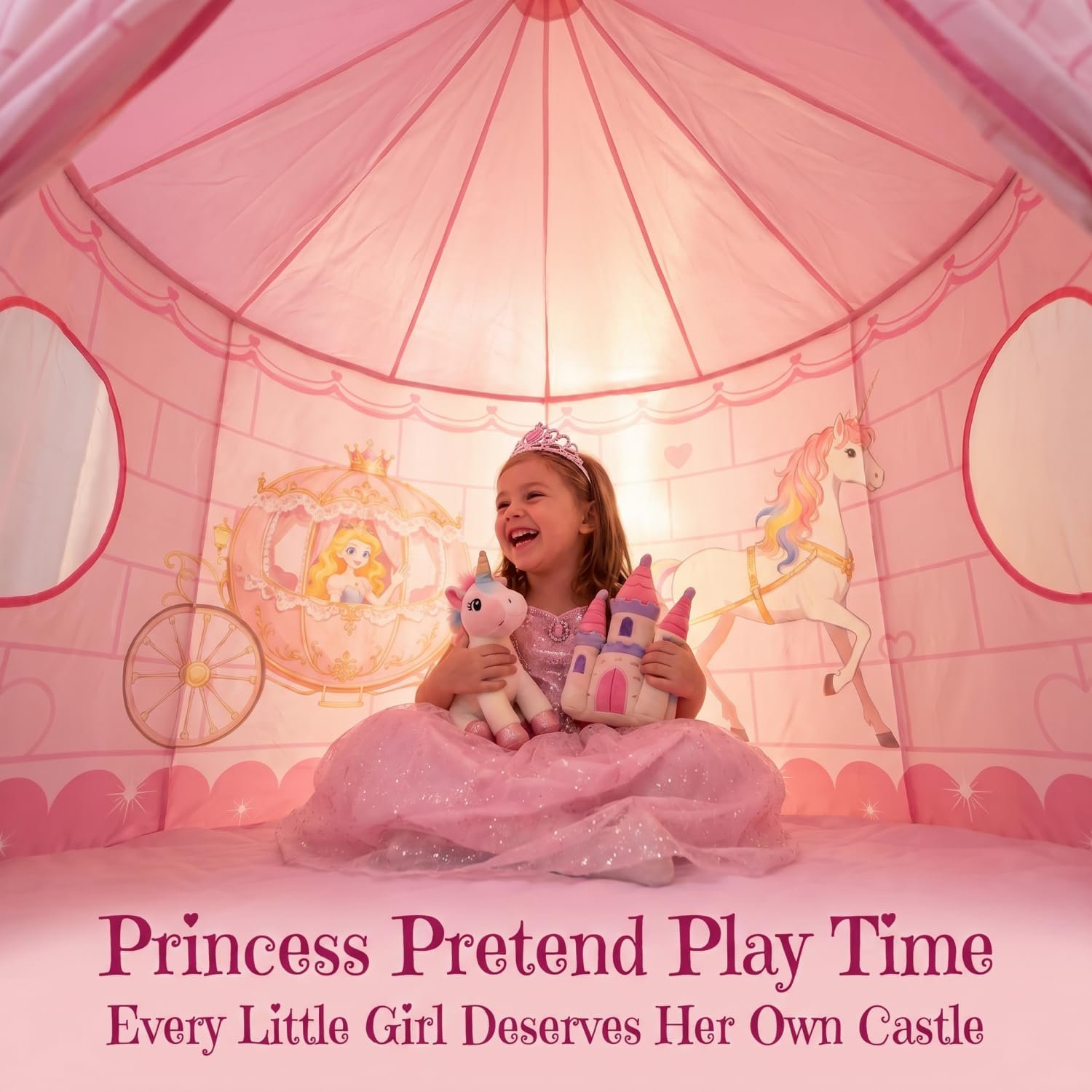
Theme is the second thing, and it is more decisive than people expect. This is a firmly pink castle design with crown and carriage artwork. A child who loves that look will adopt it instantly. A child who does not will be polite about it for a week. Buy for the child in front of you, not the one in the catalogue photo.
Ventilation is the quiet detail that makes a difference. The mesh window here keeps air moving, which stops the inside getting warm and stale during a long play session, and it gives you a clear view in. Being able to glance over from the sofa and see that everything is fine, without ducking down to the door and interrupting the game, is genuinely handy.
Finally, think about where it will travel. If you want something that goes to a grandparent's house for the holidays, the flat fold matters as much as the castle print. A best portable kids tent earns its place by being easy to move, not just nice to look at.
Setting it up well
A tent on bare floorboards is a hard place to sit. Add a rug or a folded blanket underneath and the whole thing becomes somewhere a child will actually stay. A couple of cushions from the sofa do more for comfort than any accessory sold separately, and the supplier record lists only the play tent as included, so you will be supplying those anyway.
Position matters too. Keep the tent clear of heaters, radiators, curtains with long cords and the top of any stairs. Give it a wall or two to lean against visually, even if it is freestanding, because a corner feels more den-like than the middle of a room.
If it is a gift, set it up before the child sees it. A folded tent in a box is a box. A standing castle with the lights on is something else entirely.
Looking after it
Care is straightforward. Wipe the panels with a damp cloth and a little mild soap when they pick up marks, then let the tent air dry fully before you fold it. Damp fabric folded into a cupboard will smell within a week. Skip the washing machine entirely, since a sewn-in sprung frame and a spinning drum are a bad combination.
Take the light string off before any cleaning and keep it well away from water. Give both the frame and the string a quick look before each use, especially if the tent has been stored for a while or travelled in a car boot.
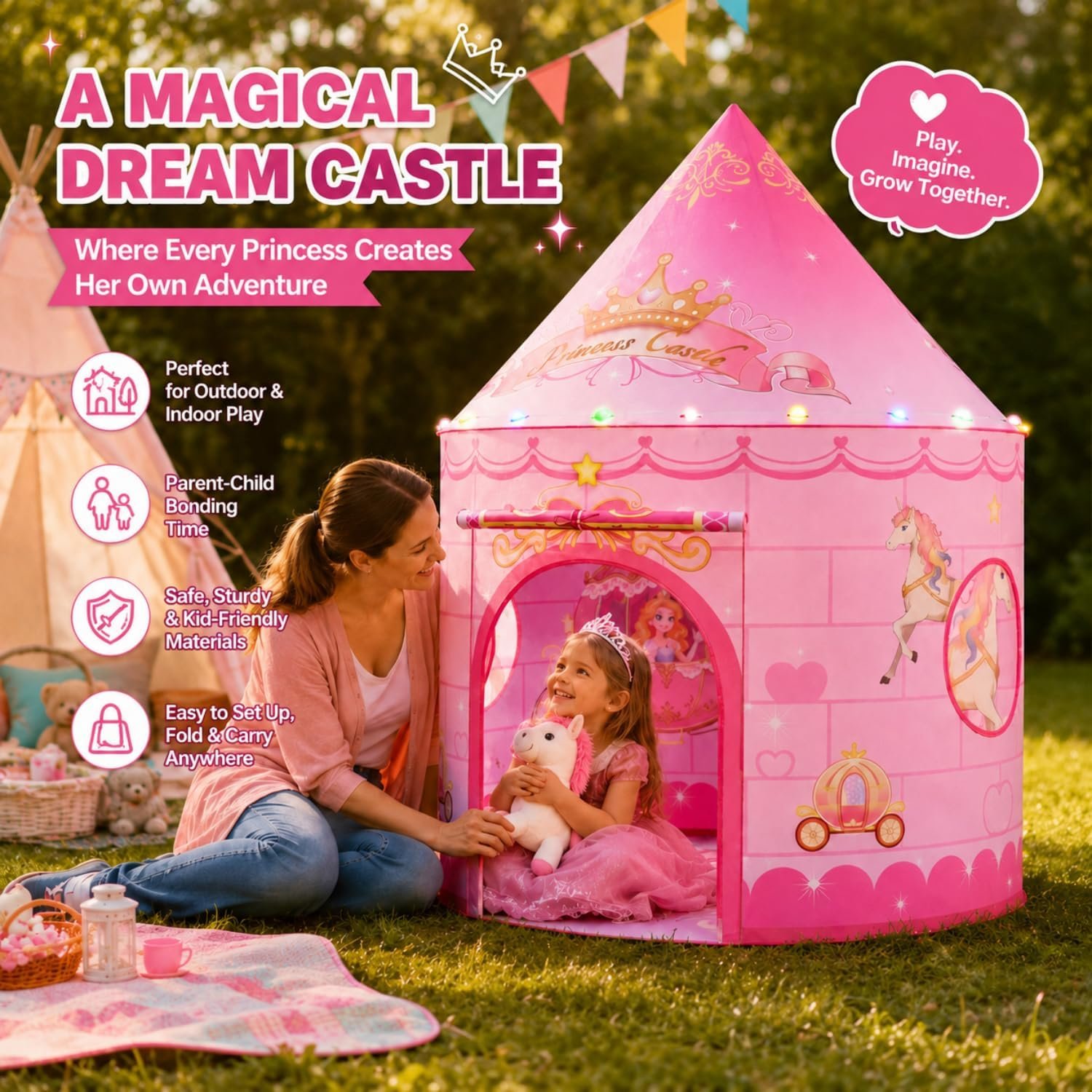
For outdoor use, keep it to dry, calm days on a lawn or patio and bring it in afterwards. It is a play tent, not camping gear, and leaving it out in rain or overnight dew will shorten its life quickly.
The short version
This is a pink castle pop up tent with an LED light string and a mesh window, recommended by the maker for ages 6 to 8. It opens fast, folds flat to a compact 440mm by 40mm by 340mm, and needs a clear corner and a rug to really come into its own.
Buy it if your child likes pretend play, dress-up or reading somewhere private, and if you have a spot to put it. The lights turn it into a calm reading nook in the evening, the mesh window keeps you in the loop without hovering, and when you have had enough of it underfoot it disappears behind a door in under a minute.